
Choosing the Best eSIM for Costa Rica (Our Honest Experience)
When we were planning our trip to Costa Rica, we had to figure out how eSIMs worked for the first time. The first step was deciding if an eSIM was actually the right choice for us—the answer was yes.
Our carrier’s international plan was $10 a day (too expensive), our phones don’t accept physical SIM cards, and we needed data the second we landed so we could navigate our 7-hour journey to the coast.
If you’re on the fence, start by weighing your options, checking carrier costs, and verifying that your phone is eSIM compatible.
Once you decide to go the eSIM route, step two is picking the right provider.
A lot of travelers default to Airalo, which works great for standard itineraries. But because we were heading off the beaten path, we needed an eSIM that would work in rural Costa Rica.
That search led us to Roafly, and we were blown away by how well everything worked. We had service the minute we landed, and we had service on remote beaches.
Just in case though, we started with a short 3-day plan so we weren’t locked into something that didn’t work in rural areas.
The ultimate test came when our camera was stolen on the beach in Playa Chiquita. We were in a remote spot that even our local host didn’t have cell service. But our eSIM gave us enough signal to text for help.
To save you hours of scrolling through biased reviews, we scoured Reddit, vetted reviews, and weeded out the spammy affiliate comments to bring you the truth. Here is everything you need to know to choose the best eSIM for your Costa Rica travels!

What is an eSIM and How Does It Work for Travel?
If you’re new to the concept, an eSIM is simply a digital version of the traditional plastic SIM card. Instead of physically removing your home SIM card (and risking losing that tiny piece of plastic in your bag) you download a digital sim through an app, and turn it on when you need it.
Why eSIMs Are Ideal for Slow Travel in Central America:
- No physical card required: Keep your primary home SIM inactive inside your phone while receiving local Costa Rican data.
- Instant connectivity on arrival: Download and install your plan before boarding your flight so you have data when you land.
- Easy border transitions: Multi-country regional plans allow you to cross borders without having to get a new SIM.
Understanding eSIM Coverage in Costa Rica
Before picking an eSIM provider, it helps to understand how the networks operate in Costa Rica. Basically, digital eSIM companies are resellers—they lease access from the three main national telecom companies:
- Kölbi (ICE): hands-down the best overall coverage across the country. Especially in rural areas.
- Claro: Strong secondary network with fast 4G/5G speeds in major urban areas, tourist towns, and along main highways.
- Liberty (formerly Movistar): Reliable in the Central Valley (San José) and major tourist hubs, but notorious for losing signal rapidly once out of the area. This is what most eSim companies lease through.
Top Picks For Where To Stay In Puerto Viejo:
Best eSIM for Costa Rica: Top 6 Providers Compared
Here is how the main providers stack up based on a standard 10 GB / 30-Day comparison:
| Yesim | $25 | Claro & Liberty | Budget travelers & multi-device hotspotting |
| Roafly | $25 | Kölbi ICE | Remote, rural & coastal areas |
| Nomad | $29 | Liberty | Central America multi-country travel |
| JetPac | $33 | Claro | Reliable mid-range coverage |
| Airalo | $38 | Liberty | Popular app, but pricier with limited reach |
| Orange eSIM | $35 | Kölbi, Claro & Liberty | Premium multi-network fallback |
Provider Breakdown:
1. Roafly – Our Personal Top Pick for Flexible Travel
Roafly became our go-to choice because of its seamless setup and multi-network capabilities. Because it connects directly through Kölbi ICE, it is arguably the most reliable choice for solo female travelers heading to off-grid surf towns or secluded rainforest eco-lodges.
2. Yesim – A Good Second Choice
Yesim‘s branding and interface is what first drew us in, but with more research we knew we wanted an eSIM offering coverage through Kölbi. Yesim does offer coverage through 2 different providers, making it a good second choice. The price is also low in comparison.
3. Nomad – Best for Regional Border-Hopping
If Costa Rica is just one leg of a broader Central American journey, Nomad offers incredible multi-country regional packages that cover you seamlessly across borders.
Planning Your Trip To Costa Rica?
These apps are essential for your travels:
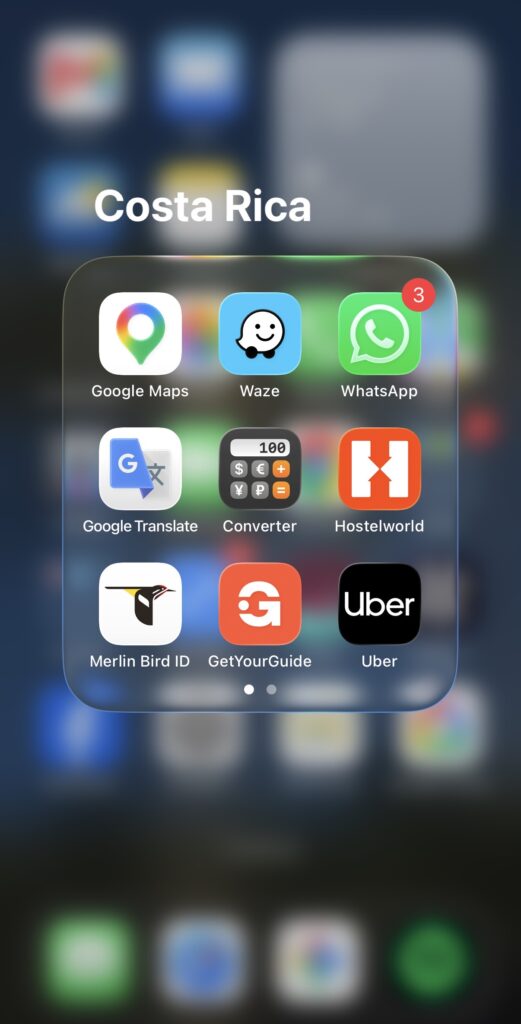
Google Maps: great for finding restaurants, beaches, things to do
Yesim: We did so much research to make sure we would have service in Puerto Viejo. This esim was perfect
Waze: Don’t even try apple maps. Waze is the main map everyone uses in Costa Rica
What’s App: Literally everyone uses what’s app in Costa Rica. For tuktuks, booking tours, accommodations, everything.
Google Translate: great for when you need to speak spanish at the grocery or in the uber.
Converter App: downloaded so many, this one is superior.
Hostelworld: Great for finding cheap accommodations on the fly and local events
Merlin Bird: so fun to identify all the birds around you. We saw both a toucan and green macaw!
Get Your Guide: the best app for booking tours, guides, and so much more.
Uber: besides biking, uber was the main way we got around in Puerto Viejo. it’s very cost effective in Puerto Viejo
Step-by-Step: How to Setup & Activate Your eSIM
Setting up a digital SIM for the first time can feel intimidating.. like you may somehow lose your number or something. But really it’s super straightforward.
- Verify Unlocked Status: confirm with your mobile provider before leaving to ensure your phone is 100% carrier-unlocked.
- Purchase & Install at Home: Buy your desired plan while at home a day or two before departure. Follow the app instructions or scan the provided QR code to install the cellular profile.
- Label Your Lines: In your phone’s settings, label your home card as “Primary” and your new digital profile as “Costa Rica Data”.
- Once You Take Off:
- Turn OFF your Primary home line (and data roaming to prevent unexpected daily roaming charges).
- Turn ON your new Costa Rica eSIM.
- Upon Arrival: Once the plane lans turn your phone off and then back on. It will automatically connect to the local network.
Essential Data-Saving Tips for Slow Travel
When working remotely or navigating unfamiliar routes, you can run through data quickly. Here is how we stretch a 10 GB plan as far as possible:
- Download Offline Maps: download offline map regions on Google Maps for all of Costa Rica.
- Toggle Off Background App Refresh: Go into your phone settings and disable background updating for high-consumption apps (so pretty much anything you get notifications from).
- Use Low Data Mode: Turn on “Low Data Mode” in your cellular settings to restrict automatic cloud backups and photo syncing until you are connected to Wi-Fi.
The Bottom Line
We were super happy with our experience using Roafly. Not only for how easy it was to install and top-up data anytime, but most of all for the actual service that we had while traveling.
Our Final Recommendation: Go with Roafly. Test the connection once you get there, and then top up once you know it’s all good!
Frequently Asked Questions
Can I keep my WhatsApp number while using a local eSIM?
Yes! When you install your digital SIM profile and open WhatsApp, the app will ask if you want to update to the new number or keep your existing number. Choose to keep your current number so all your contacts, messages, and chats remain completely unchanged.
What happens if I run out of data?
Roafly (and others) allows you to easily “top up” additional gigabytes directly inside their smartphone apps without needing to install a new QR code.
Will an eSIM work for calls and SMS text messages?
Most travel data plans are data-only. This means they do not come with a phone number, but allow you the have data wherever. So, you can make phone and video calls using data-based messaging apps like WhatsApp, which is widely used by Costa Rican hotels, tour guides, and transport services.
Checkout Our Other Puerto Viejo Guides
👙 Is Puerto Viejo, Costa Rica Worth Visiting? Our Honest Take 2026
🚎 Taking the San Jose to Puerto Viejo Bus: Everything You Need to Know
🦥 Best Things To Do In Puerto, Viejo Costa Rica
🏝️ Where to Stay in Puerto Viejo, Costa Rica: Best Areas & Hotels
🎒 The Ultimate Costa Rica Packing Guide: Essential Gear & What to Pack
🍤 25 Best Restaurants in Puerto Viejo, Costa Rica: Our 2026 Top Picks