How to Plan a Cross-Country Road Trip Through the National Parks
Over two months and 10,000 miles, we camped our way from park to park. This guide shares every campsite, route tip, and lesson we learned. along the way

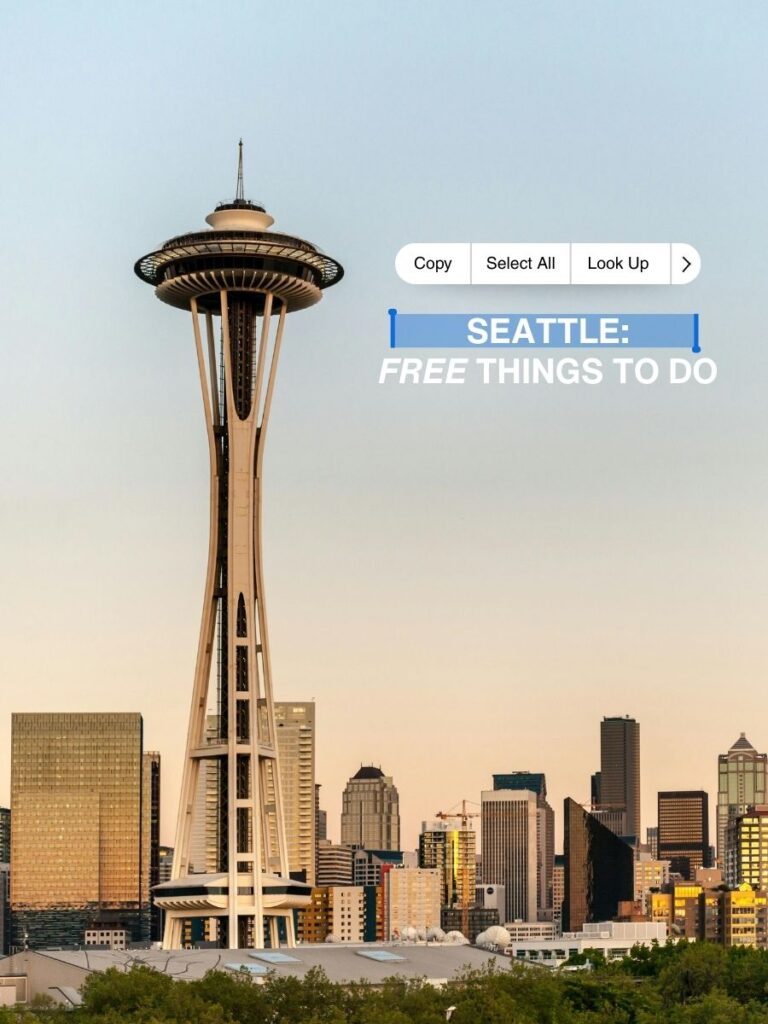
Six months before this trip, we applied for a three-week house sit in Capitol Hill, Seattle. The plan was simple: fly from Ohio, settle in, explore, come home. But the more we thought about it, the more flying felt like skipping the best part. Why not make the journey part of the story?
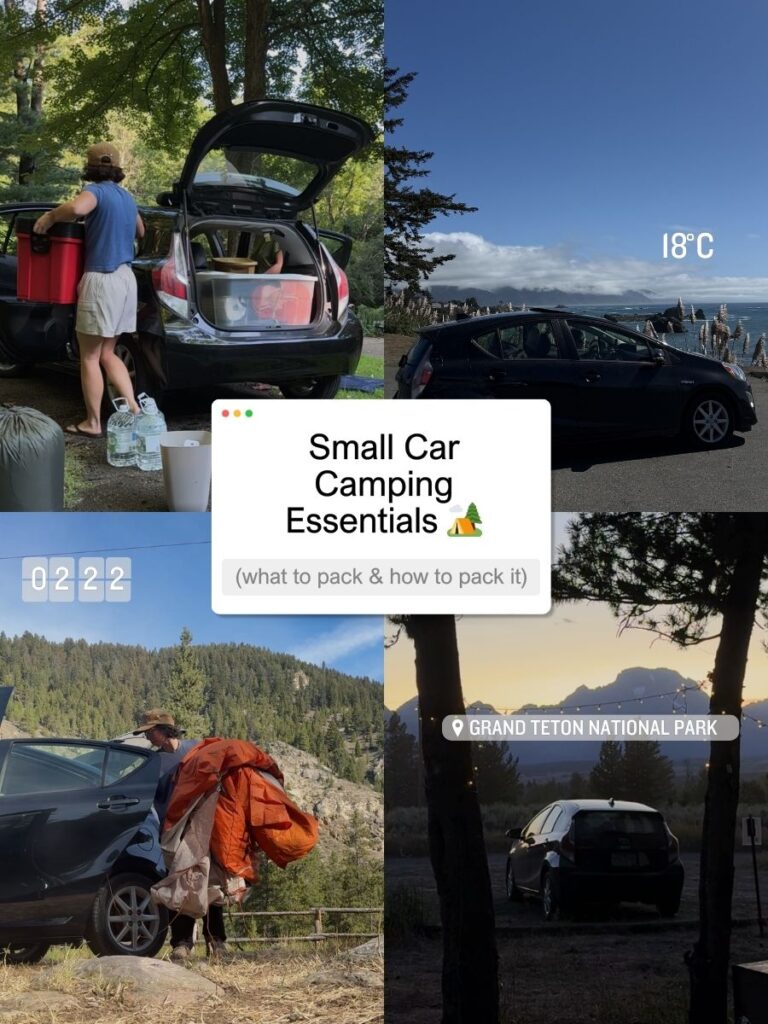
So we packed up our Prius, filled the trunk with our camping setup (read what we packed here), and drove west on I-90 camping at free, dispersed campsites the whole way. No detailed itinerary, no reservations, just two fixed dates: when we left Ohio and when we needed to reach Seattle. Everything in between was pure flexibility.
We relied 100% on Campendium, our go-to app for finding free public land campsites, and learned that the best road trips happen when you leave just enough room to wander.
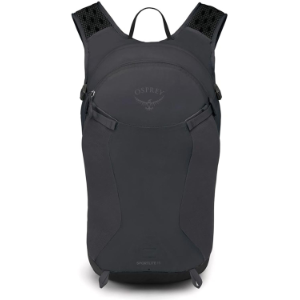
our Camping essentials
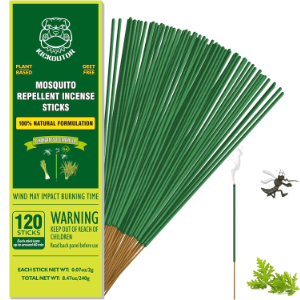 Bug Incense
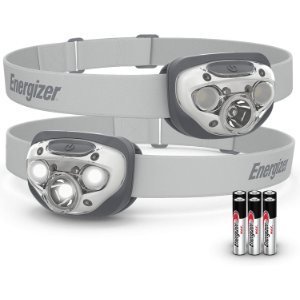 2-pack Headlamp
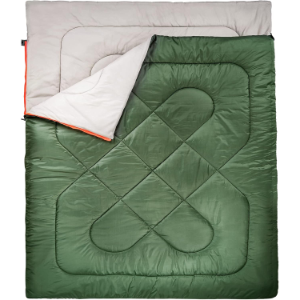 2 Person Sleeping Bag
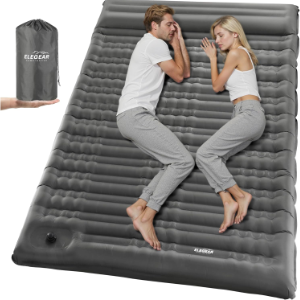 2 Person Sleep Mat
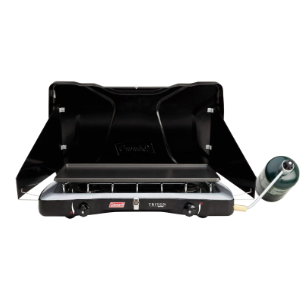 Coleman Campstove
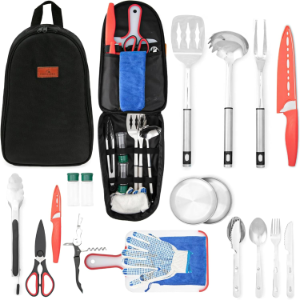 Cooking Utensils
How We Found Campsites Using Campendium
If you’ve never used Campendium, it’s one of the best tools for finding free campsites across the U.S. We used it every night of our trip, usually planning our next stop right from the car.
We kept things simple when searching:
- Set Filters: Public Land + $0 Cost
- Map View: Scrolled along our route to find spots close to main highways for easy travel days
- Photos & Reviews: Chose campsites based on both vibe (peaceful, scenic, private) and accessibility for our Prius
Once we found a few options, we’d open the map, look at the road layout, and pick the spot that fit our pace for the day. Sometimes that meant pulling off early for a quiet forest road to get to a better campsite first thing in the morning. Other times, it meant pushing an extra hour to get closer to the next landmark.
Reviews mentioning low-clearance vehicles were our lifeline. They helped us avoid rough roads, while photos gave us a sense of what to expect—trees, open views, nearby water, or how crowded it might feel.
Campendium also doubled as inspiration. We’d scroll through photos, spot a mountain view or lakeside site, and decide on the fly that it was our next stop. That mix of freedom and easeful planning was what made this trip feel so freeing.

Part 1 |Our Route: From Ohio to Seattle
1. Ohio → Lake Vermillion Campground, South Dakota
 Setting up @ Dusk
- Night Time <3
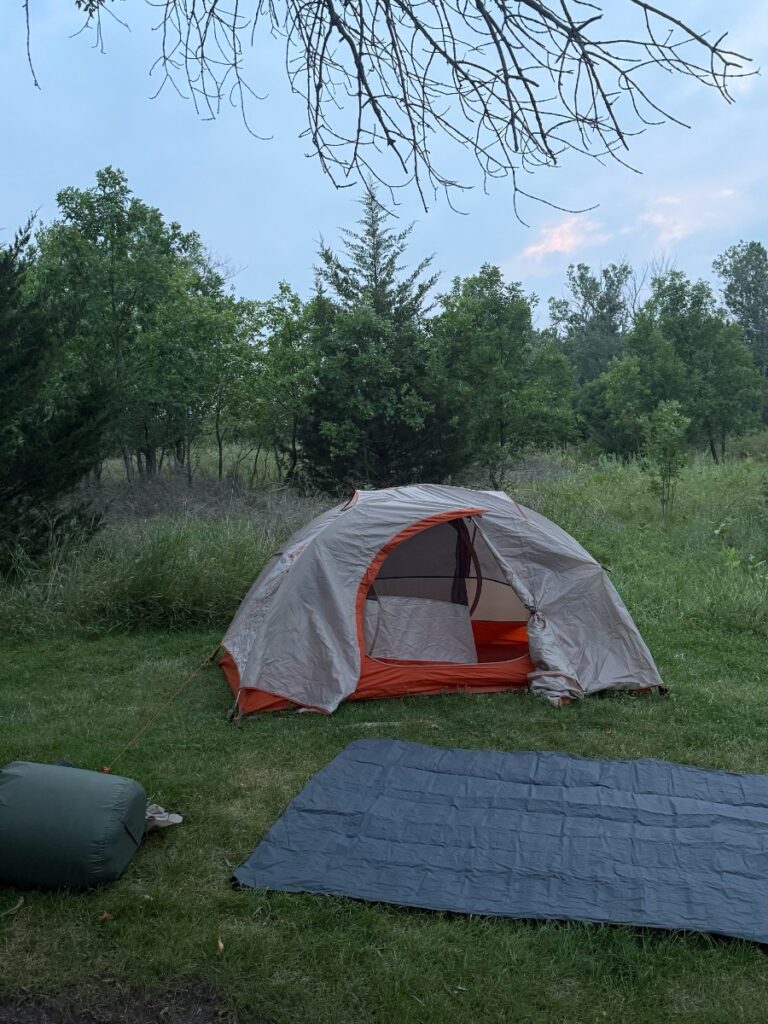
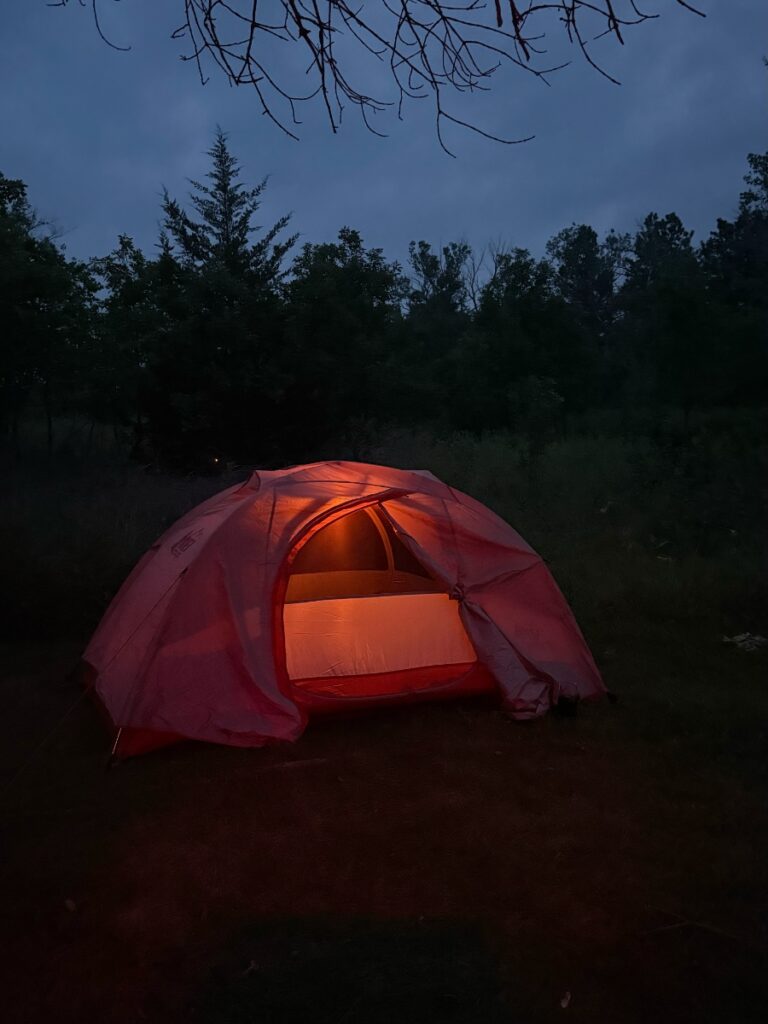
Lake Vermillion Campground, South Dakota
Our first stop after 15 hours on the road. Options were a bit scarce around here so we went with a $15 option. It was worth it for the easy access off I-90 and a quiet/safe setting.
We arrived just before dark, set up camp, and went straight to sleep.
These quick overnight stops are essential when covering long distances. Having a simple, accessible place to pull in for the night keeps the trip manageable and helps you stay rested enough to enjoy the journey and keep going.
2. South Dakota → Warm Springs Dispersed Camping, Wyoming
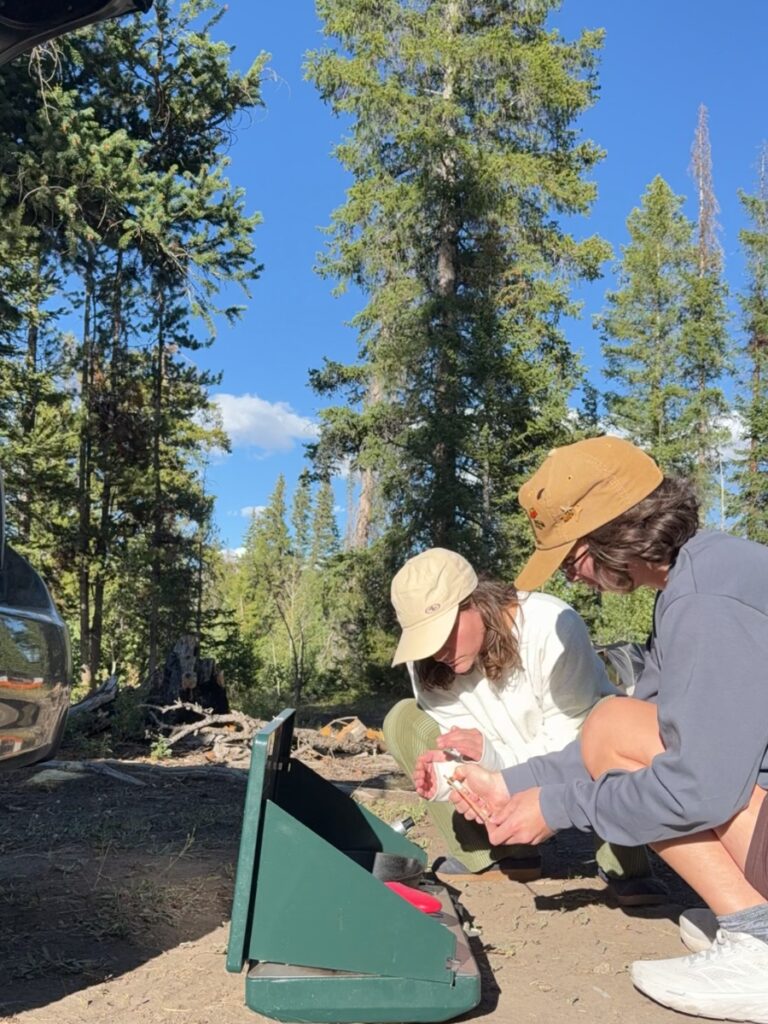 Giddy about cooking outside
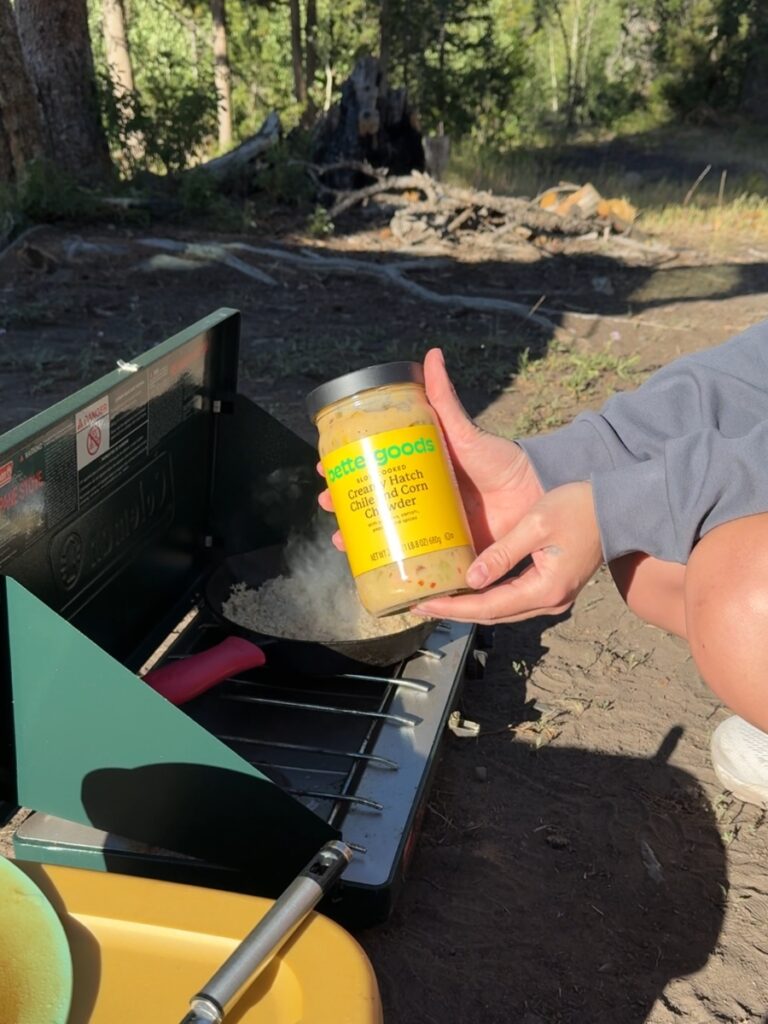 Dinner for the night
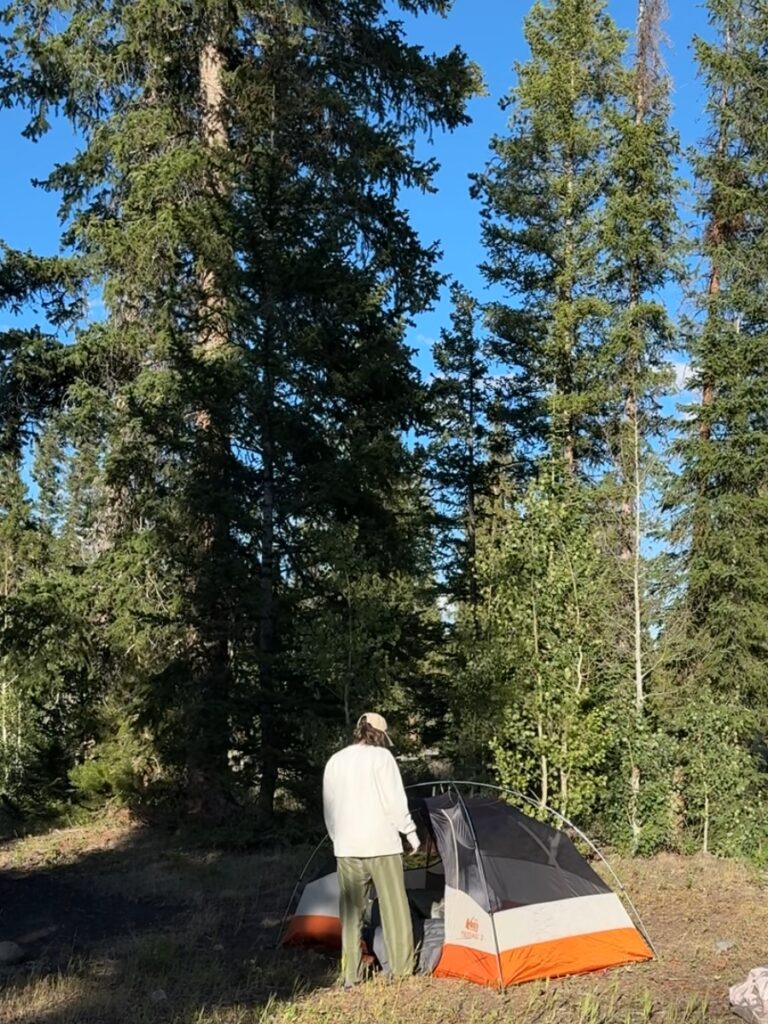 Setting up camp
Warm Springs Dispersed Camping
Set inside Shoshone National Forest, this peaceful site tucked under pines was our first real taste of mountain air. The dirt road was manageable for the Prius, and the silence was unmatched.
We skipped the nearby Badlands Scenic Byway that morning — something we regret — but made a note to come back for a sunrise drive someday. If time allows, always take the scenic route.
3. Wyoming → Lower Teton View / Toppings Lake, Wyoming
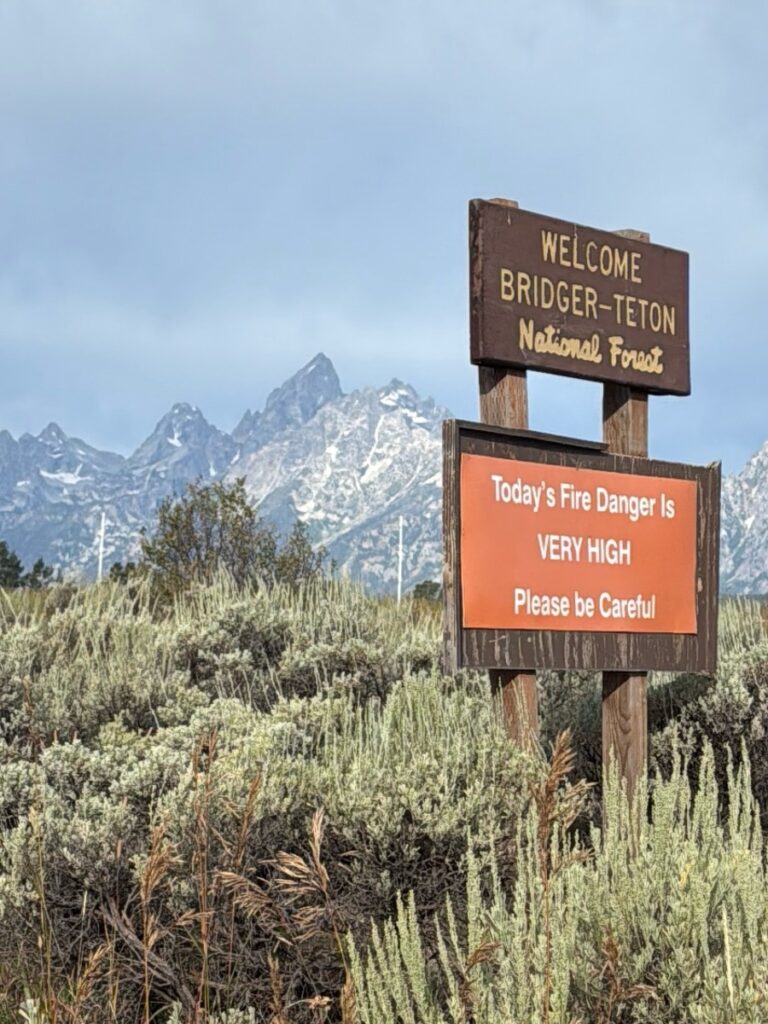 Arriving @ Teton
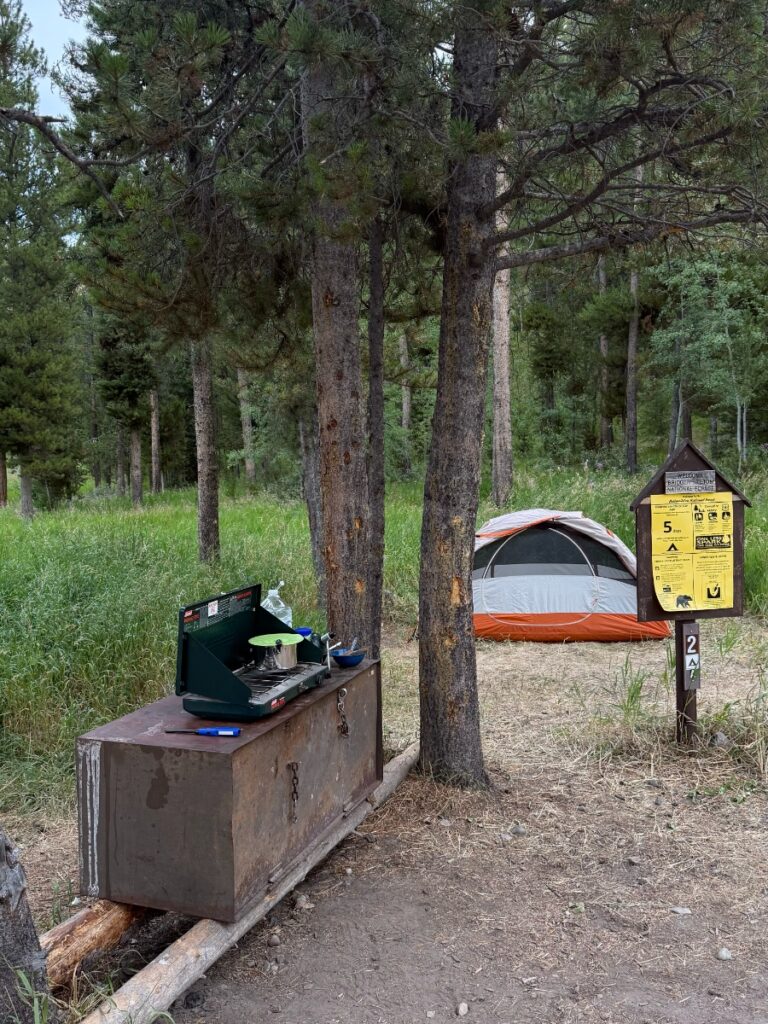 All Setup
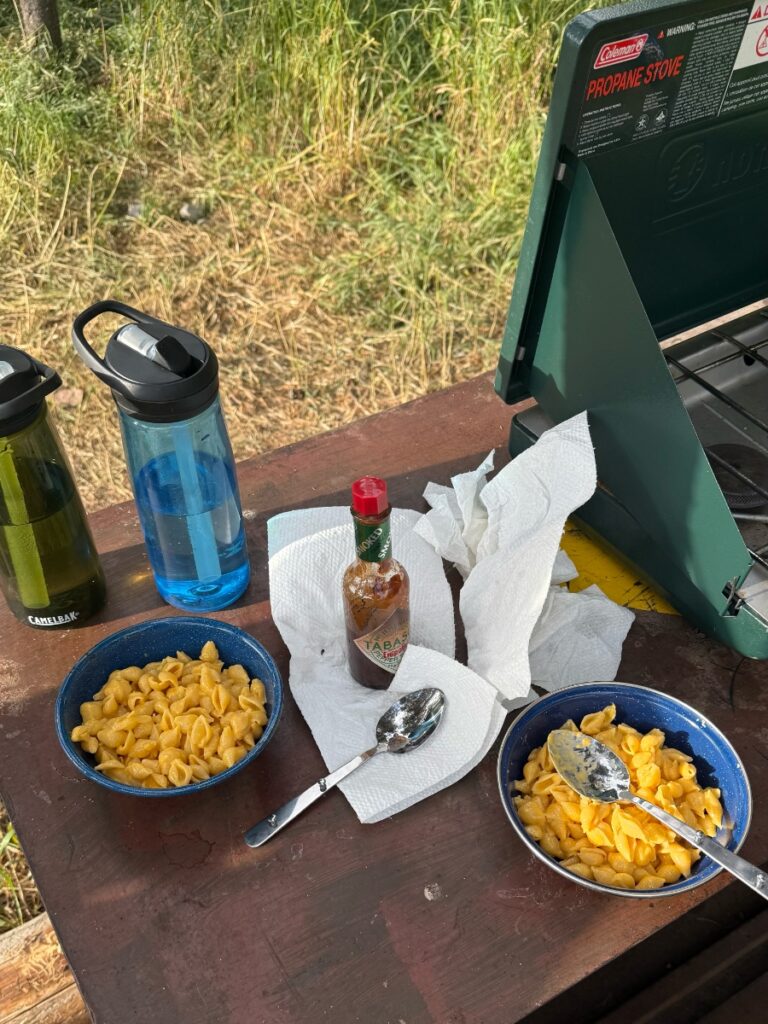 Dinner
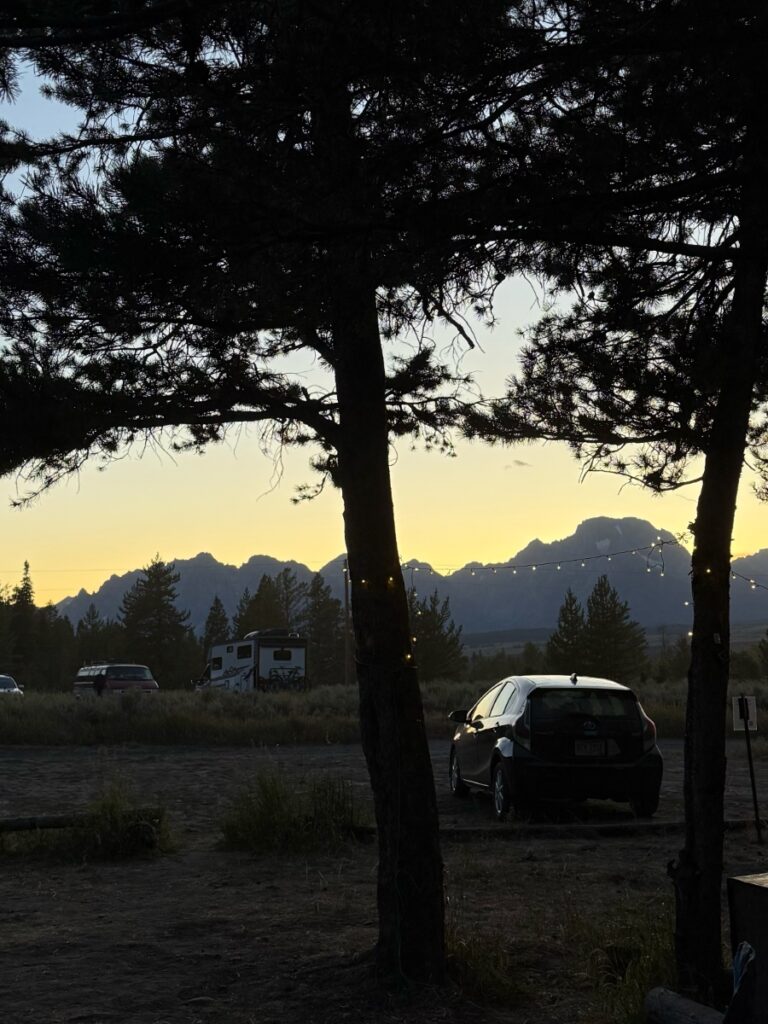 Sunset
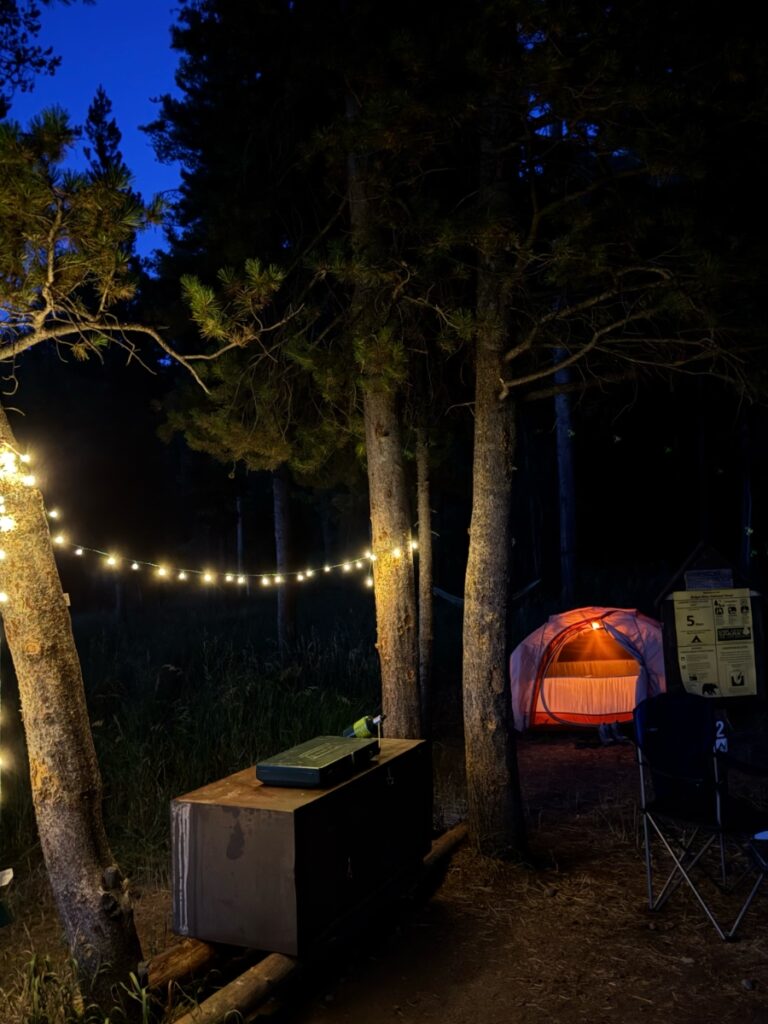 Night
Night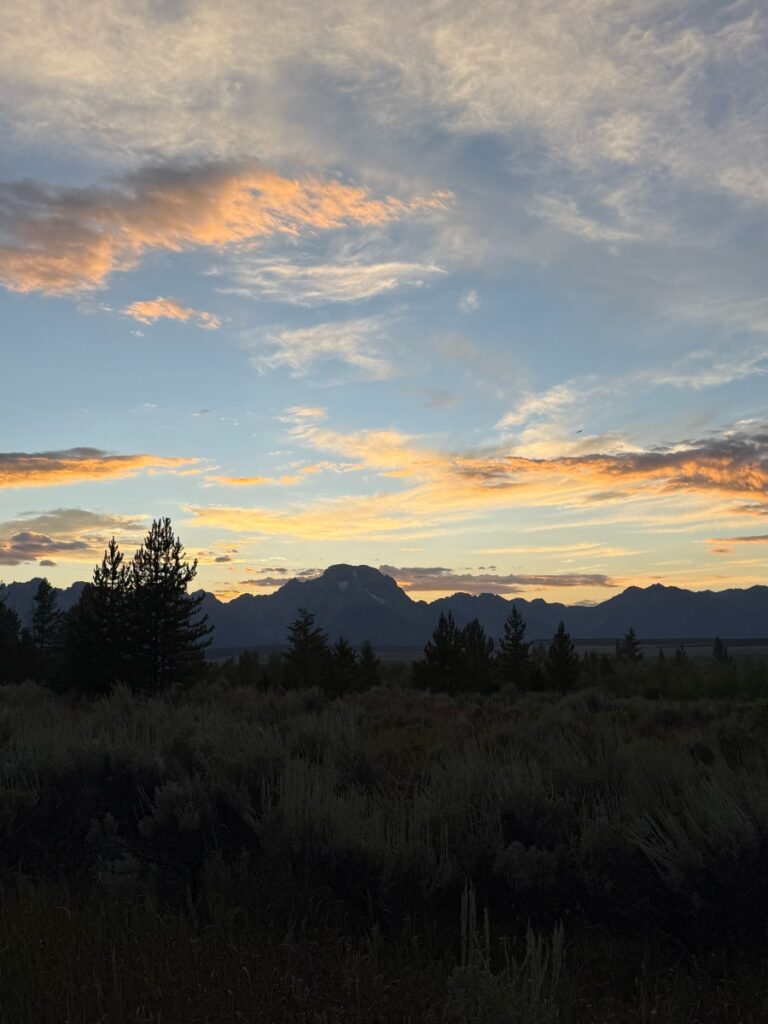 Sunrise
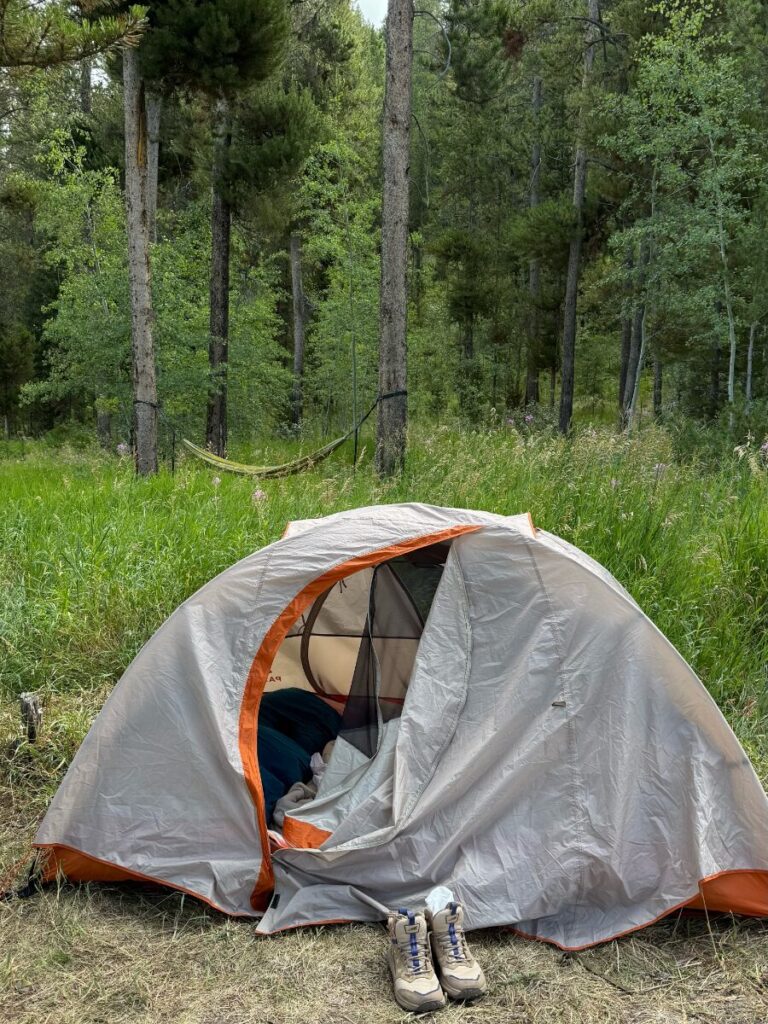 Hello Tent 🙂
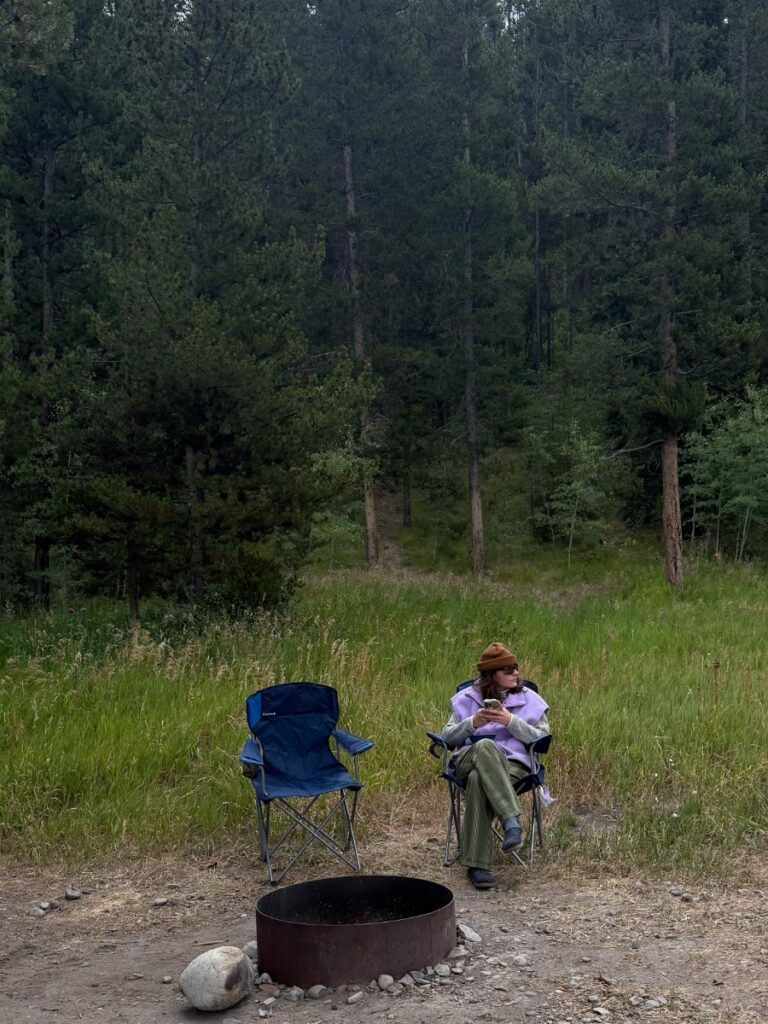 Hello Meg 🙂
Lower Teton View – Toppings Lake Dispersed Camping
This was the heart of the trip. Located within Bridger-Teton National Forest, this site had sweeping views of the Tetons and was less than 20 minutes from the park entrance.
Arrive early as the lower level can fill fast towards afternoon/evening. The further up you go, the bumpier the road, but the views at the top make it worth it.
Zero dollars for that view? Unreal. Free camping at its absolute best.
To read our full guide to grand teton national park, click here.
4. Grand Teton → Taylor Fork Dispersed Campsites, Montana
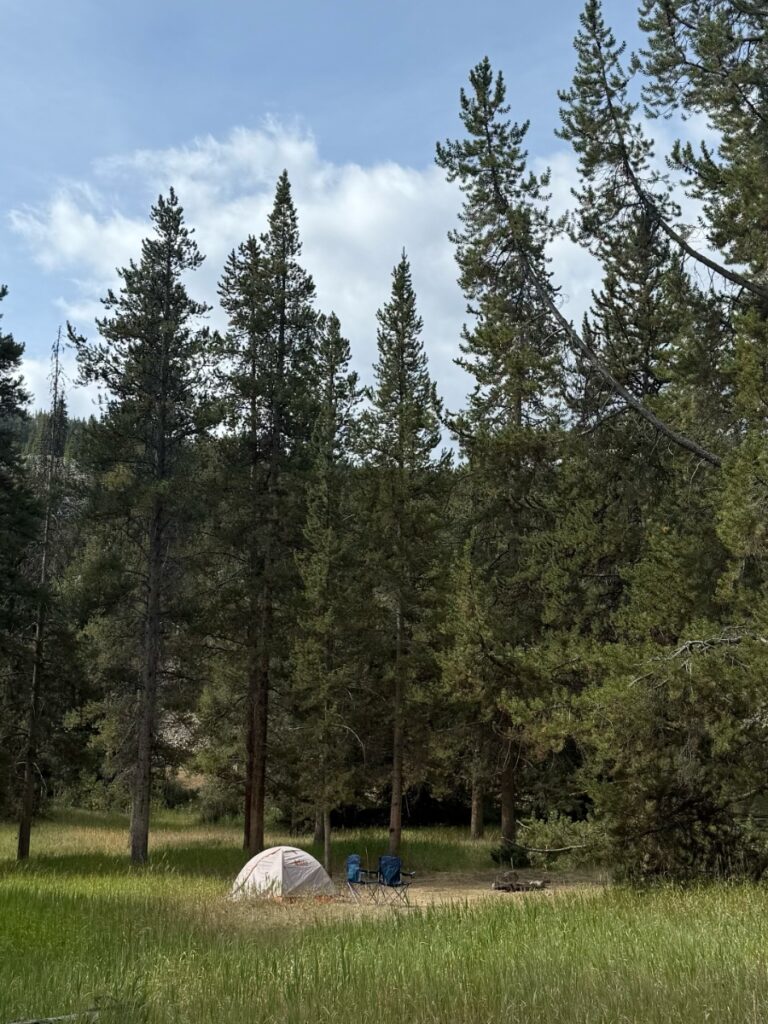 So Peaceful in MT
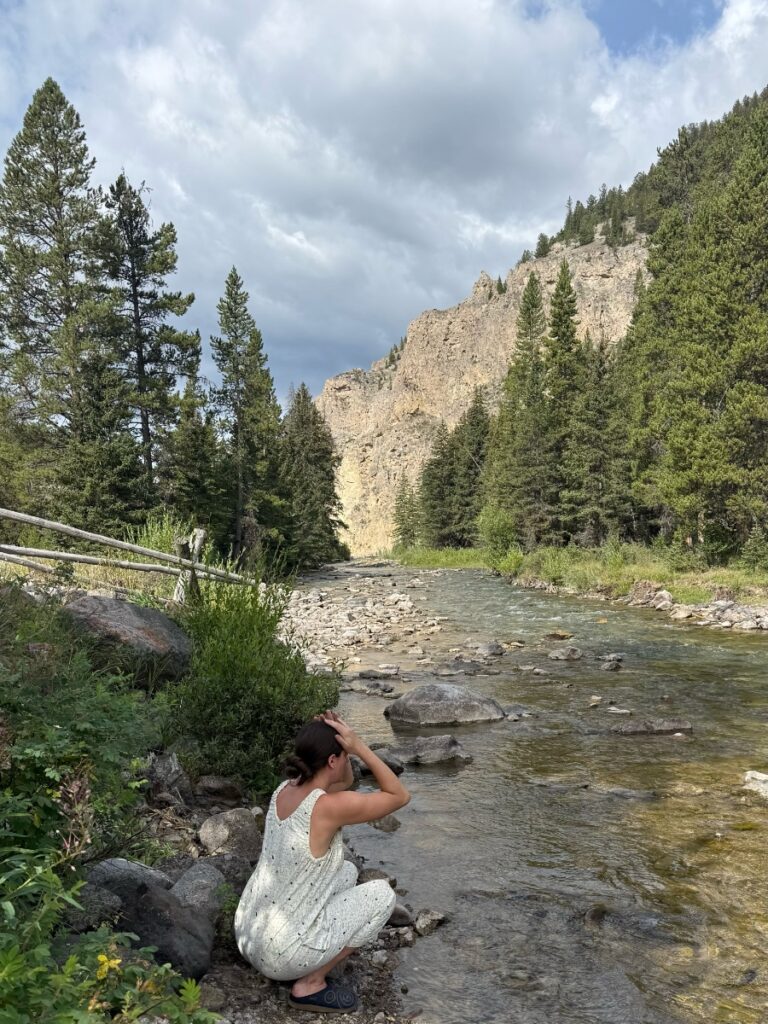 Doing Our Hair
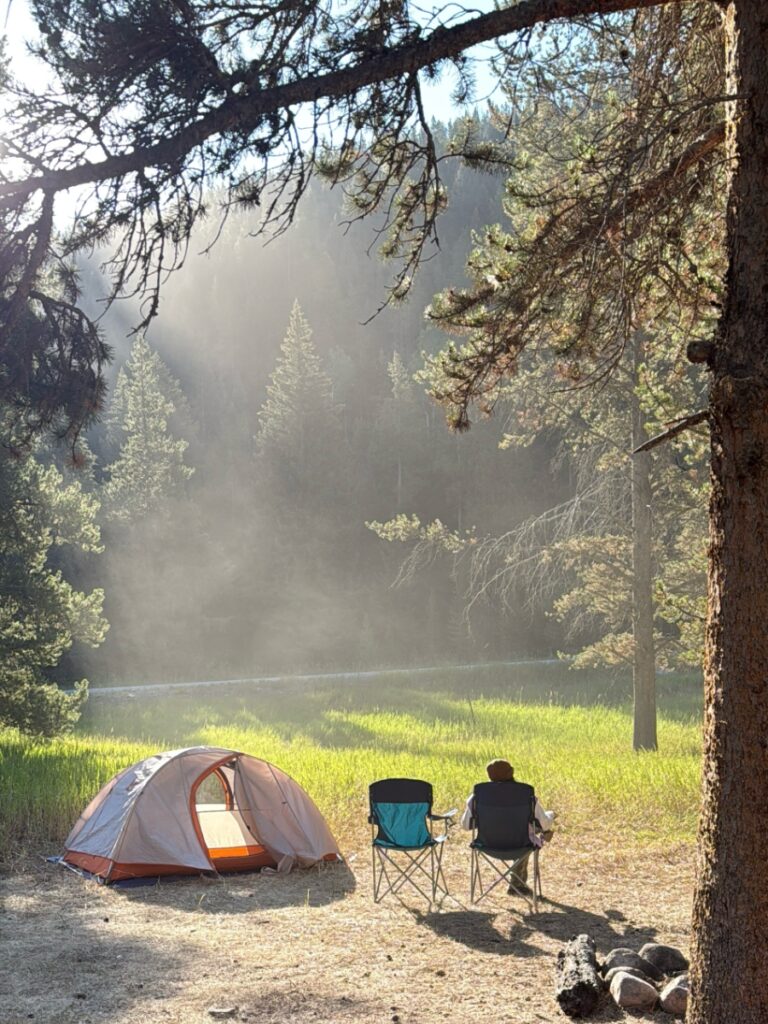 Morning Time
Taylor Fork Designated Campsites
After two nights near the Tetons, we headed north.
Off Highway 191 near Big Sky, Montana we found Taylor Fork Dispersed Camping. Another dirt road lined with sites, we chose the first one, close to the river and set in a grassy meadow.
The only drawback with choosing the first site is its the site with the most traffic. We were only here 2 nights and we loved the ambiance of this spot, so we stuck with it.
The road going past the camp leads to a working ranch and more campsites, head up for more privacy!
5. Taylor Fork → Muchwater Dispersed Campground, Montana
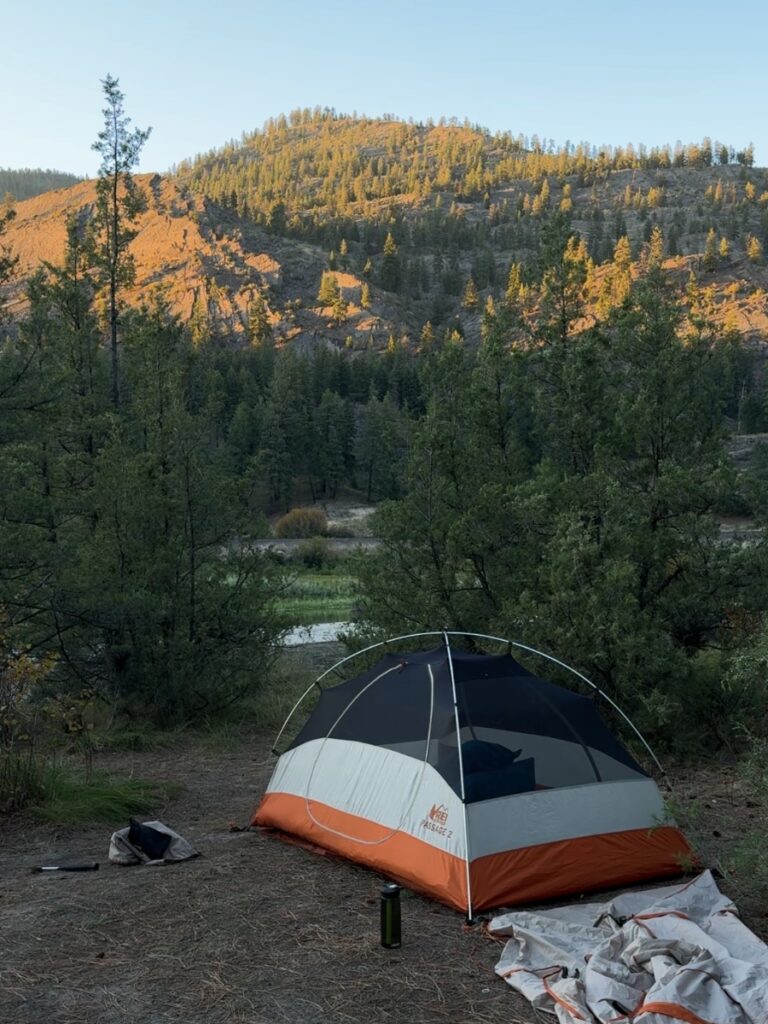 Setup by the River
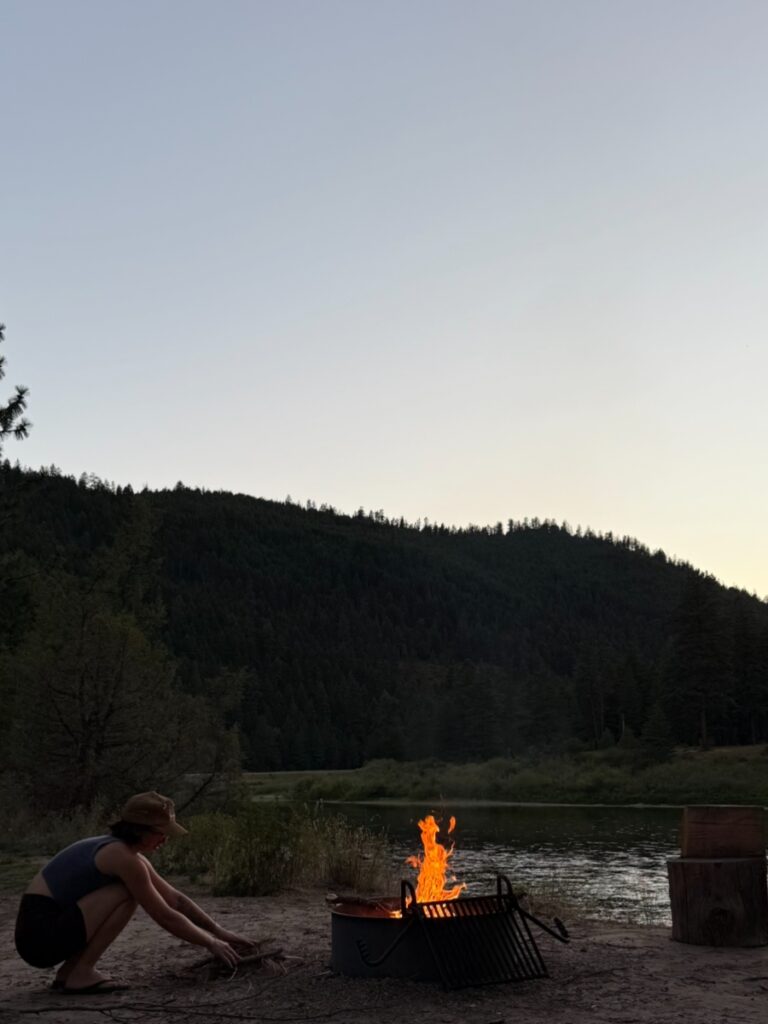 Liv Making a Fire
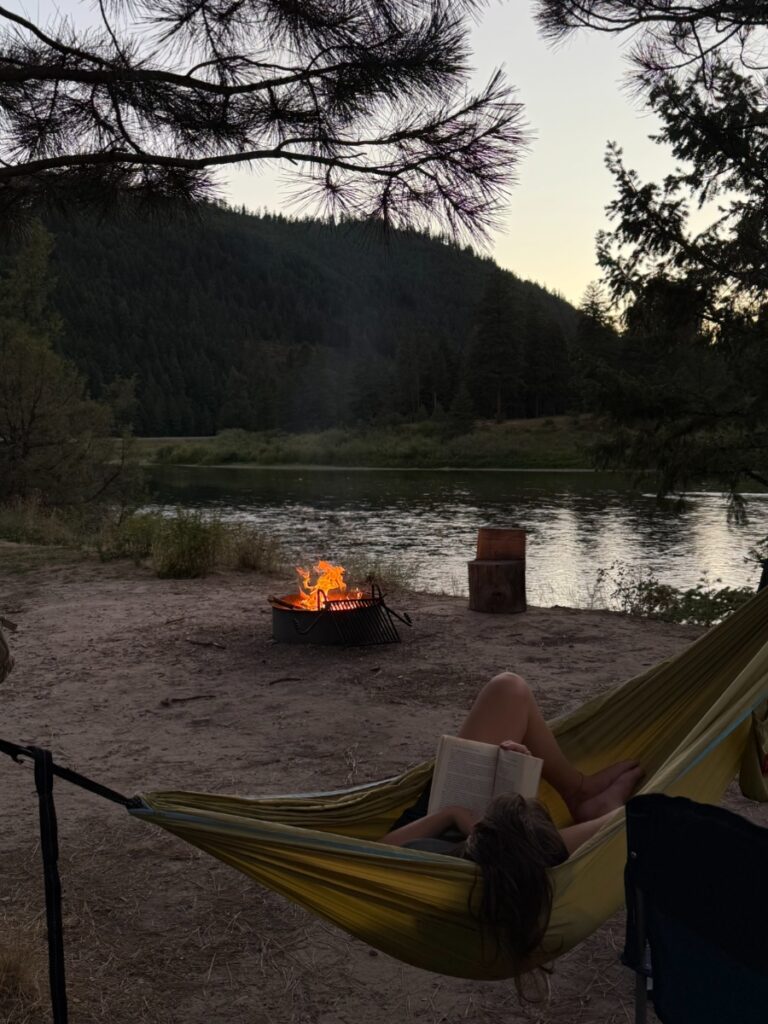 Meg Reading Edward Abbey
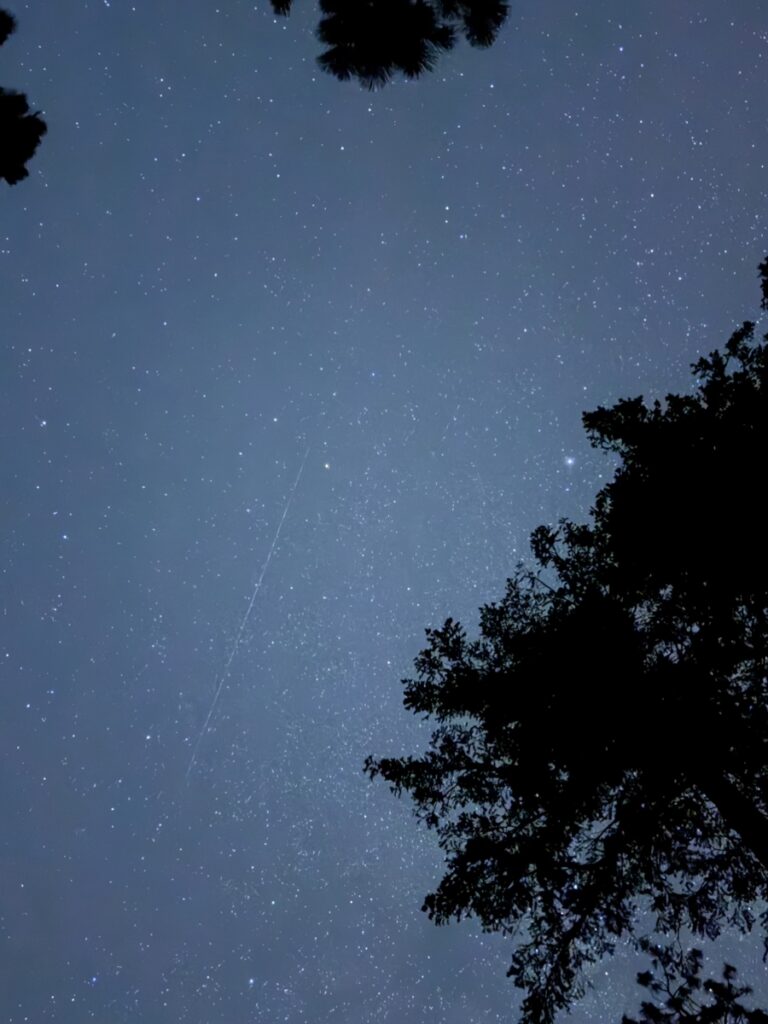 Caught A Shooting Star
Munchwater Dispersed Campground
Close to Coeur d’Alene, we stayed at Muchwater Dispersed Campground. The location was cute, tucked in the woods and near water, but the proximity to the highway and trains made it noisy. It was perfect for a 1 night stay though. And the stars were the brightest we’d ever seen them yet.
6. Montana → Liberty Recreation Site, Washington
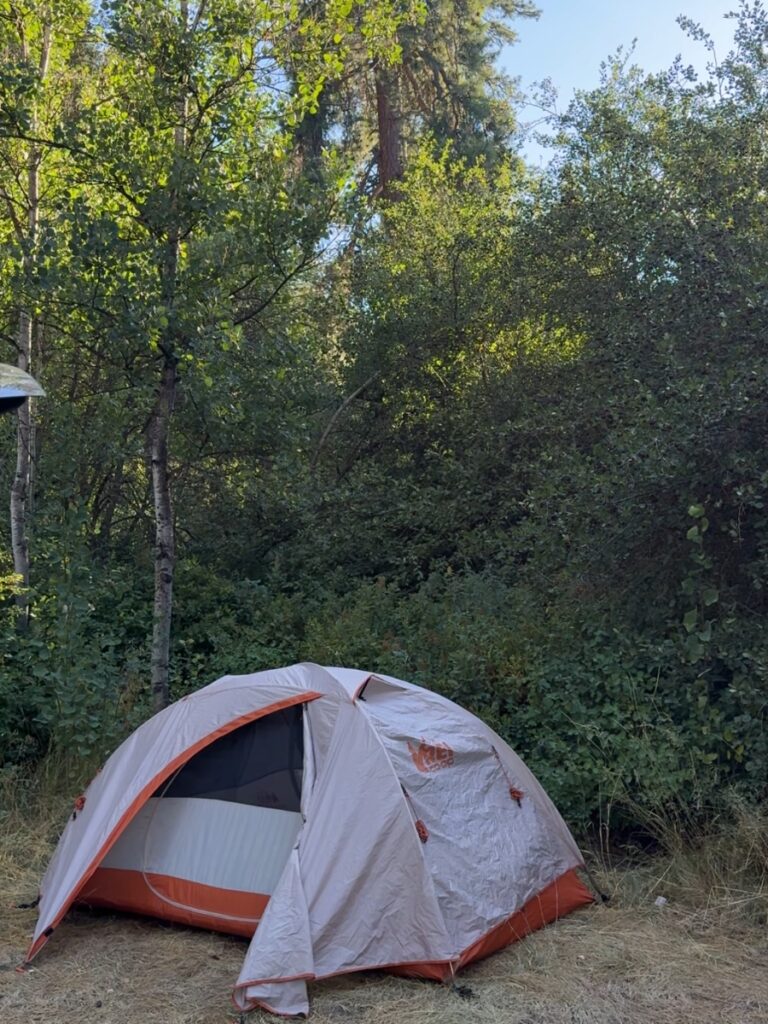 Morning @ Camp
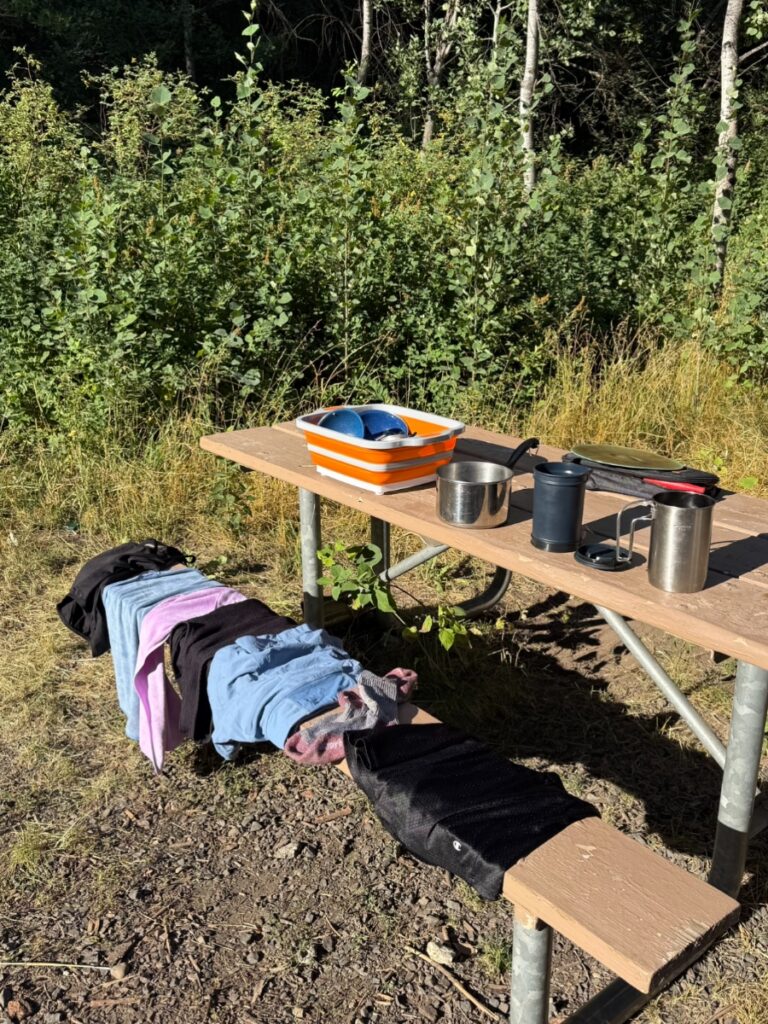 Drying our Laundry
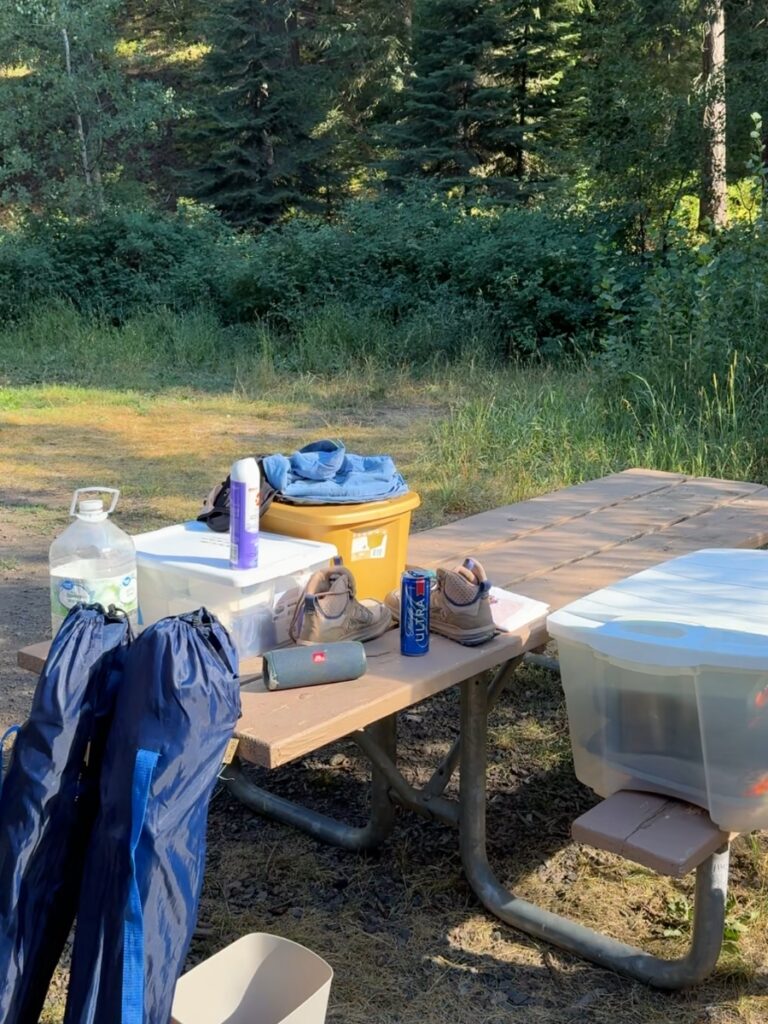 Love when a campsite has a table
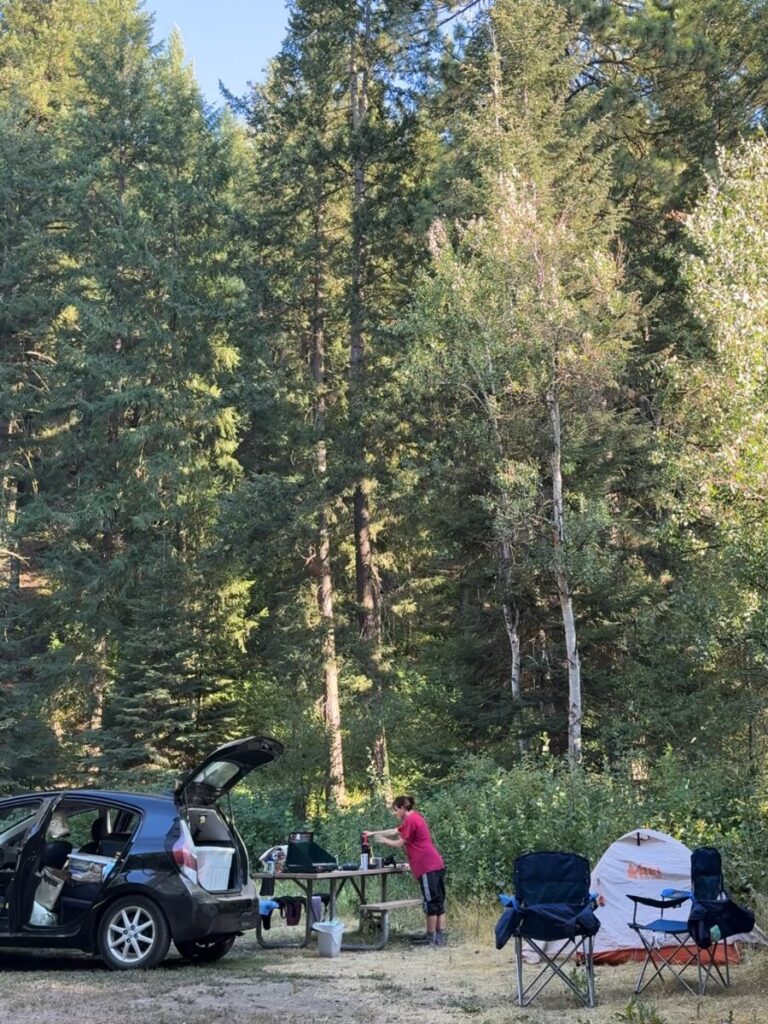 Meg unpacking the car
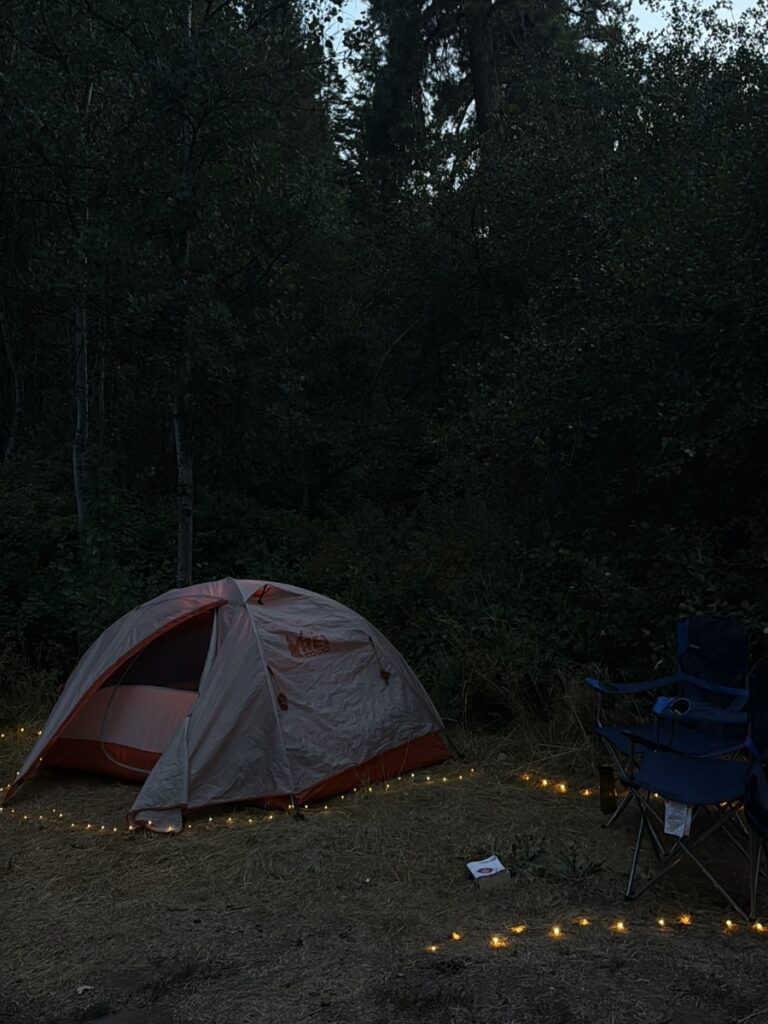 Calling all fairies <3
For our last stop, we needed a place to reset before Seattle. We camped at Liberty Recreation Site near Cle Elum, WA. It was free, secluded, and gave us space to clean up before arriving in the city.
We even took advantage of a nearby recreation center for showers, sauna, and pool.
Worth noting: most of the other campers here were ATV or RV types, but the spot itself was quiet and perfect for our final few nights on the road.
Part 2 | Highway 101, Yosemite, The Desert, & The Rockies

Settling in, letting go of the timeline, and following what felt right
After a week on the road, we reached Seattle (our final destination for the first leg of the trip) and spent three weeks house sitting in Capitol Hill. Those days gave us time to reset, catch up on work, and settle into a city rhythm for a moment.
When it was time to move again, we both felt ready to keep going. This time, we didn’t want to rush or measure days by mileage. We had a route in mind and a list of places we hoped to see, but no deadlines.
The plan was simple: follow the coast, explore the parks, and let the road guide us. We knew the general direction, but we wanted to give ourselves permission to move intuitively..
What unfolded next was the most effortless part of the entire trip: the stretch from the Pacific Northwest down to Yosemite, through Utah and Colorado, and eventually back home to Ohio. It was less about getting anywhere and more about being in it.
7. Seattle → Sadie Creek Campground, Washington
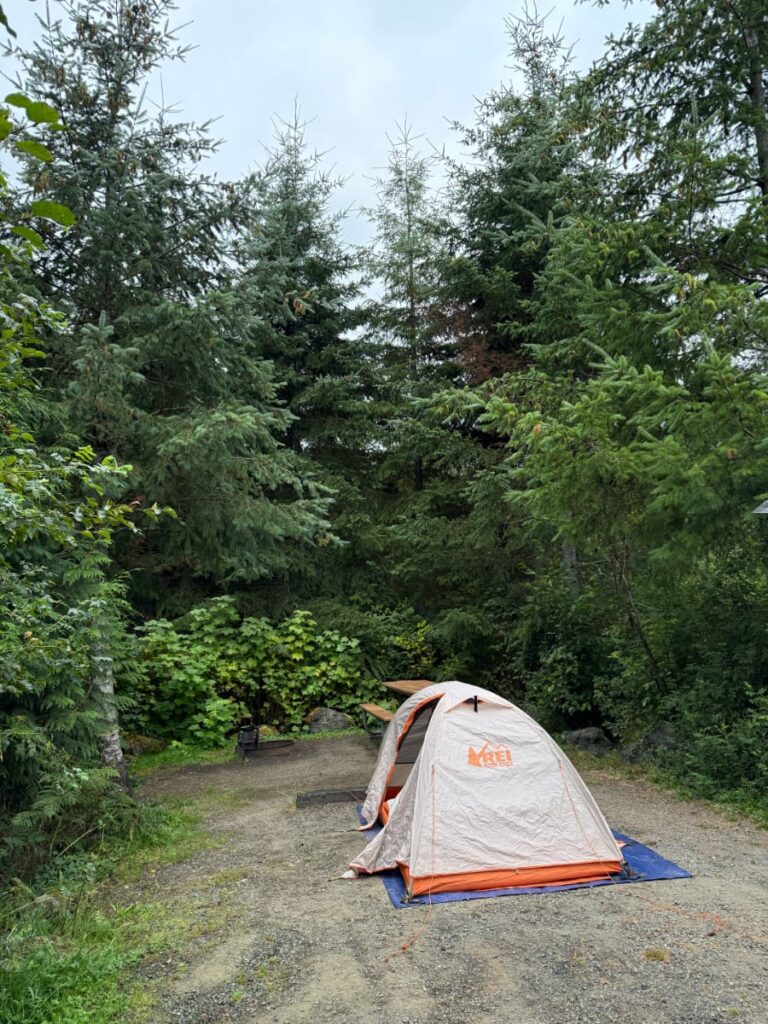 Quick setup for an overnight stay
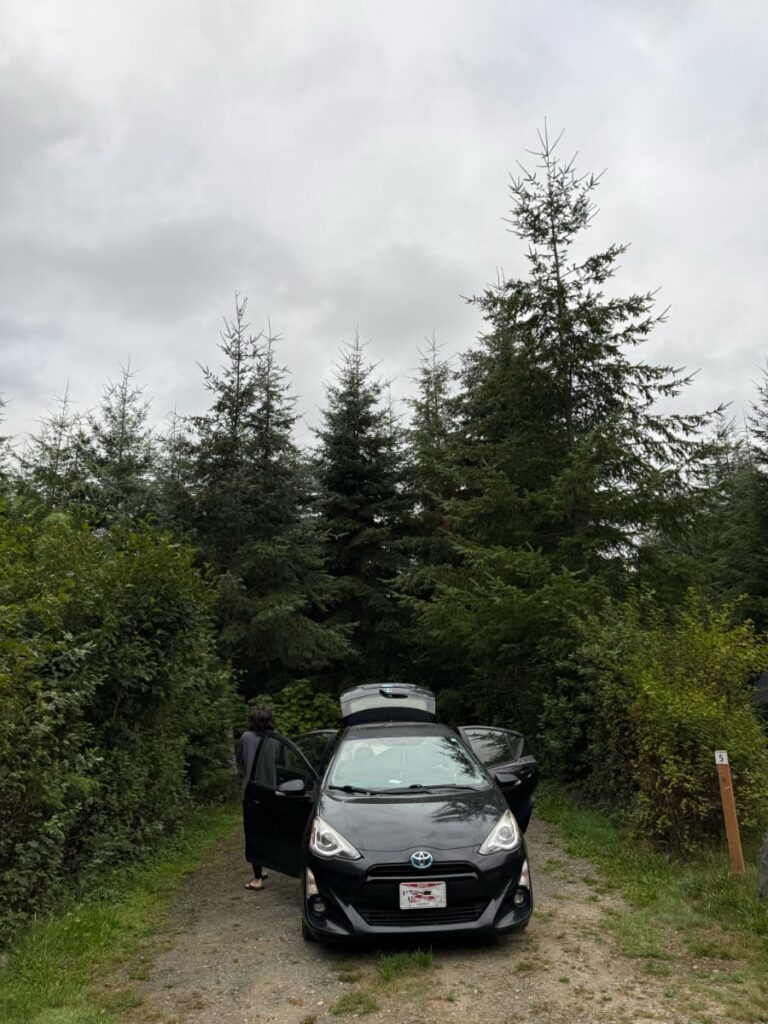 Easy spacious sites
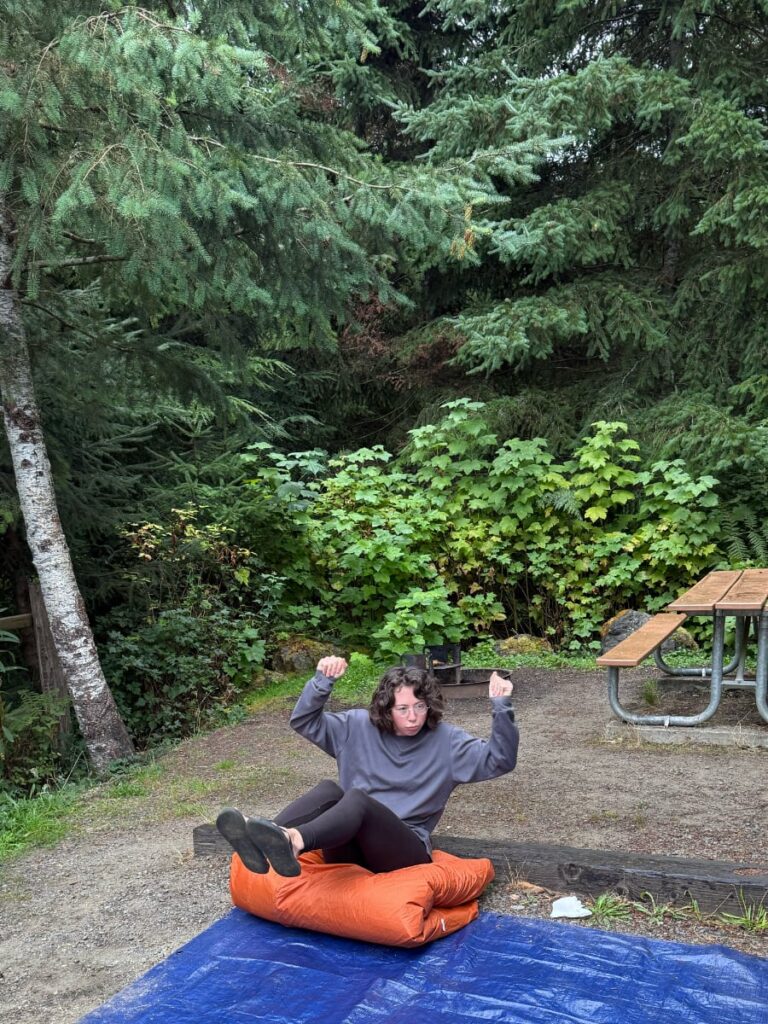 Folding up the tent to shove in the car
We left Seattle in the late afternoon and began our next stretch of the trip toward the Olympic Peninsula. After a full campground at Lyre River, we landed at Sadie Creek Campground, a small gravel circle with about eight sites tucked among the trees.
It was quiet, easy to access, and ideal for a quick overnight stop. These kinds of simple, low-effort camps are perfect when you’re arriving after dark or covering long distances.
Camp notes:
- Convenient for traveling toward the coast
- Free and easy pull-in sites
- Quiet and safe for short stays
8. Sadie Creek → Upper Clearwater Campground, Washington (Near Forks)
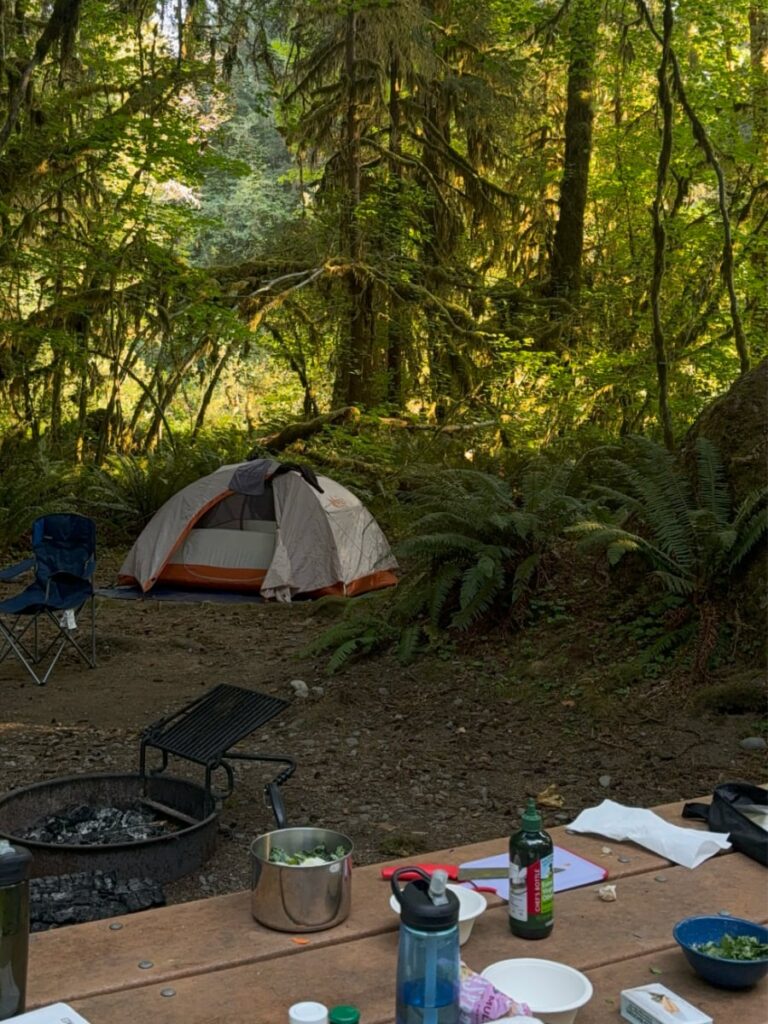 Golden hour at camp
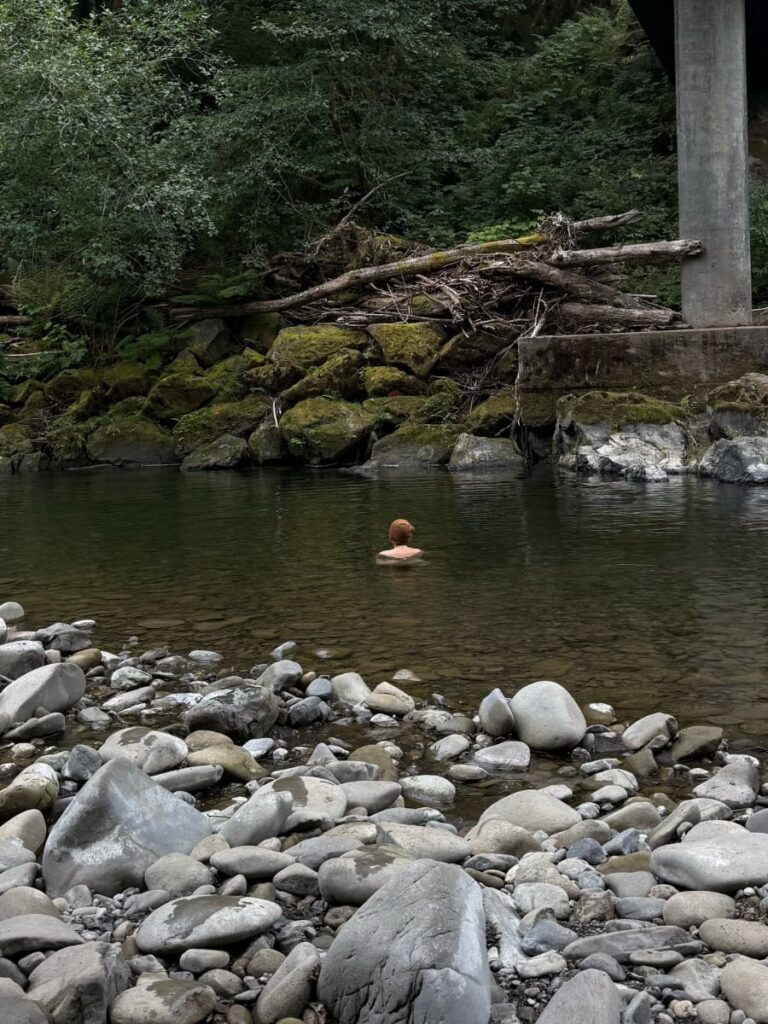 Taking a dip in the frigid river
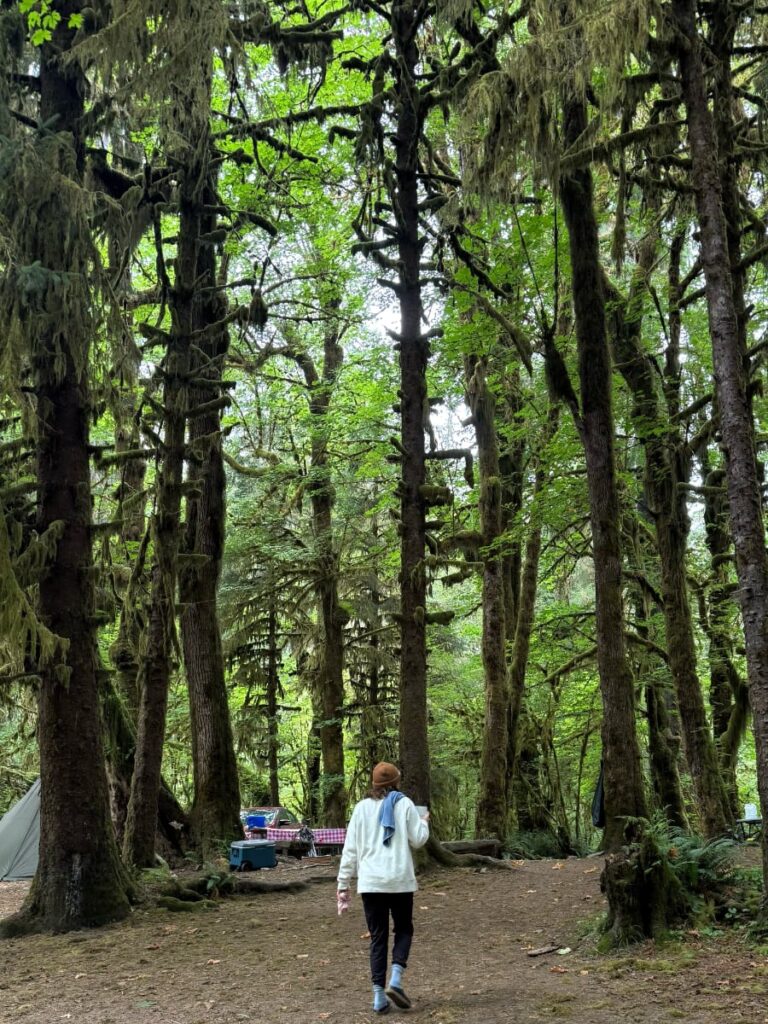 Walking back to camp from the river
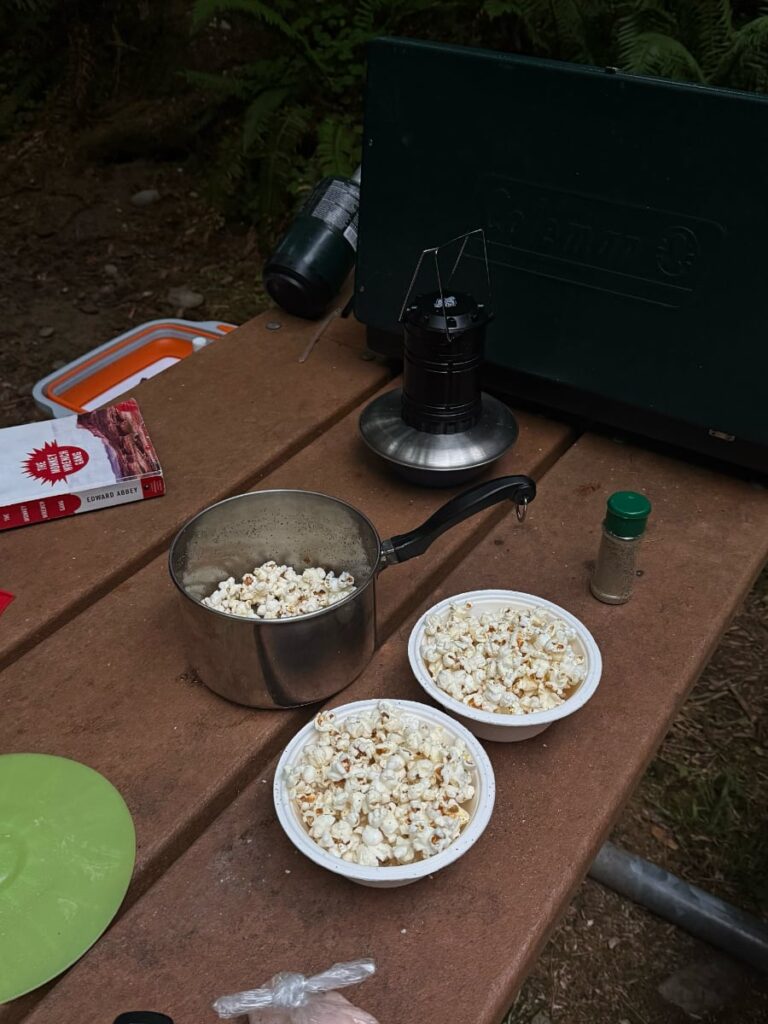 Making Popcorn at camp – best snack
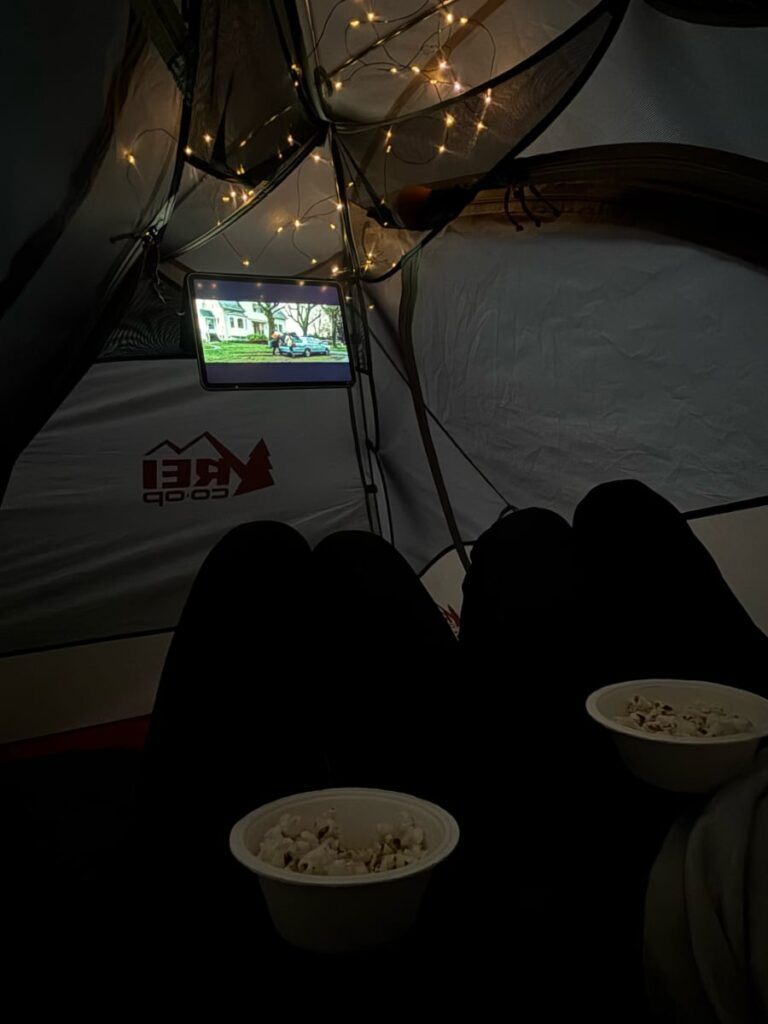 Watching Twilight in Forks, WA
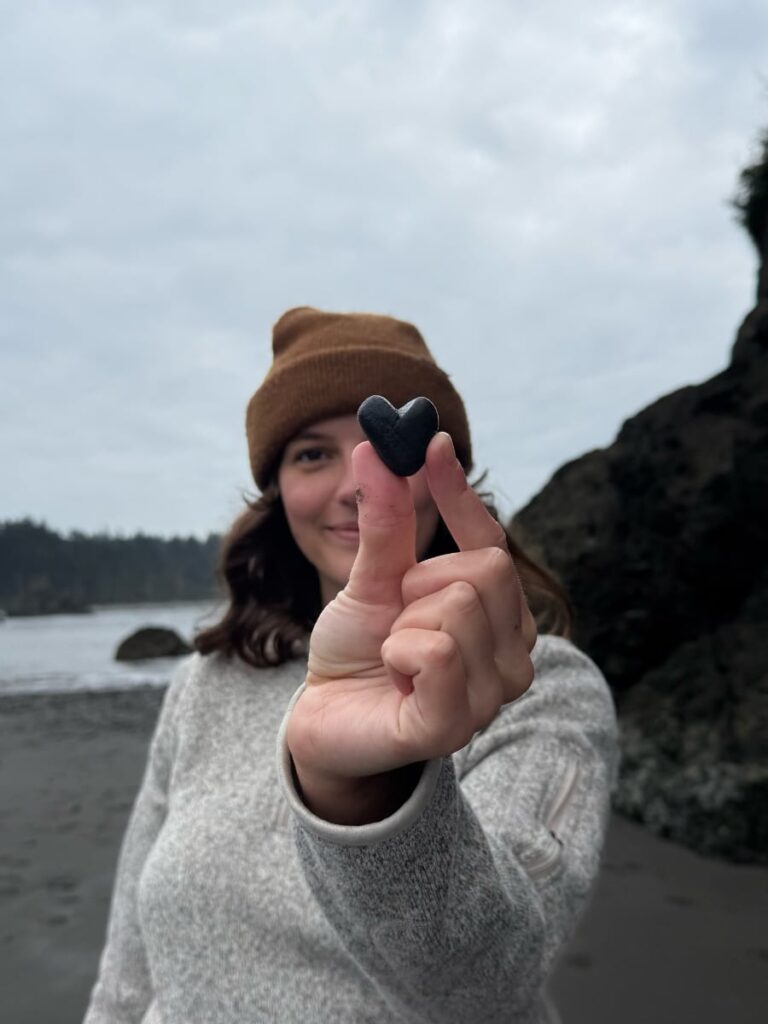 Visiting Rialto Beach
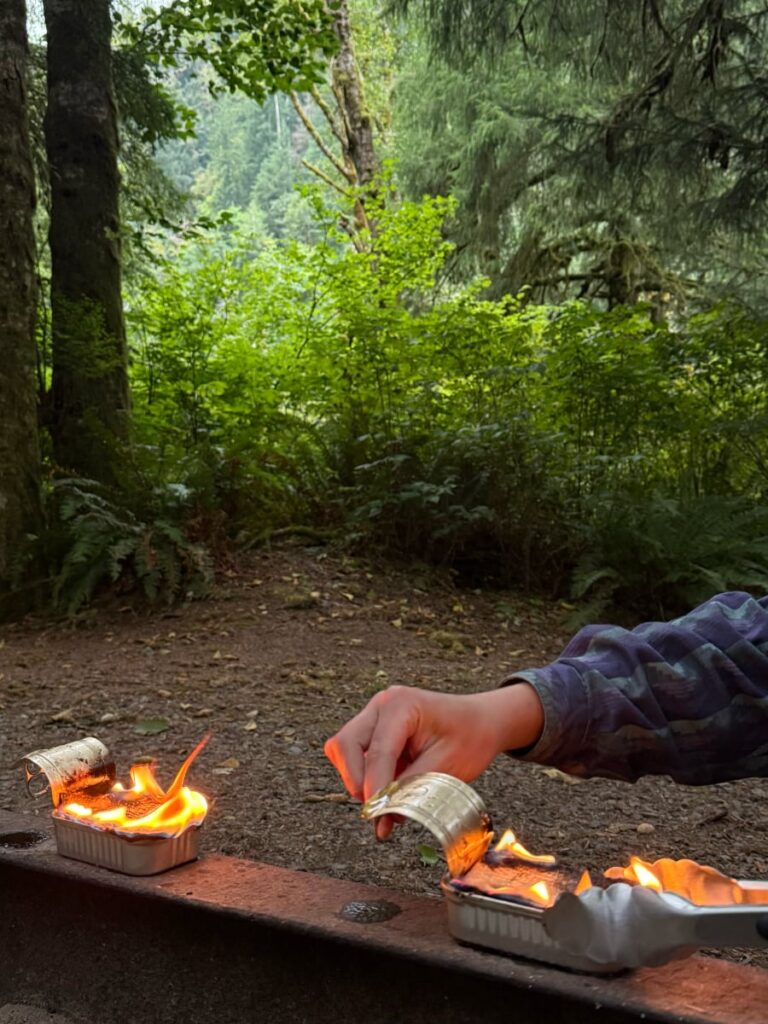 Making hot tinned fish for dinner
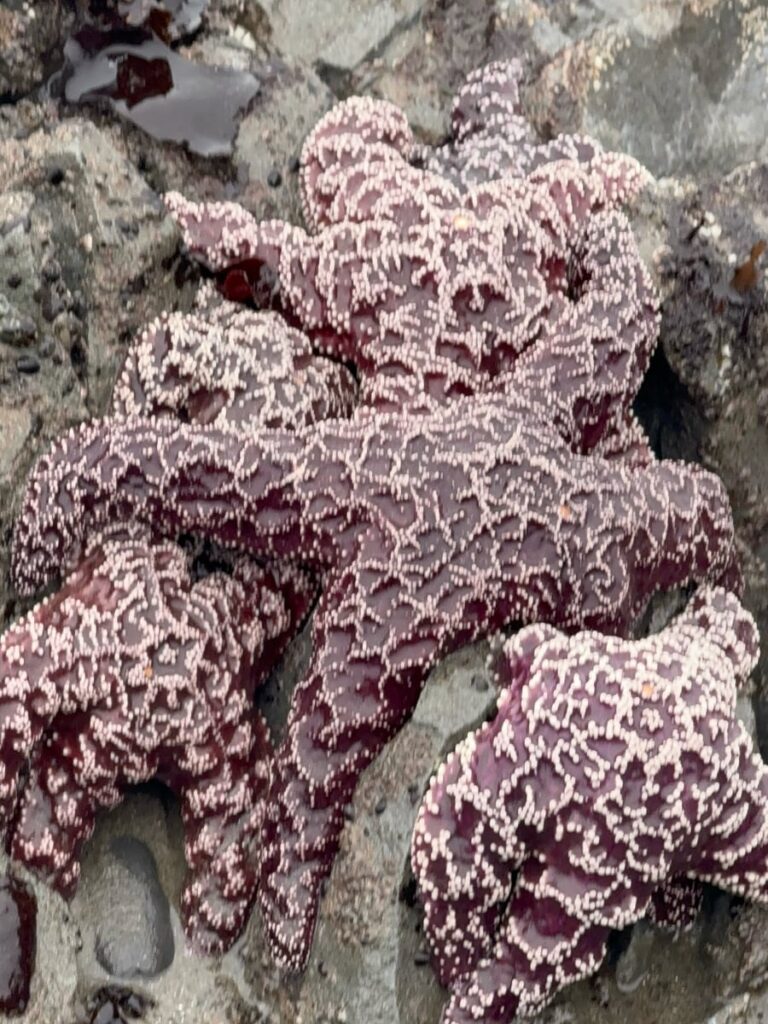 Starfish @ Riolto
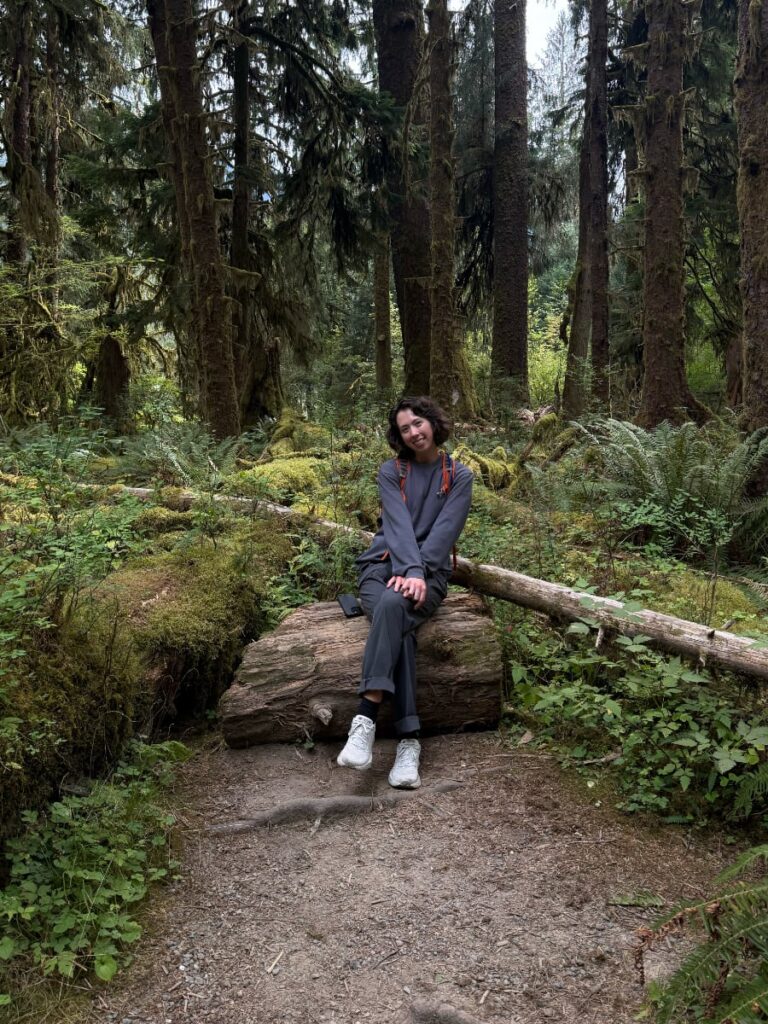 In the Hoh Rainforest
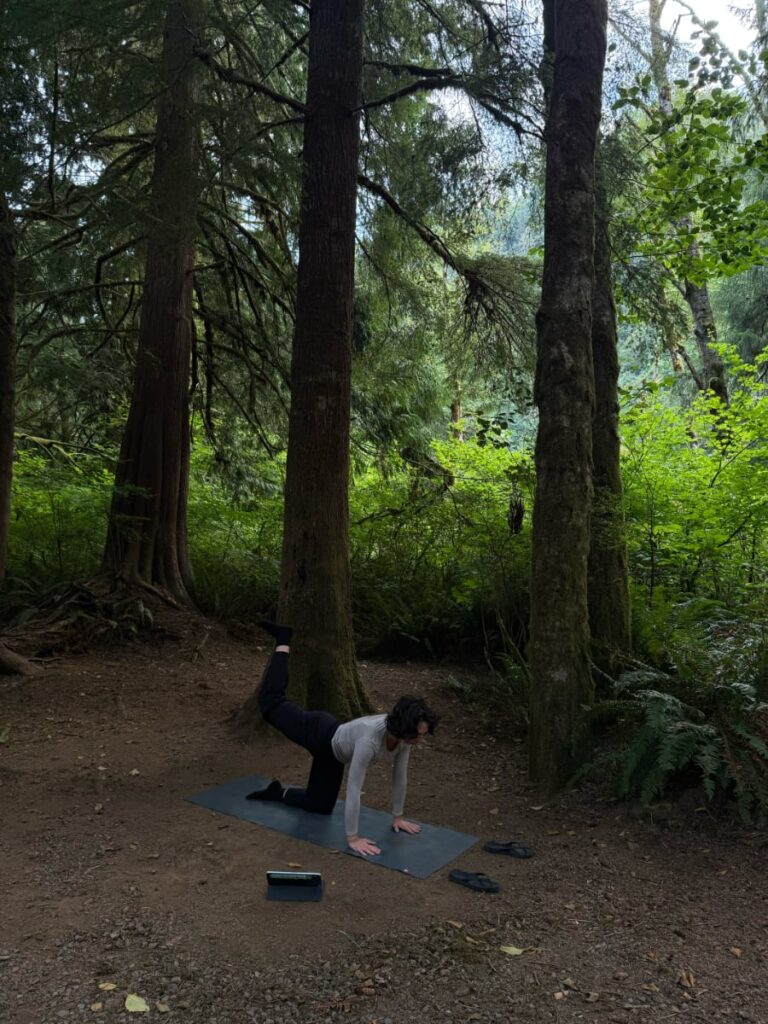 Excercising at camp
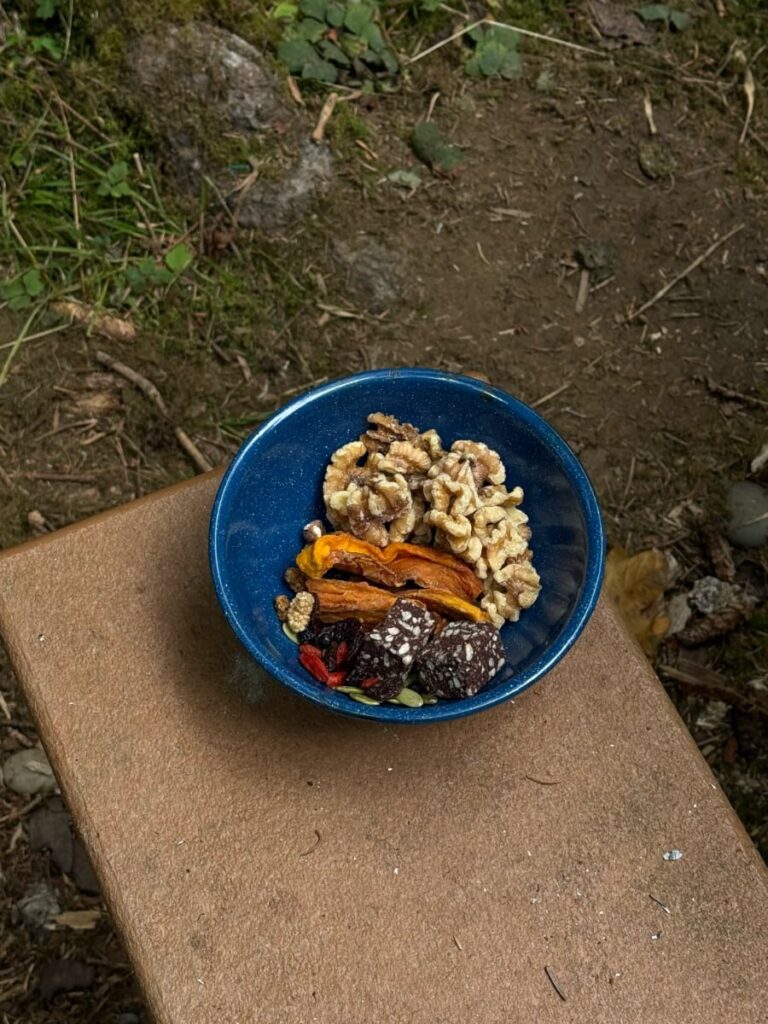 Gorpcore snack bowl
Upper Clearwater became one of our favorite campsites of the entire trip. Nestled under tall, moss covered evergreens beside the Clearwater River, it had the kind of peaceful, grounded energy that makes you slow down without trying to.
We stayed several nights, using it as a base to explore the surrounding area — Hoh Rainforest, Rialto Beach, and the mossy trails of Olympic National Park. Everything we wanted to see was within an easy drive, but coming back to camp each evening was the highlight.
Why We Loved It
- The sound of the river made the entire site feel calm and secluded
- Towering trees provided shade and natural privacy
- Easy access to both rainforest and coastline
What We Did While Staying Here
- Hiked the Hall of Mosses and Spruce Nature Trail in Olympic National Park
- Visited Rialto Beach during low tide to explore tide pools at Hole-in-the-Wall Rock
- Spent slow mornings journaling, meditating, and swimming in the river
Good to Know
- A Washington Discovery Pass is required for vehicle access
- No cell service but safe and accessible by car
- Bring river-safe soap if you plan to rinse dishes or yourself near the water
- Level sites, clean forest floor, and cool temperatures year-round
Camp meals:
- Miso brown rice with shiitake mushrooms and sweet potato
- Corn chowder with rice and ghee popcorn by the fire
- Coffee and breakfast by the river each morning
This was the spot where camping stopped feeling like travel and started feeling like a rhythm.
9. Upper Clearwater → Panther Flat Campground, California (Six Rivers National Forest)
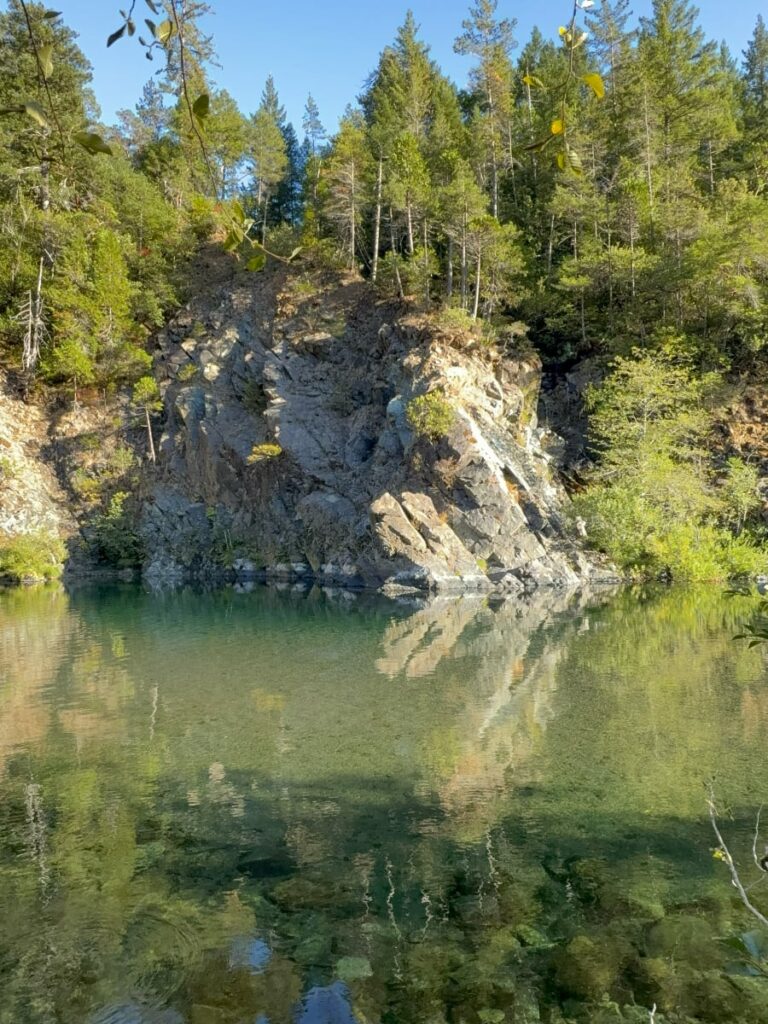 The most amazing swimming hole
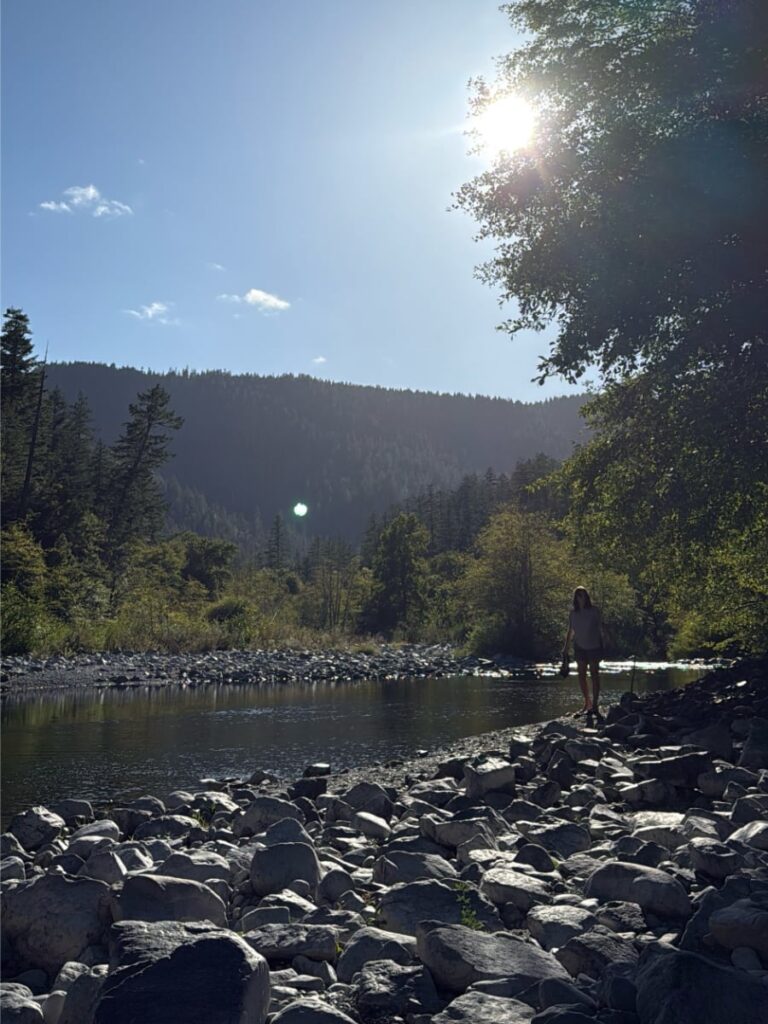 Views from the river
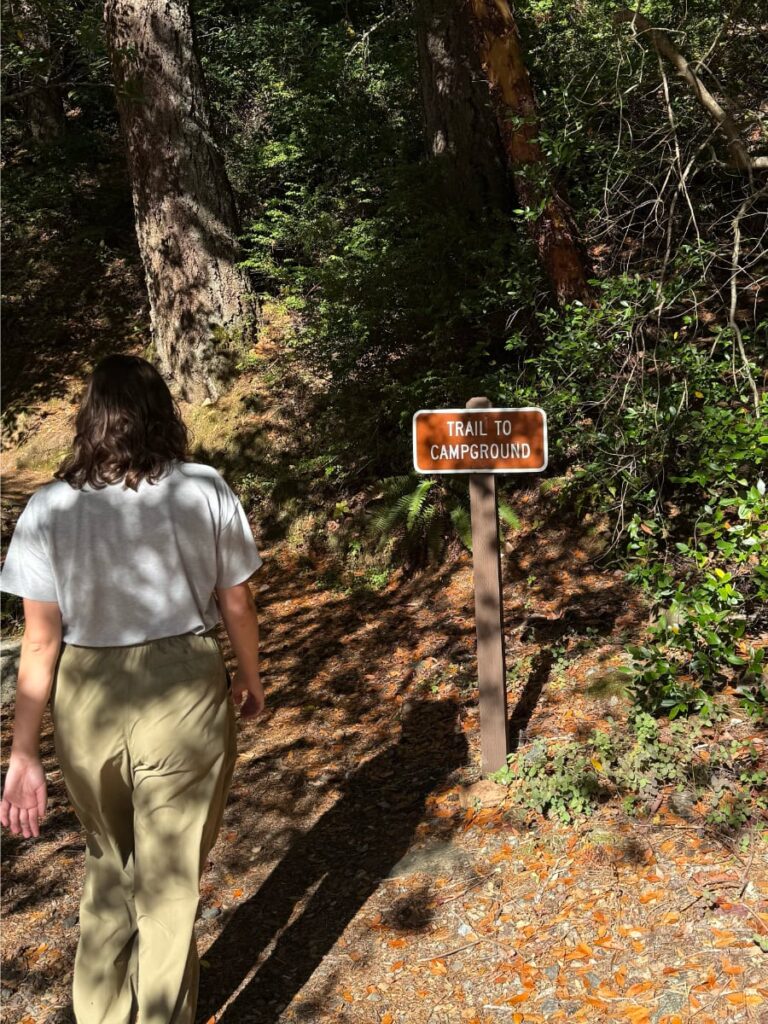 Walking back to camp from the river
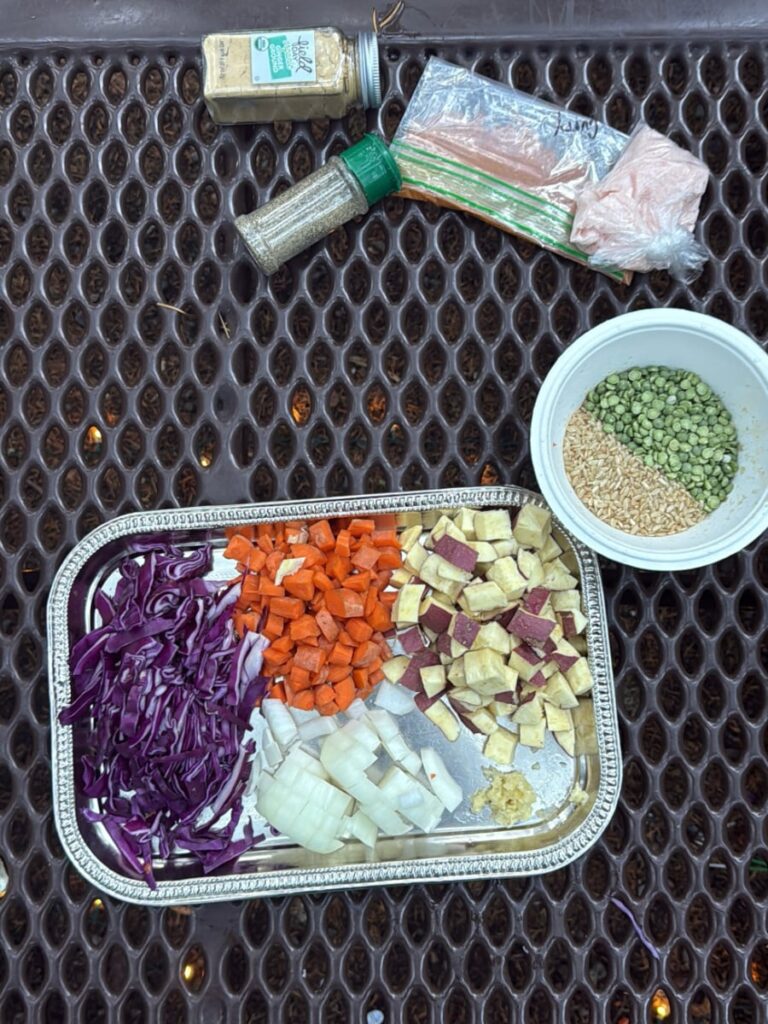 Prepping dinner
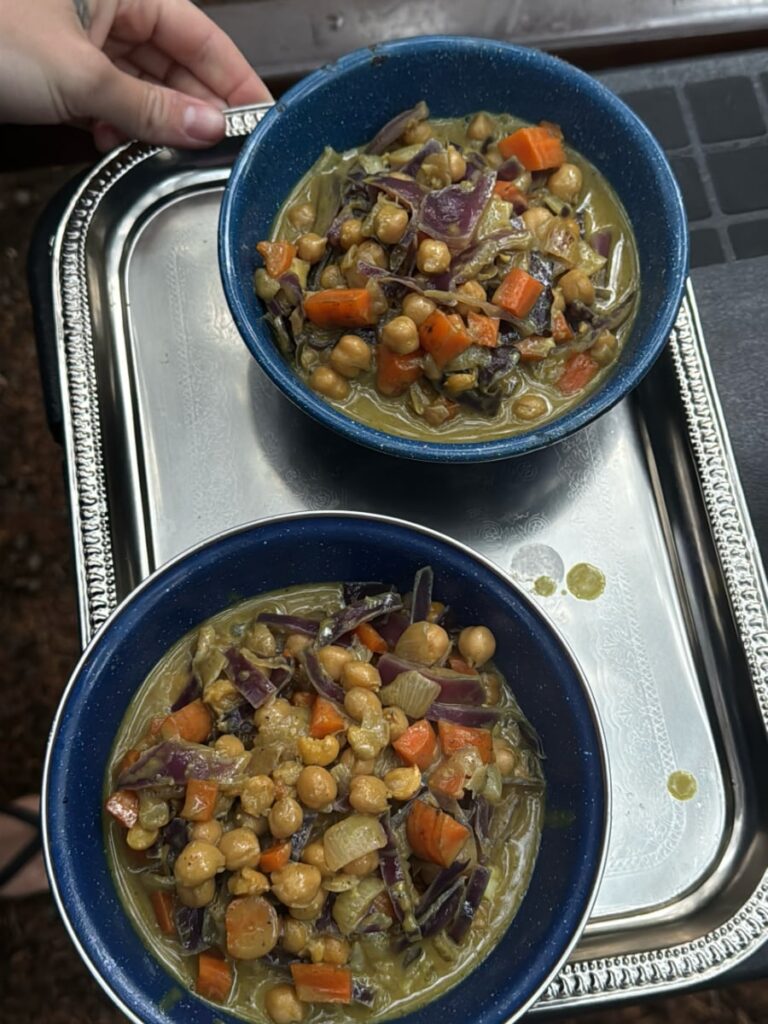 Curry
Curry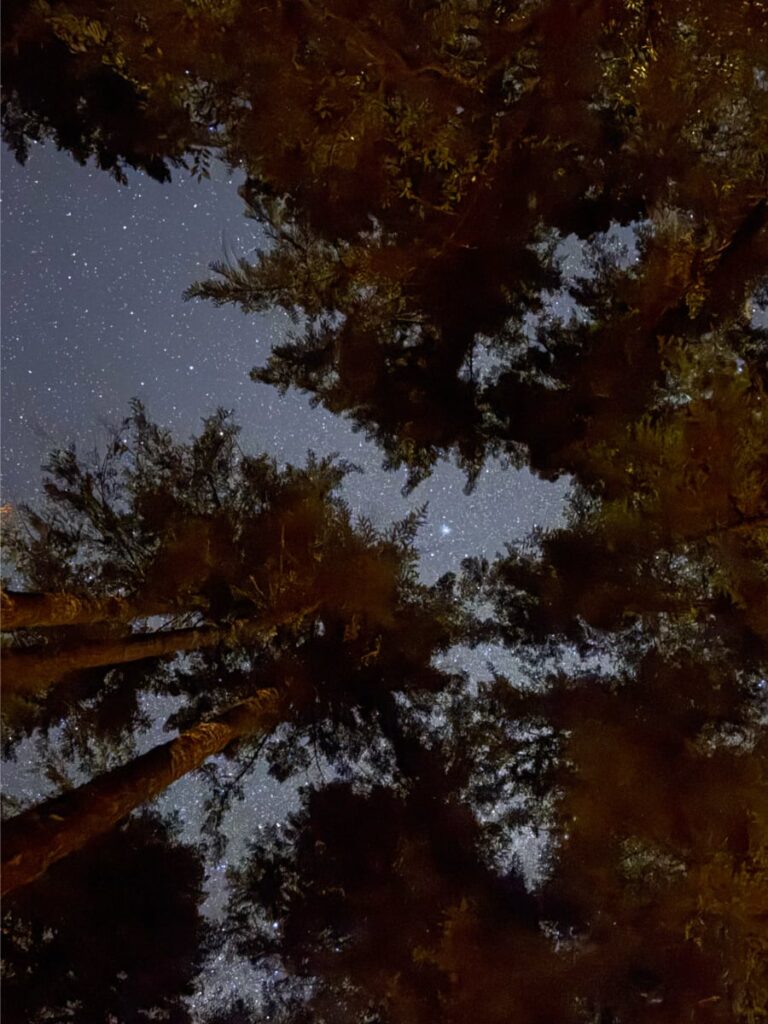 The stars >
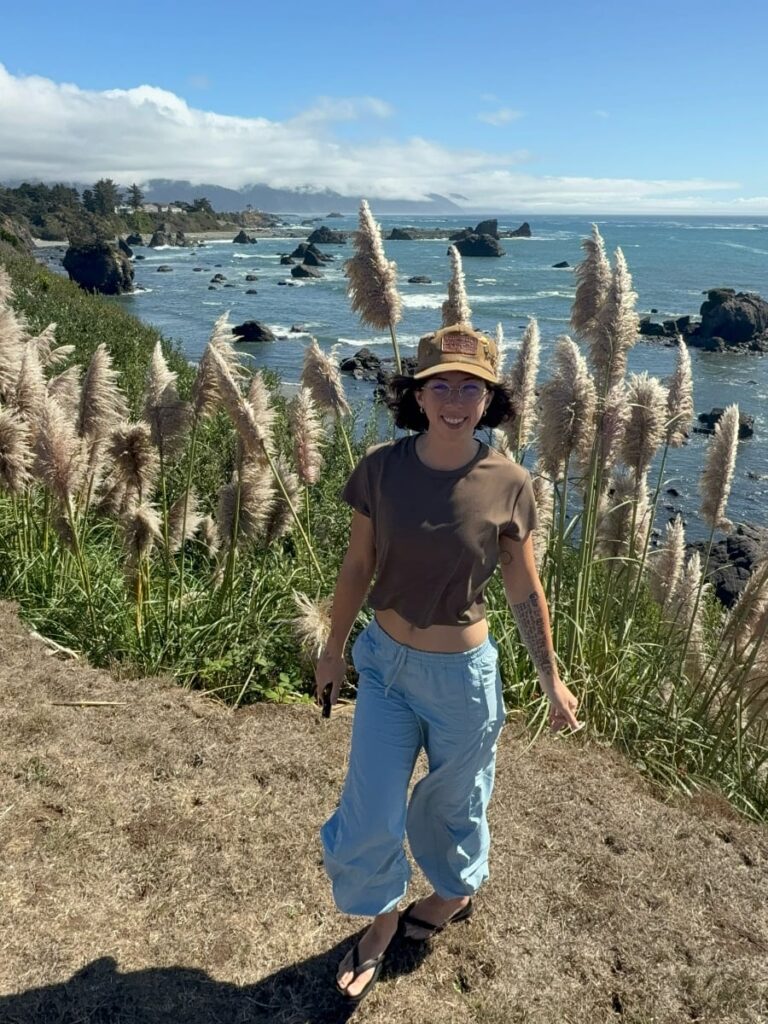 Traveling down the 101
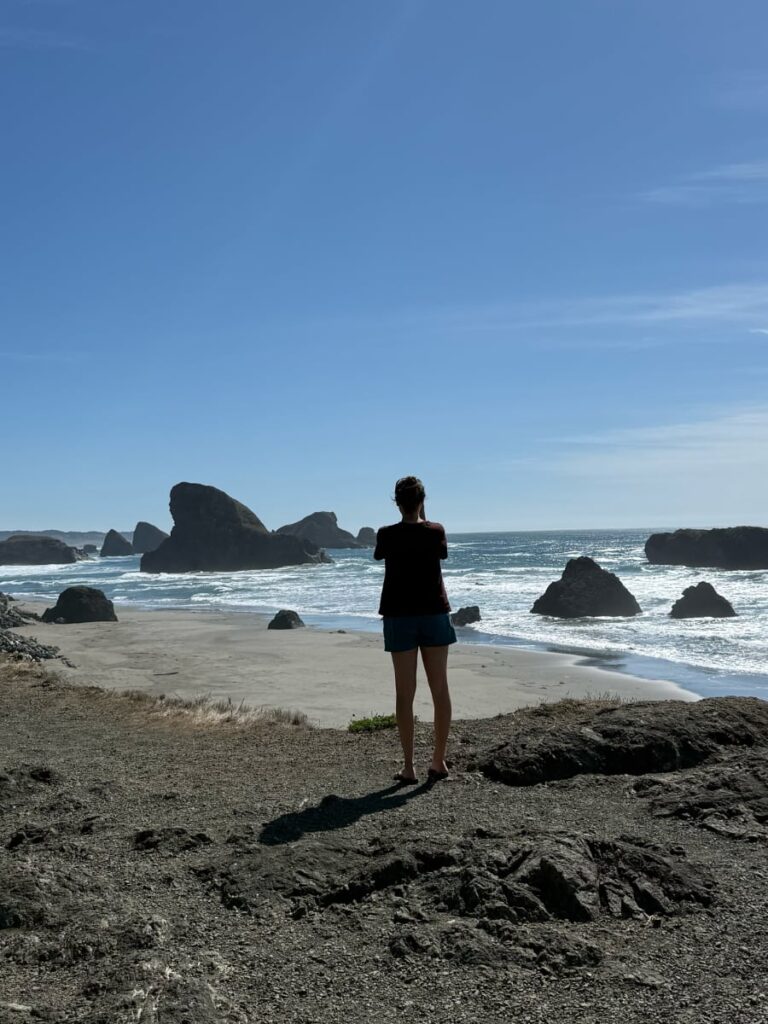 Traveling down the 101
Crossing into Northern California, we reached Panther Flat Campground—a clean, shaded site along the Smith River inside Six Rivers National Forest. After weeks of dispersed spots, this felt like a welcome reset with coin showers, picnic tables, and reliable water.
Why We Loved It
- Forested, private campsites with access to the river and amazing swimming holes
- Coin showers and bathrooms for a full refresh
- Affordable fee and easy road access for any vehicle
What We Did While Staying Here
- Rested, reorganized, and took advantage of the showers
- Walked to the river in the morning for coffee with a view
- Cooked ramen and read by lantern light
Good to Know
- Coin-operated showers; bring quarters
- Limited cell signal but accurate offline maps
- Perfect overnight or two-night stop between Oregon and the Redwoods
Camp Meals
- Shiitake ramen with miso broth
- Fresh fruit from roadside stands for breakfast
10. Panther Flat → Cowboy Camp, California (Heading Toward Yosemite)
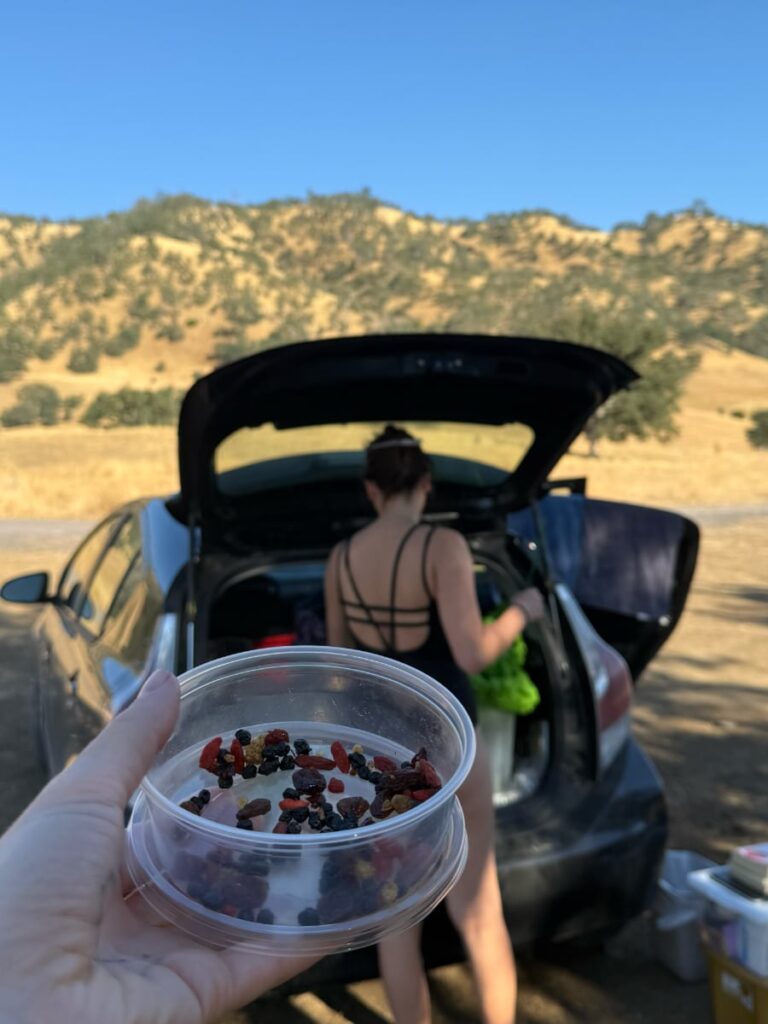 It was so hot! Swimsuits on for setting up camp
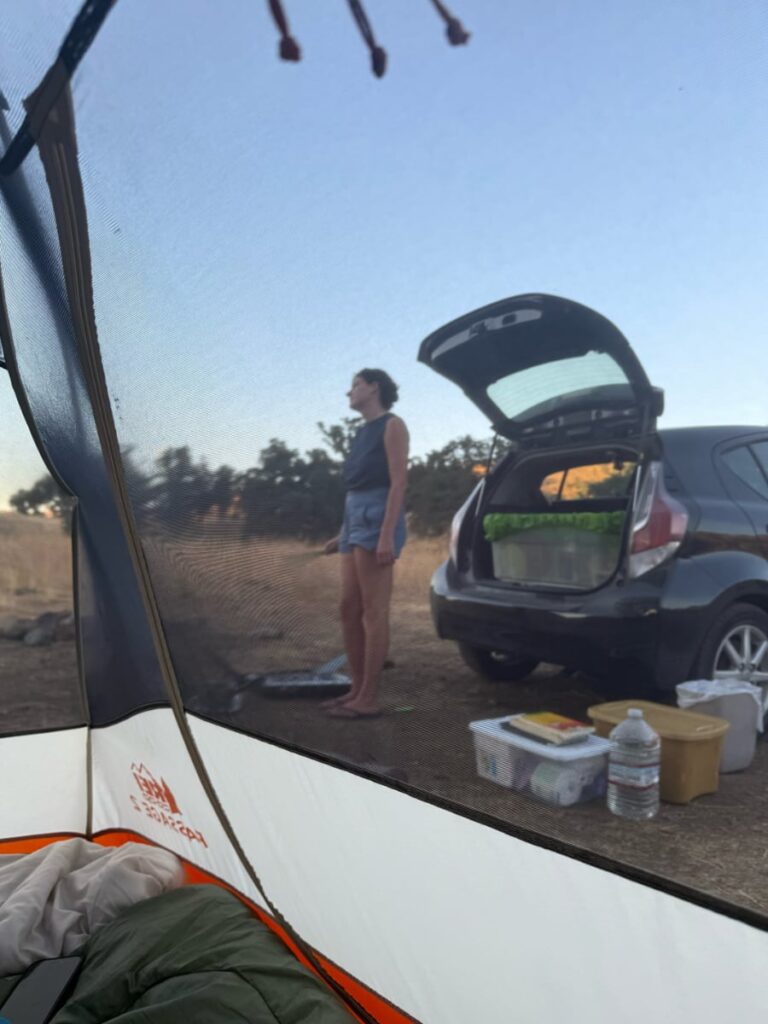 Seeking refuge in the tent from the bugs
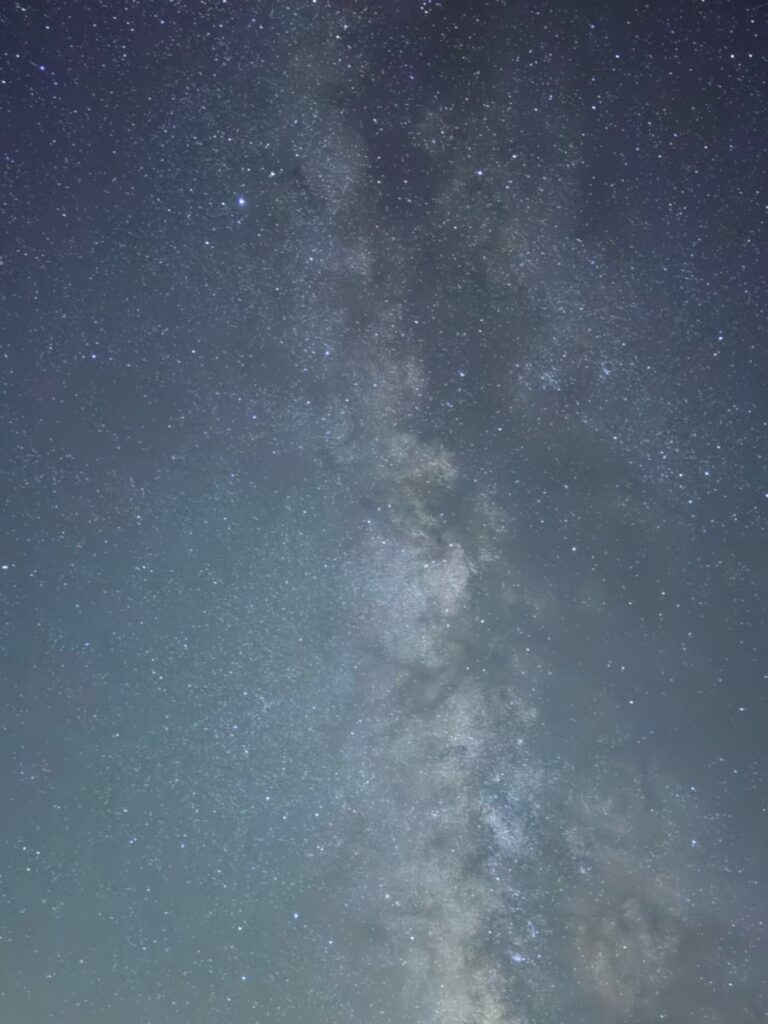 The stars made it all worth it
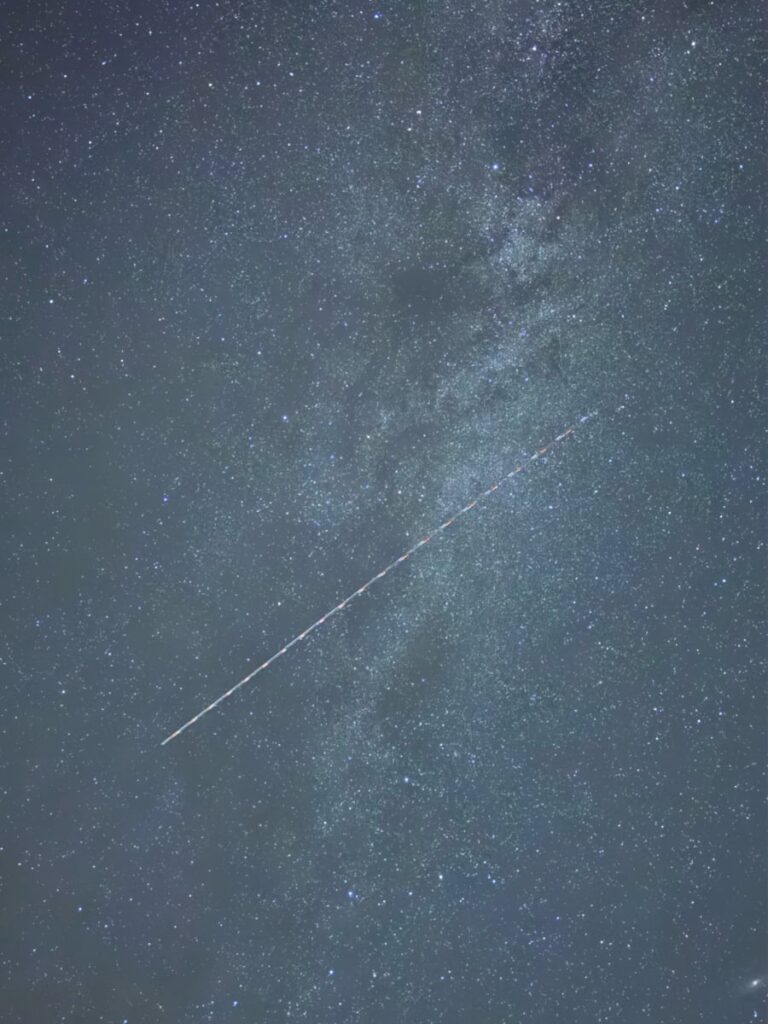 Caught a shooting star
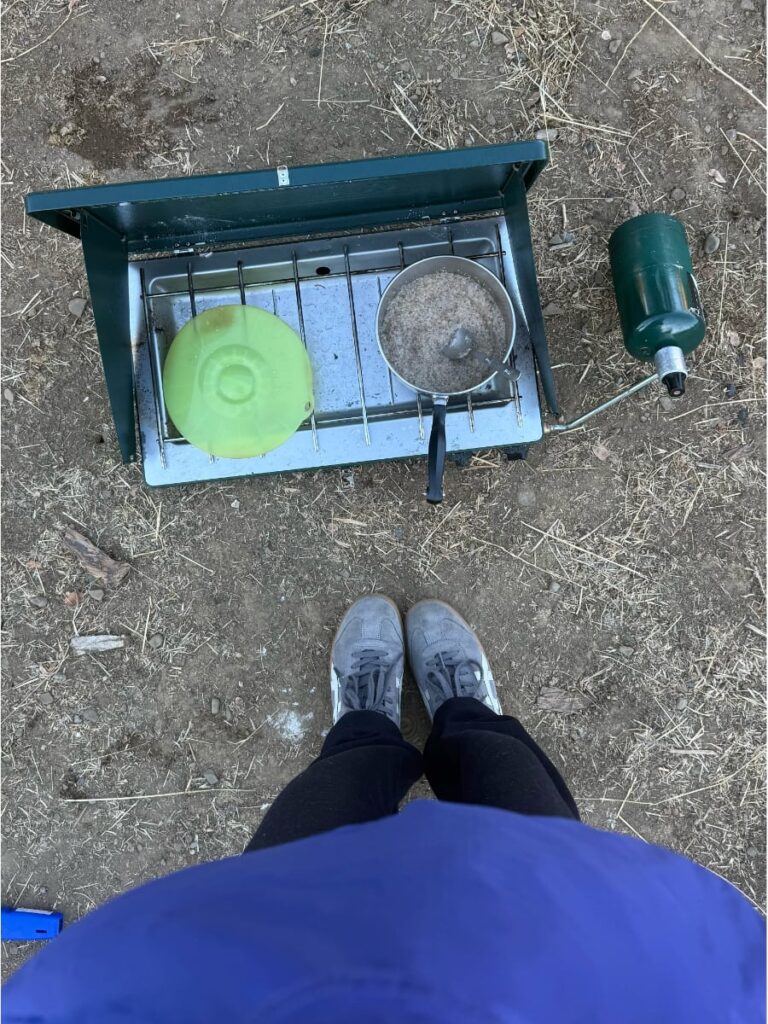 Making coffee and hot cereal in the morning
Continuing south, we stayed at Cowboy Camp, a dry open BLM site near Williams, California. The heat and flies made this one of our less comfortable stops, but the night sky was unforgettable.
Why We Chose It
- Free, easy to access directly from the highway
- Flat ground with wide-open views
- Quiet and safe for overnight travel
What We Loved
- Complete silence once the sun went down
- Panoramic stargazing with zero light pollution
Good to Know
- No shade or amenities; arrive late in the day
- Bring extra water and insect repellent
- Best used as a short overnight between long drive days
Camp Meals
- Simple sandwiches and cold drinks at sunset
- Fruit and instant coffee before packing up
11. Cowboy Camp → Goat Meadow Snow Play Area, Yosemite (Near Mariposa, CA)
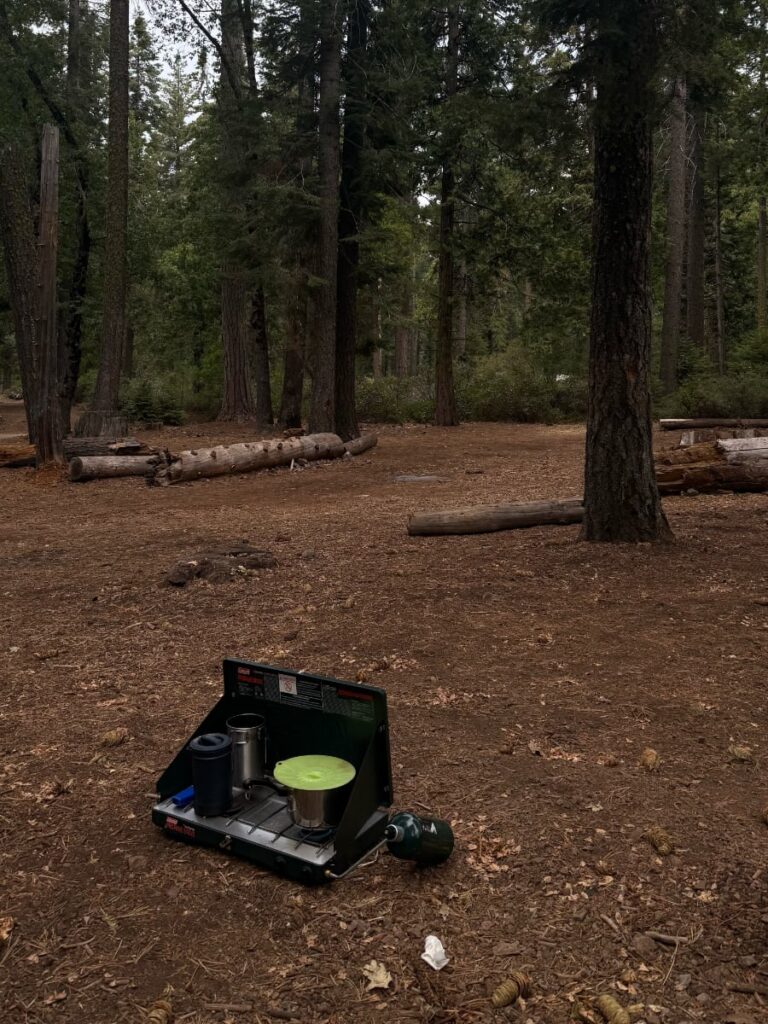
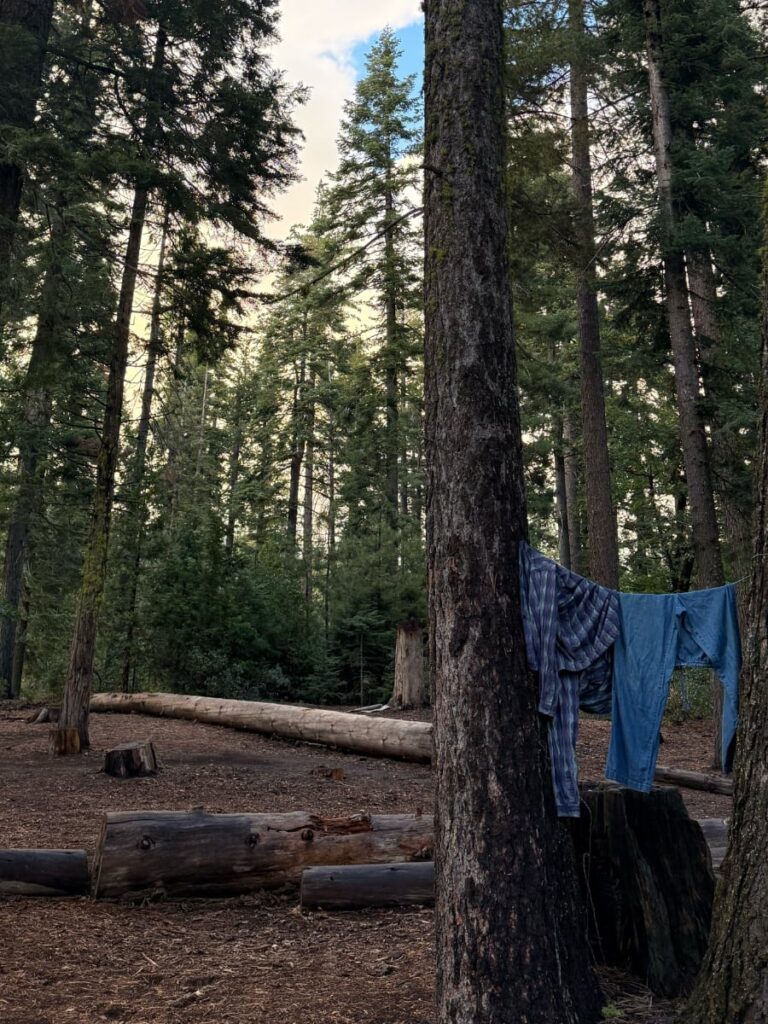
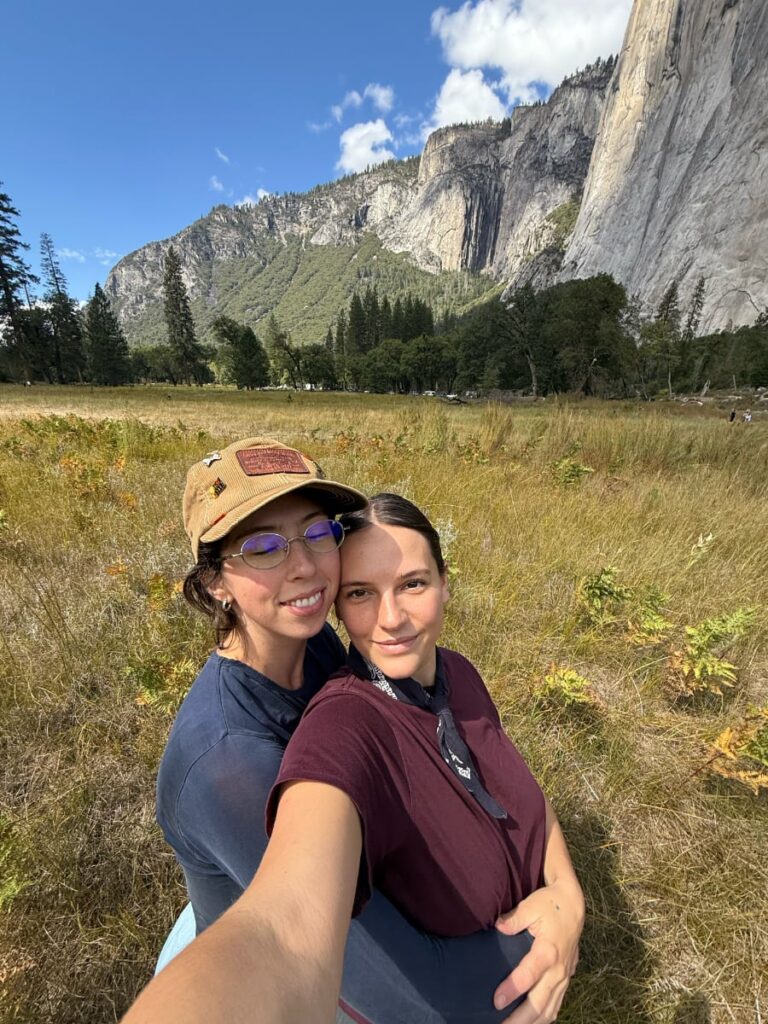
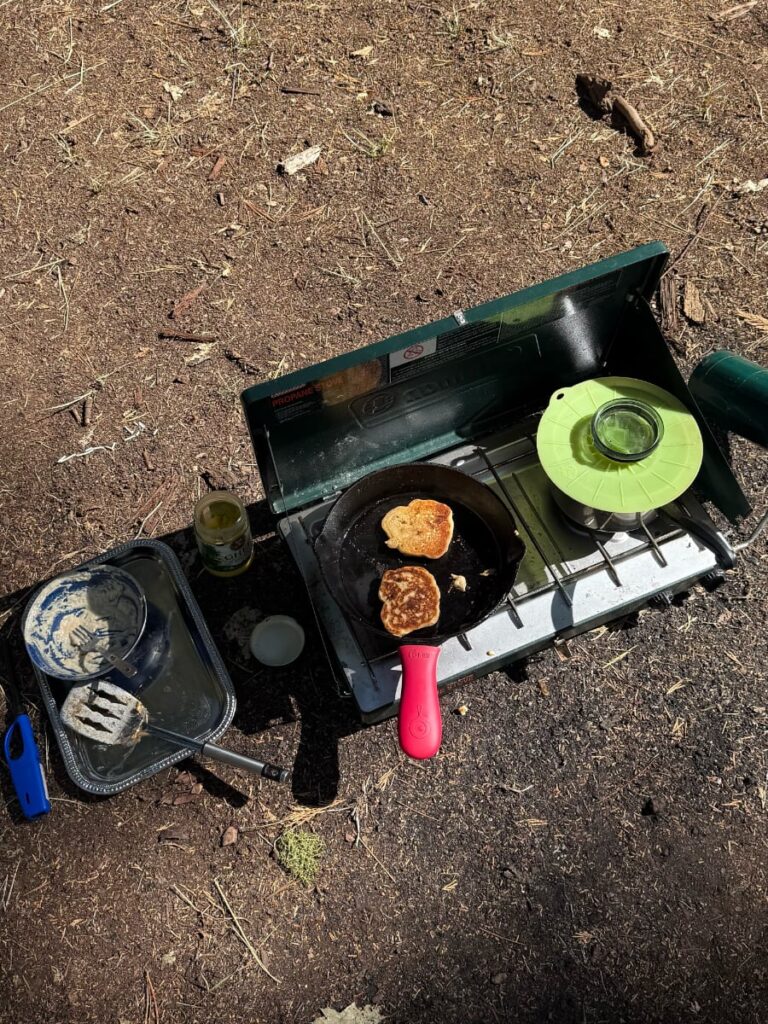
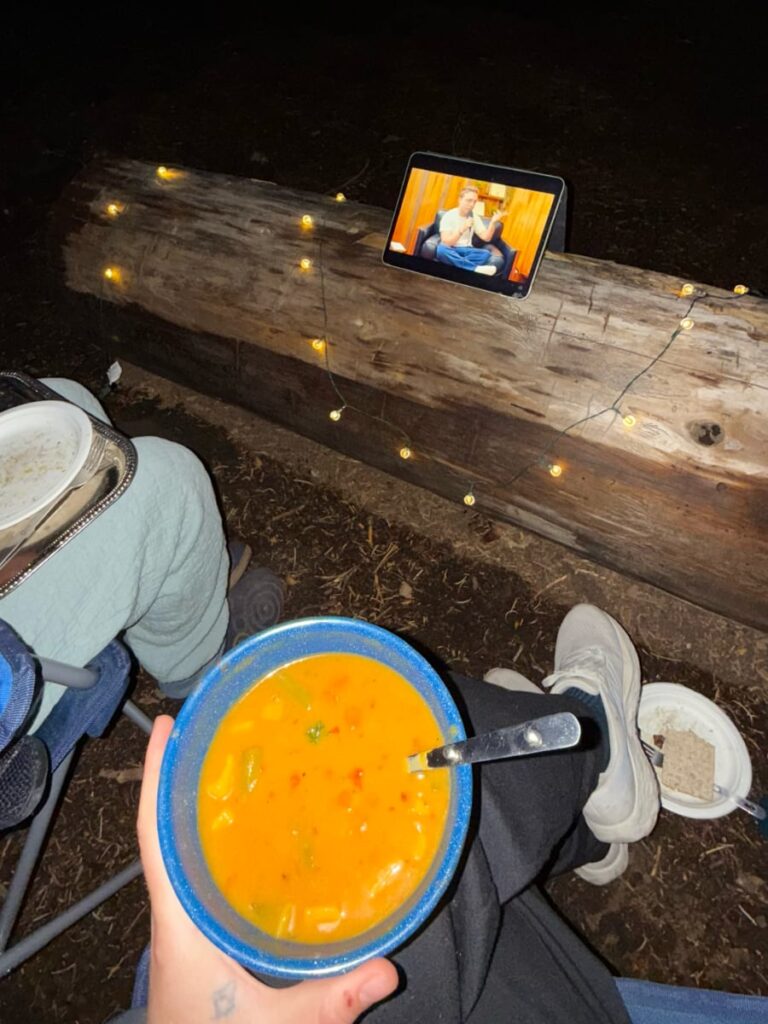
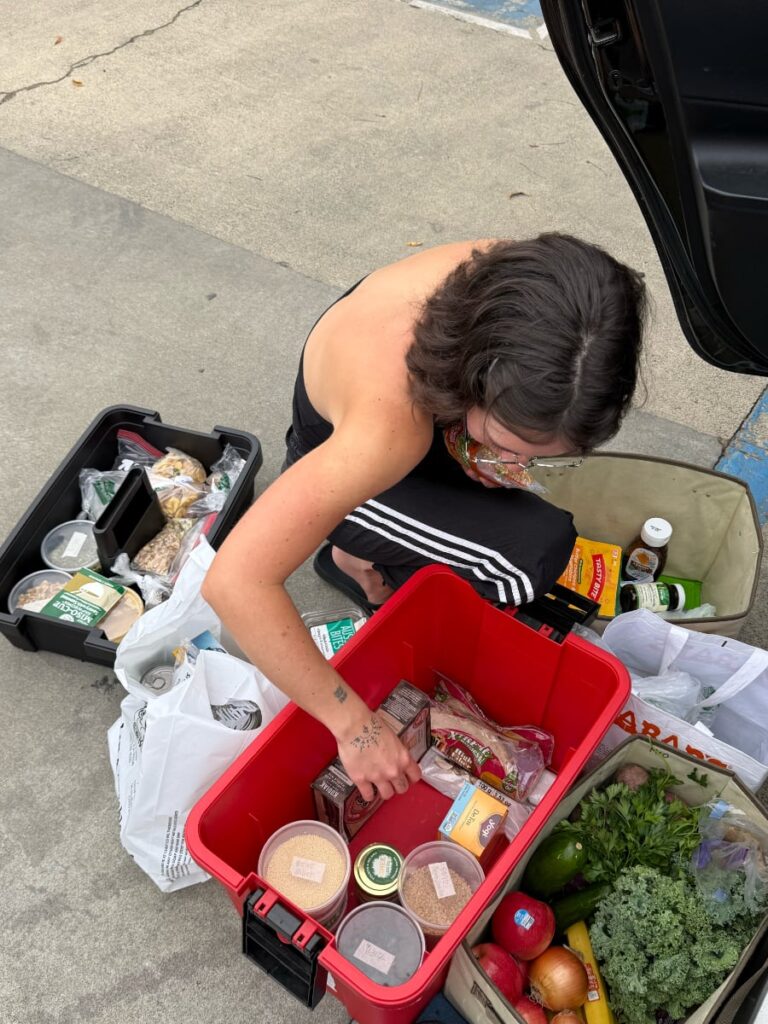
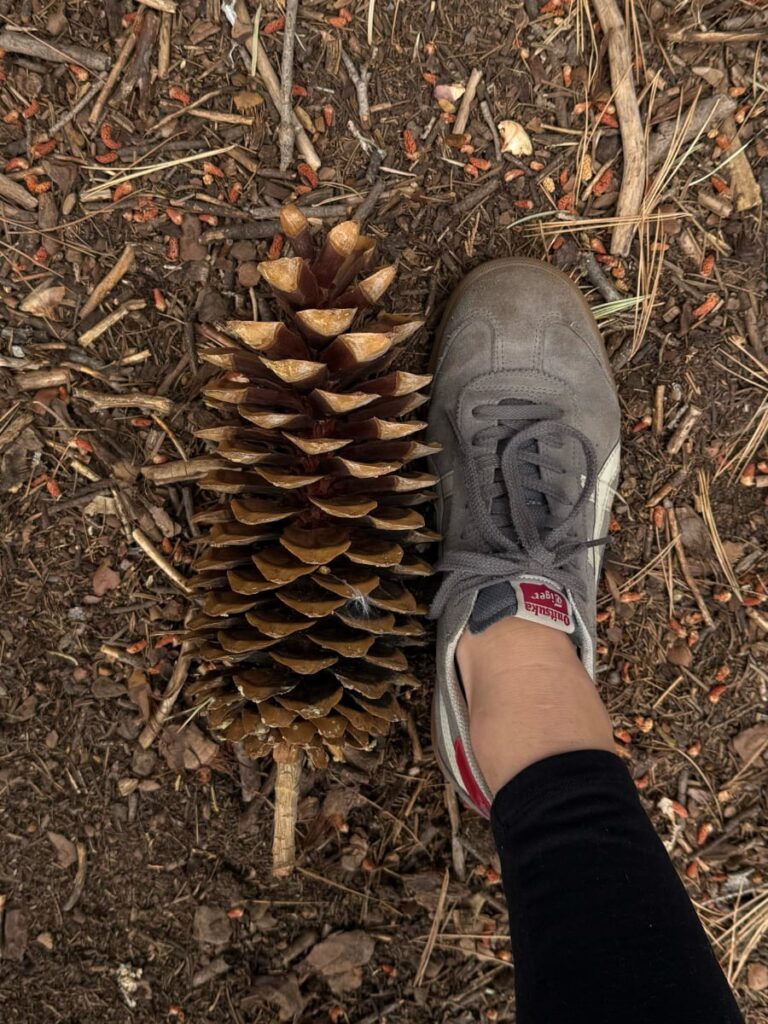
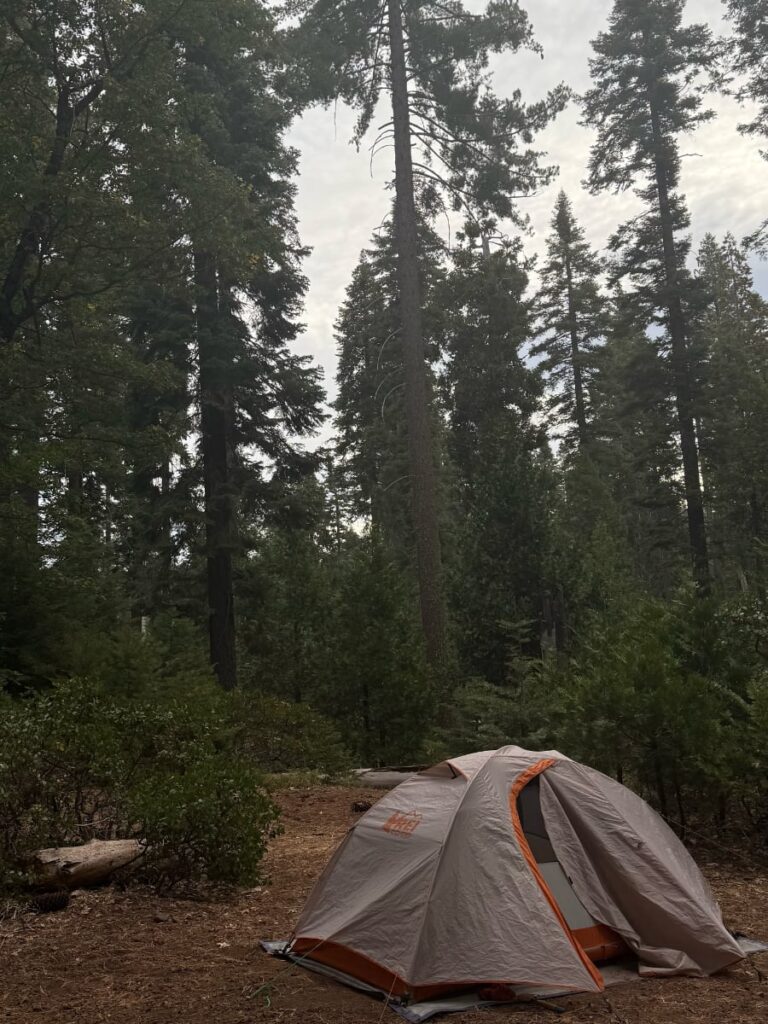
After driving through inland California (not an easy feat!), we reached Goat Meadow Snow Play Area, a free dispersed site right outside Yosemite’s South Entrance. It became one of our favorite stays for its quiet forest setting and unbeatable proximity to the park.
Why We Loved It
- Free, clean, and only minutes from Yosemite’s gate
- Spacious, shaded area with plenty of privacy
- Cool air and tall pines perfect for long stays
What We Did While Staying Here
- Took day trips into Yosemite National Park
- Visited Mariposa Grove and Wawona
- Relaxed at camp during a stretch of rain and read by the fire
Good to Know
- No bathrooms or water; bring full supplies
- Cooler nights even in late summer
- Trash bins available but limited
Camp Meals
- Curry soup with kale and wasa crackers
- Sautéed vegetables and rice over the fire
- Hot tea and quiet mornings before heading into the park
12. Goat Meadow → Crowley Lake Campground, California (Mammoth Lakes)
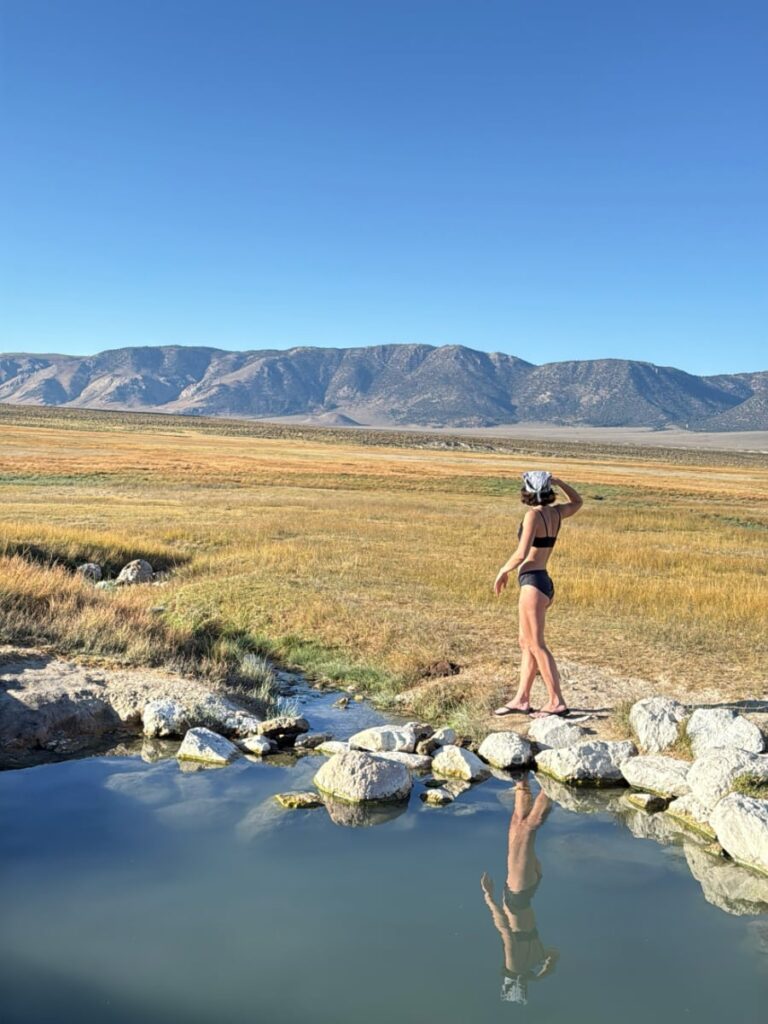
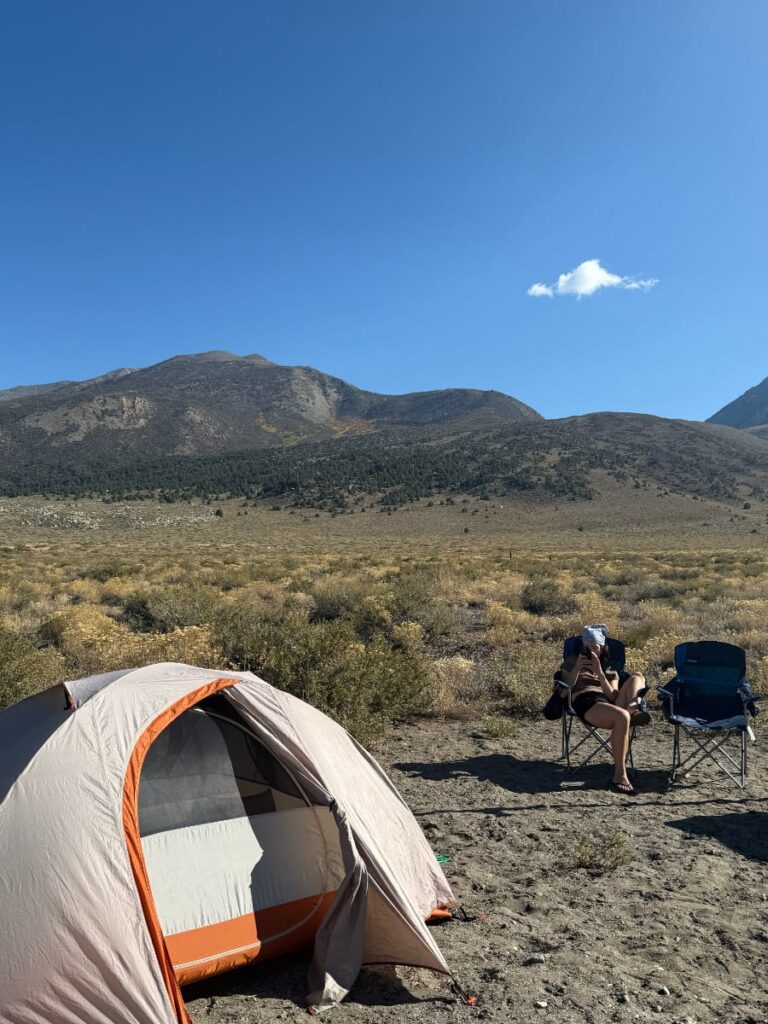
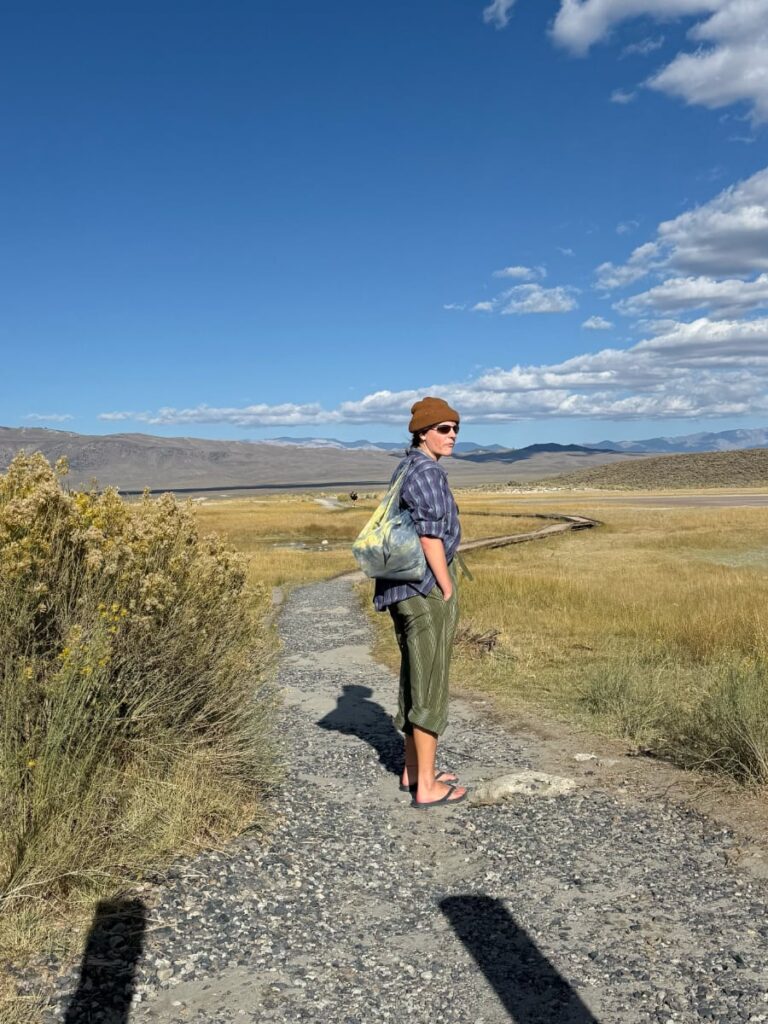
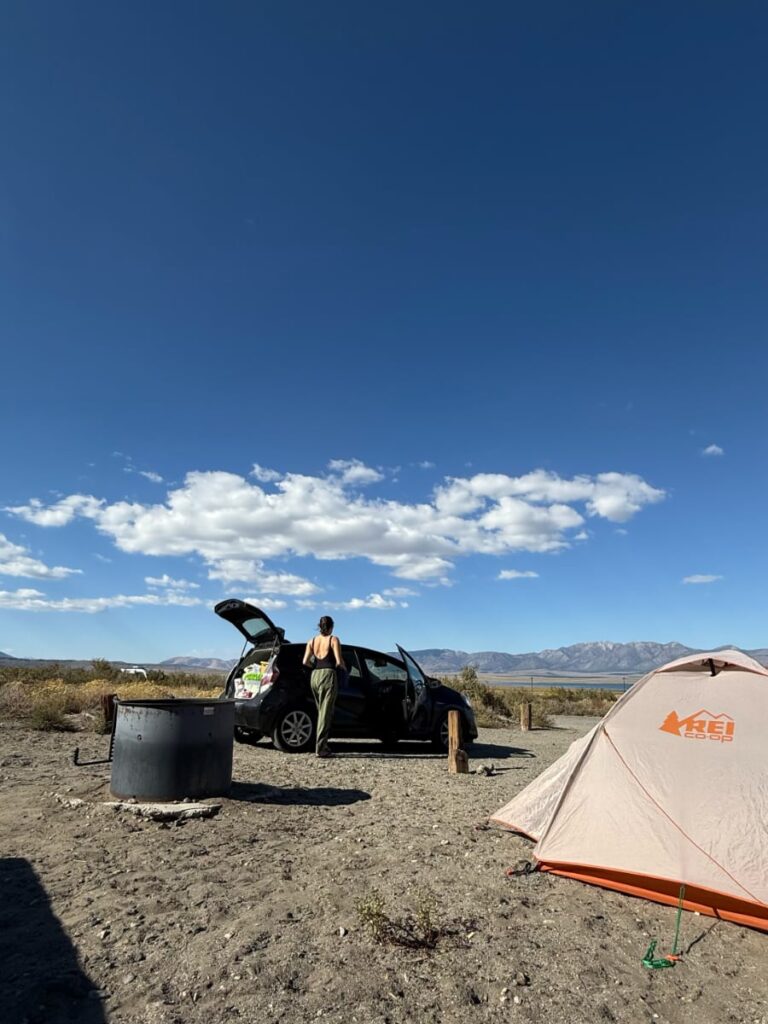
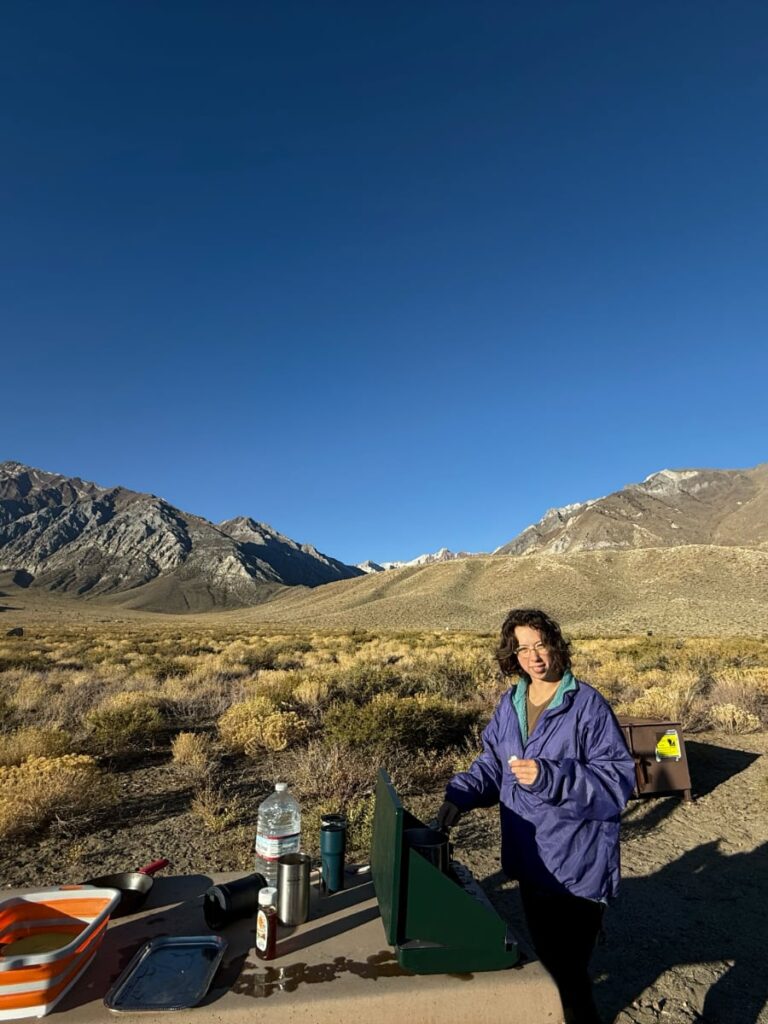
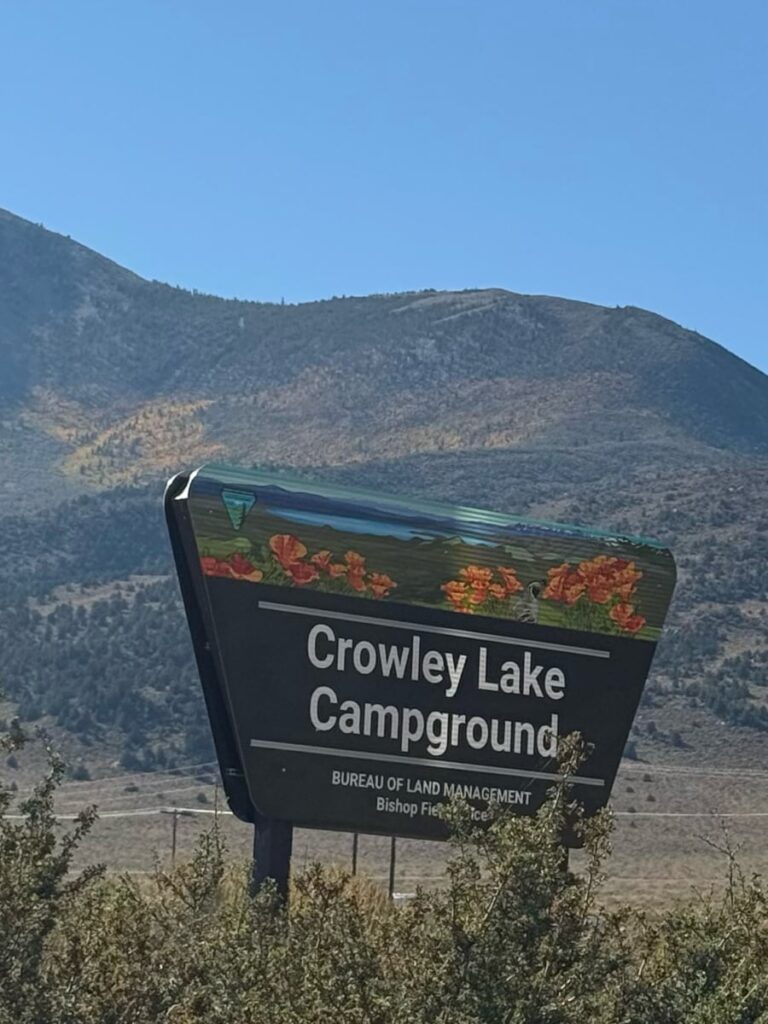
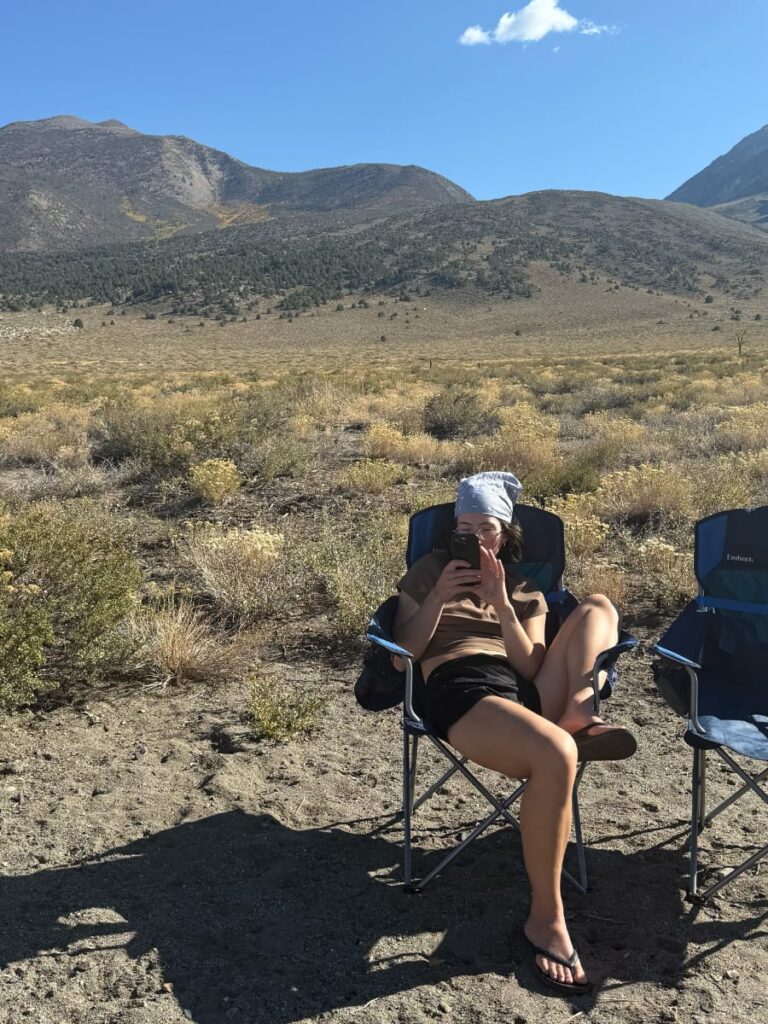
Leaving Yosemite through Tioga Pass, we stopped at Crowley Lake Campground, a peaceful site surrounded by wide-open mountain views. It was a comfortable, organized spot with amenities that made it easy to recharge after long drives.
Why We Loved It
- Clean, affordable campground with bathrooms and tables
- Wide views of the Sierra Nevada range
- Easy access to nearby hot springs
What We Did While Staying Here
- Rested and reorganized gear after Yosemite
- Watched the sunset over the mountains
- Visited Wild Willy’s Hot Springs nearby for a morning soak
Good to Know
- Fee-based with self-pay system
- Slight evening winds; stake tents securely
- Bear lockers at each site
Camp Meals
- Soba noodles with oyster and lion’s mane mushrooms
- Breakfast tea and fruit with a mountain view
13. Crowley Lake → North Creek Dispersed Camping, Utah (Near Zion National Park)
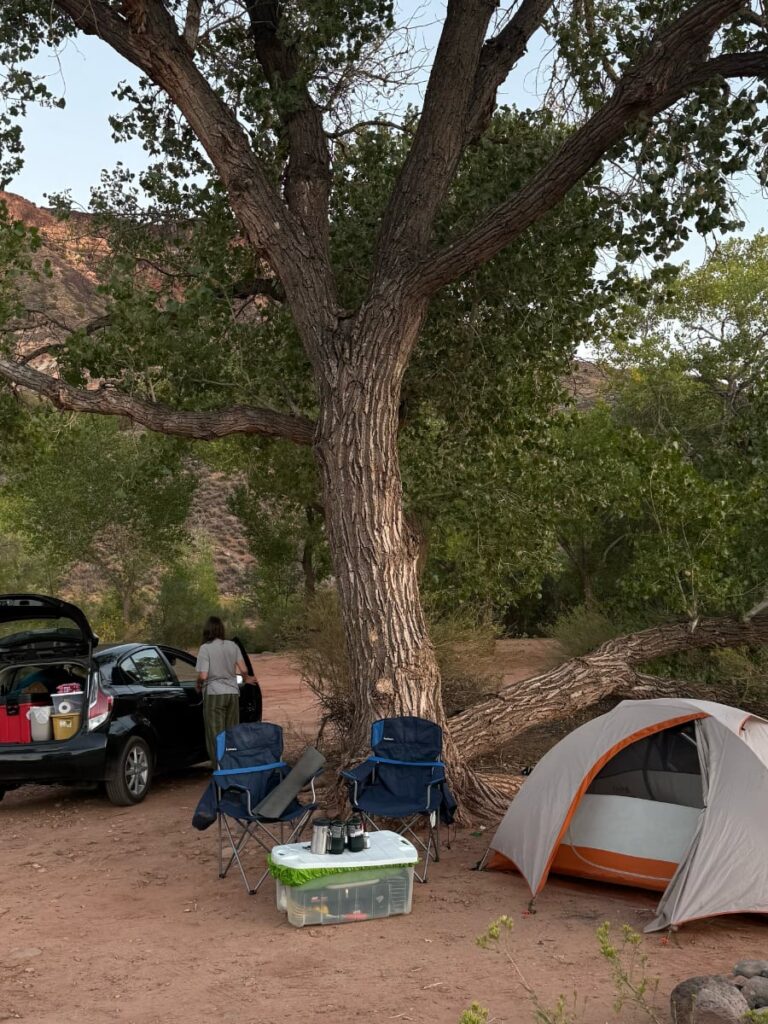 Set up near Zion NP
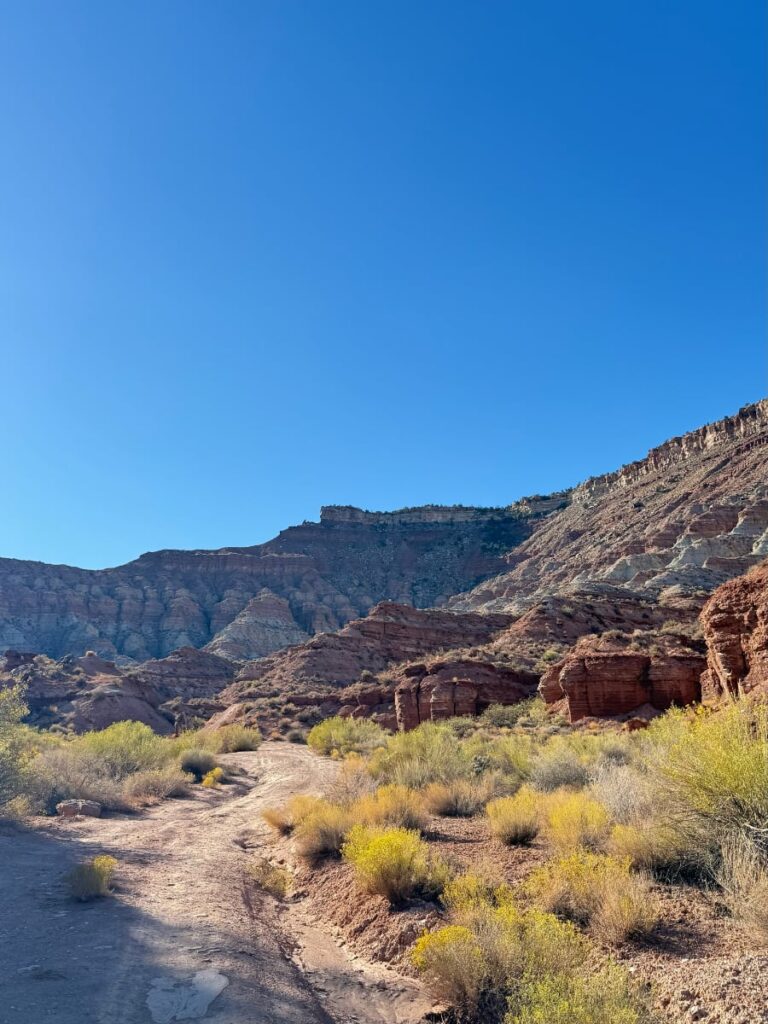 Views from near the campsite
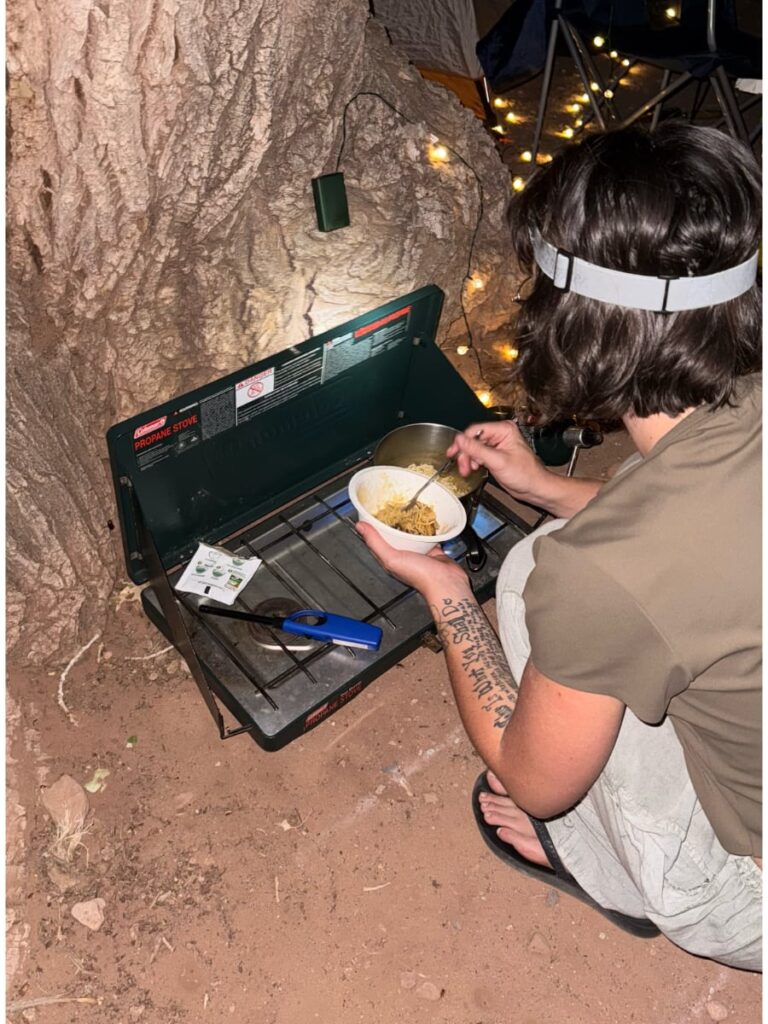 Making dinner
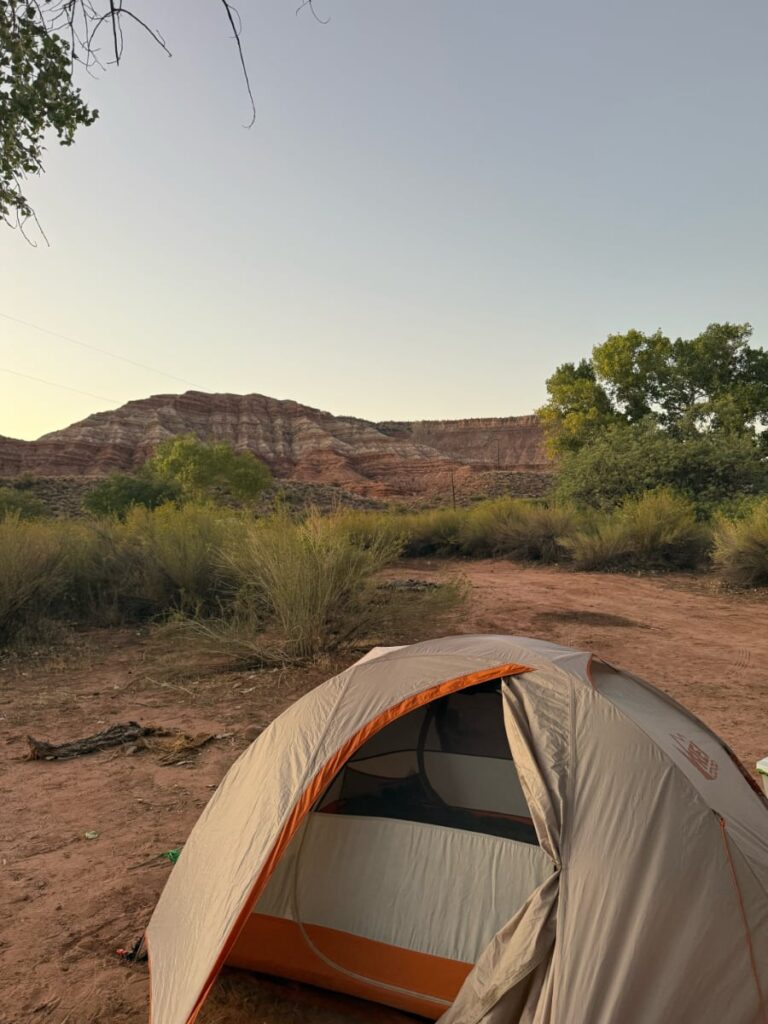 Views from the campsite
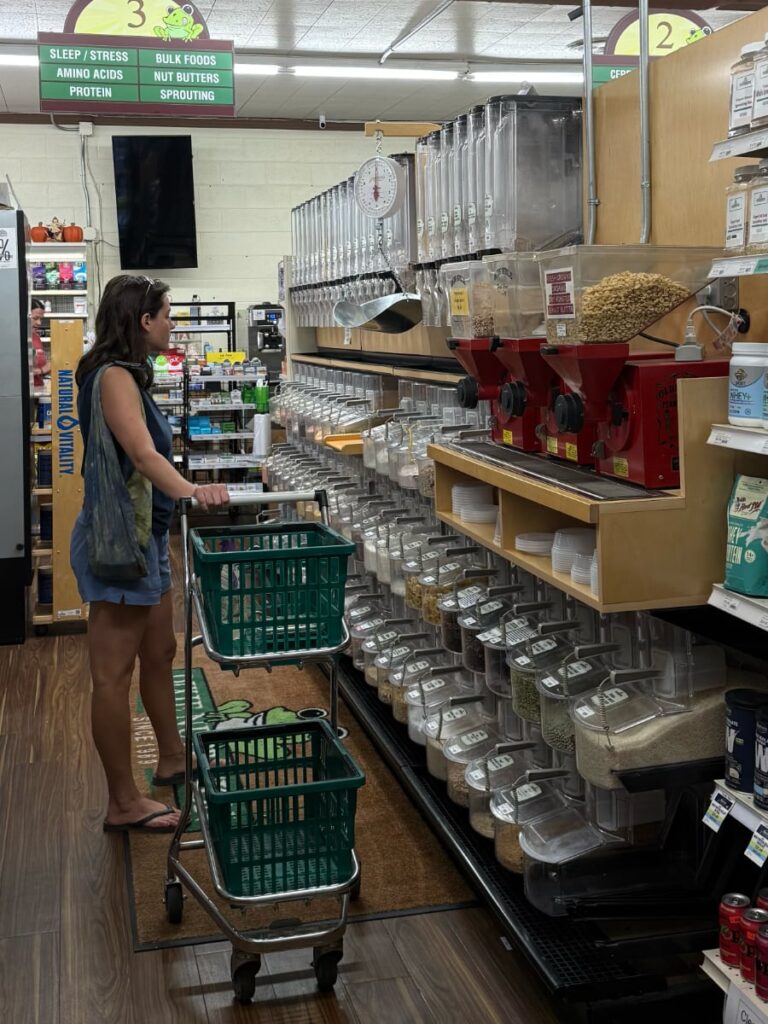 Stocking up in Springdale
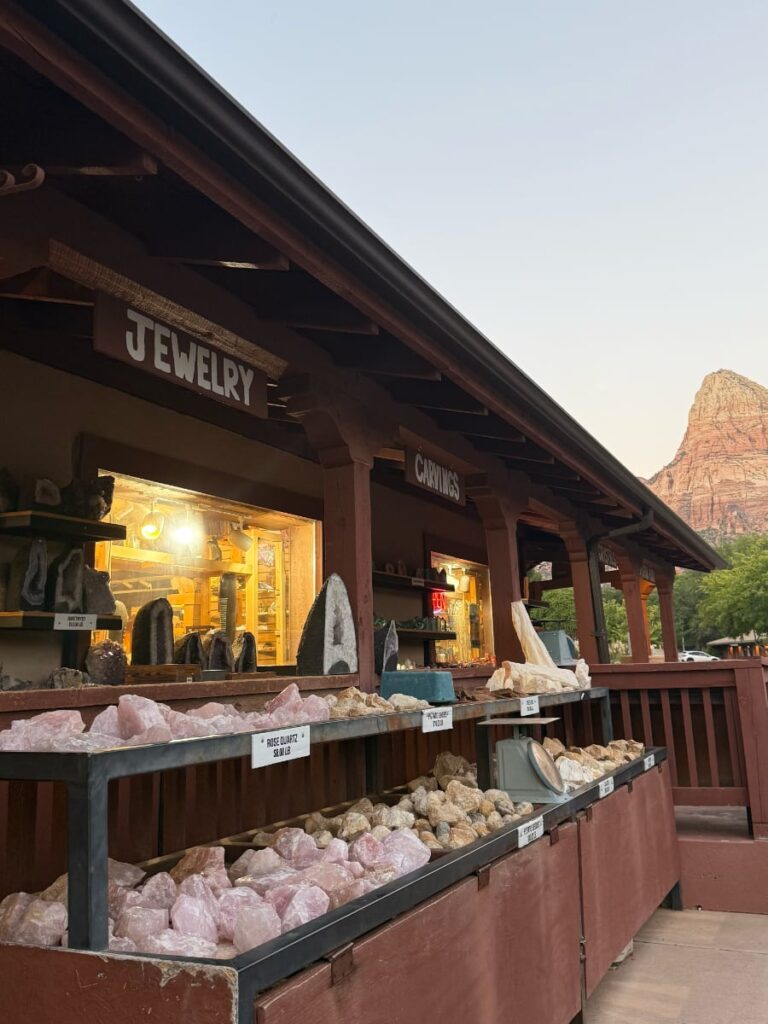 Rock Shopping
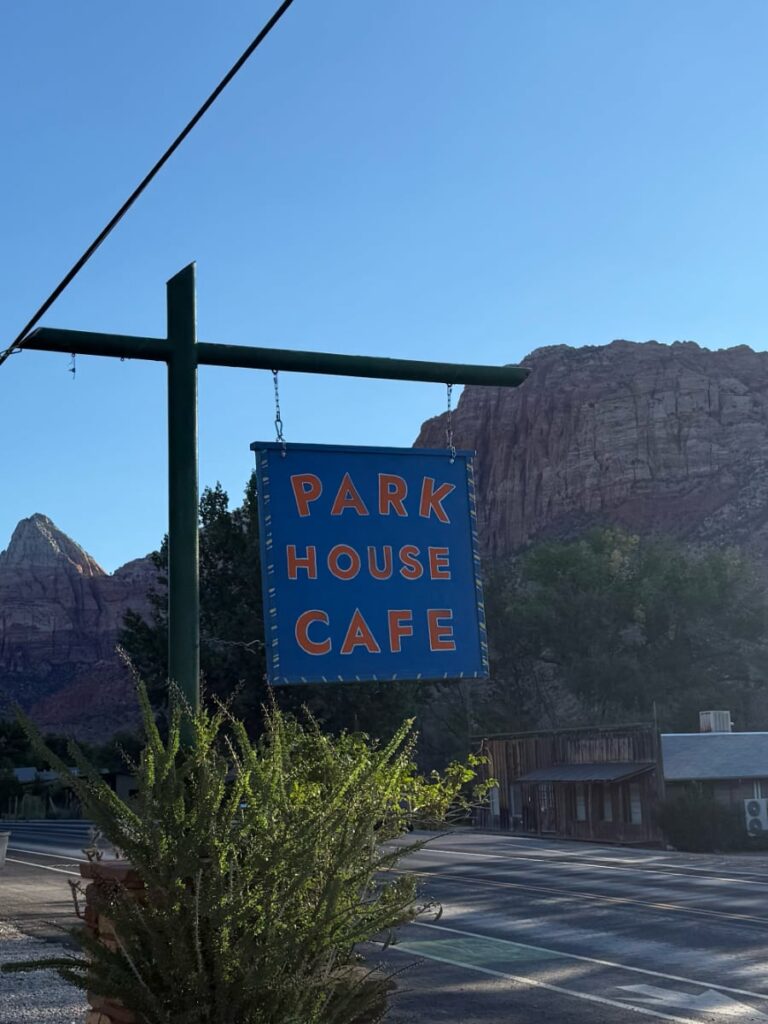 Highly recommend this restaurant
After crossing Nevada, we camped at North Creek Dispersed Camping, just outside Zion National Park. The red cliffs around camp glowed at sunset, and the air felt dry and open after weeks of forest camping.
Why We Loved It
- Free, easy-access site close to Zion
- Level pull-ins suitable for cars
- Quiet, spacious, and uncrowded
What We Did While Staying Here
- Drove into Springdale for food and coffee
- Watched the cliffs turn gold at sunset
- Planned our route through Utah from camp
Good to Know
- No amenities; bring full water supply
- Good cell service for navigation
- Best for one- or two-night stays
Camp Meals
- Tinned fish with herbs and rice
- Instant coffee and fruit for breakfast
14. North Creek → Overlook Point Boondocking, Utah (Near Capitol Reef National Park)
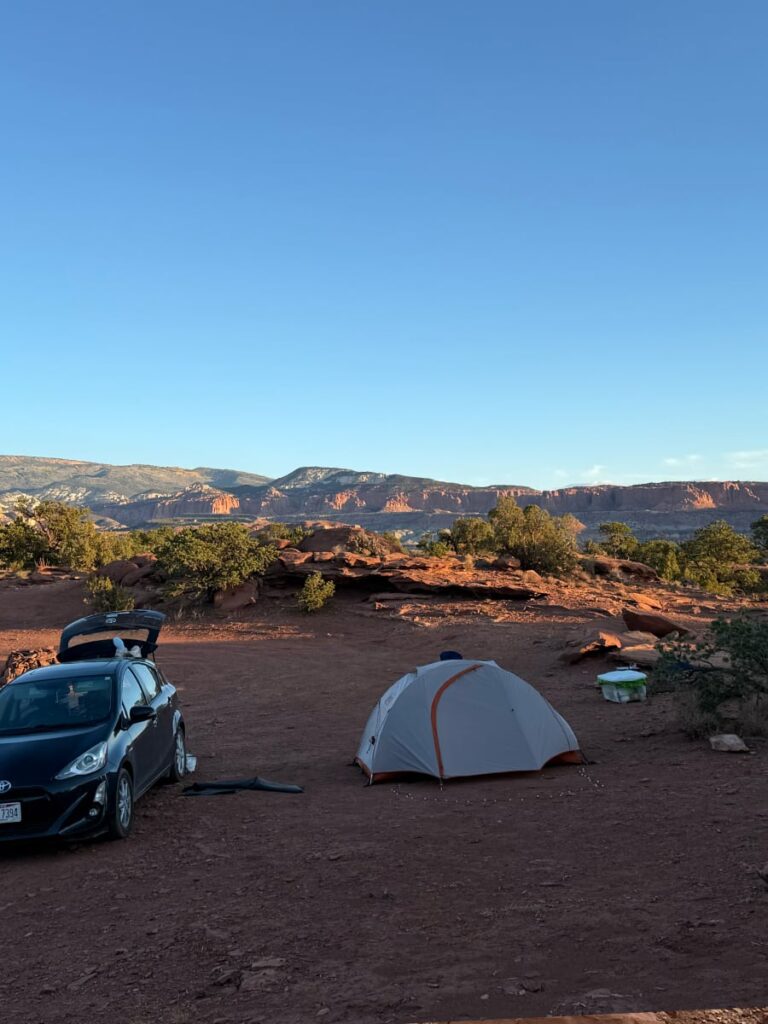 All setup in Capitol Reef
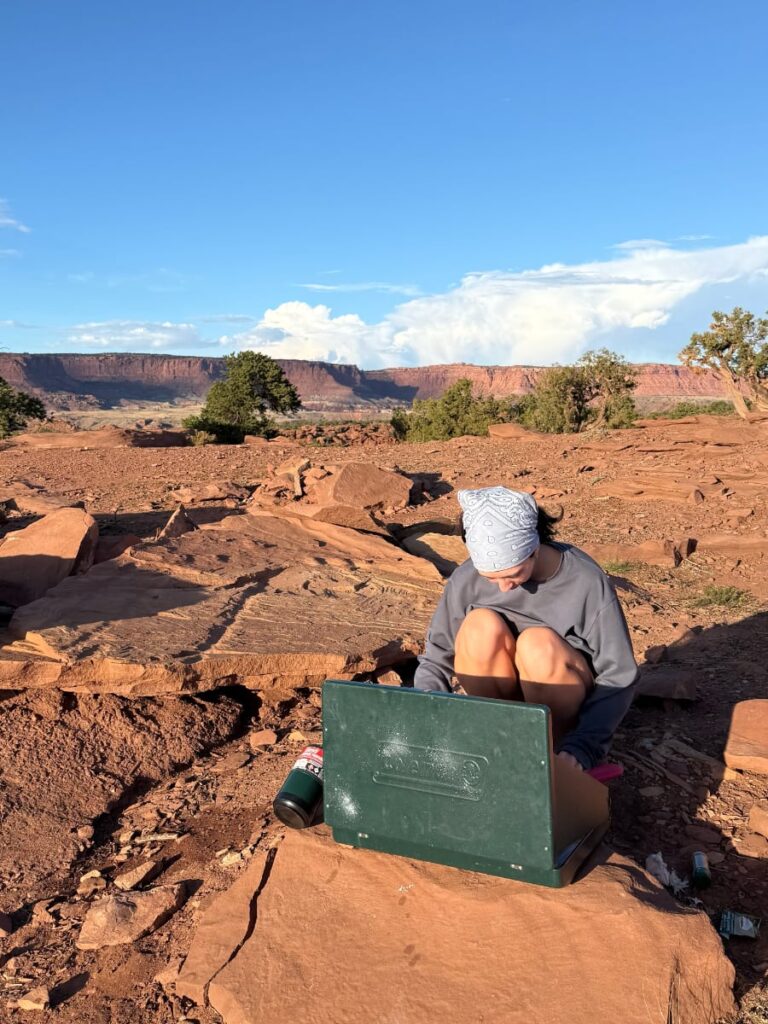 Cooking in the wild
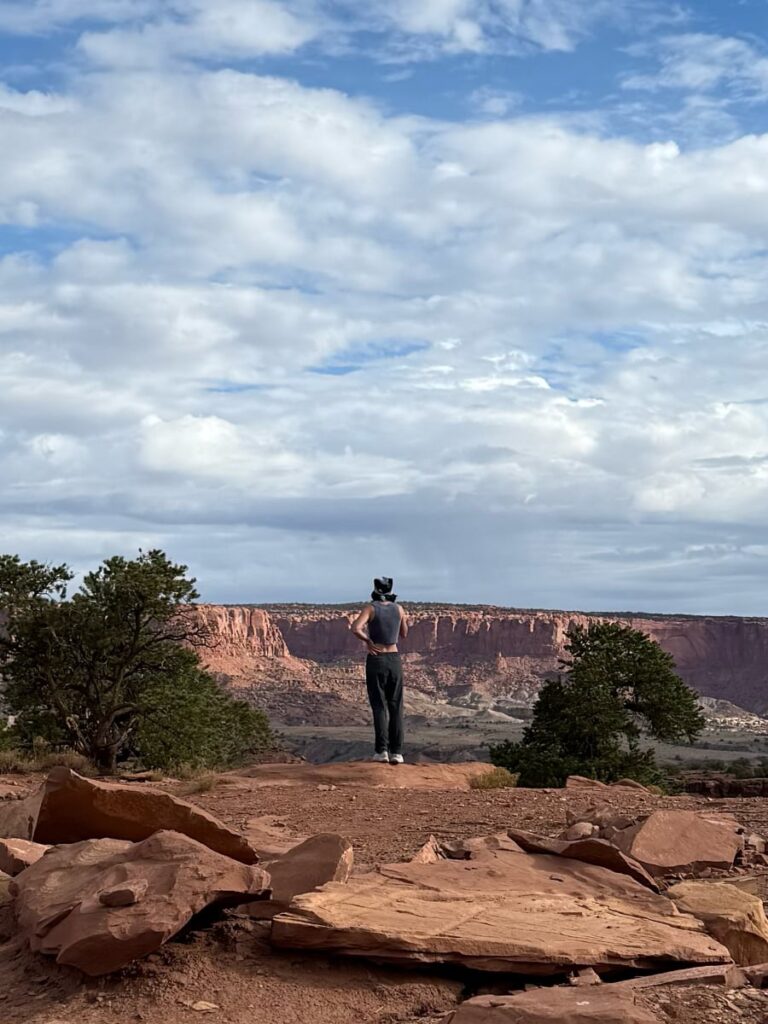 Brushing teeth with a view
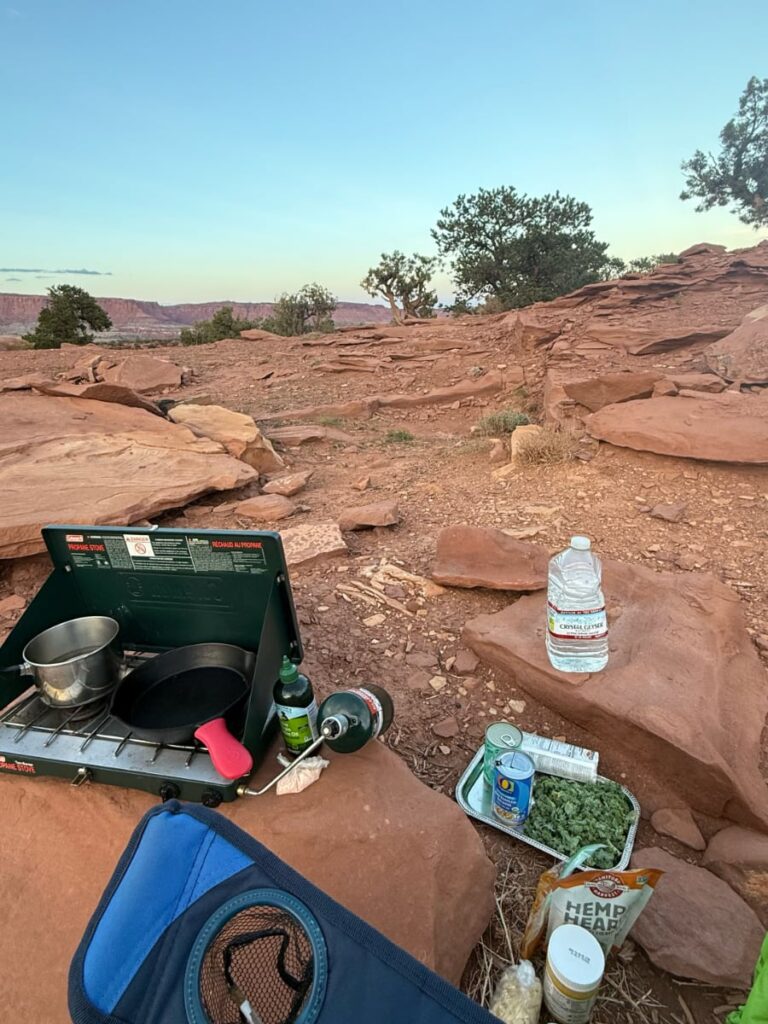 Kitchen Setup
From Zion, we followed scenic Highway 12 and arrived at Overlook Point Boondocking, a quiet, open area overlooking red rock canyons near Capitol Reef National Park. It was one of the most peaceful dispersed sites of the trip, with endless views and barely another camper in sight.
Why We Loved It
- Free and wide open with panoramic desert views
- Firm, level ground suitable for any vehicle
- Ideal spot for stargazing and photography
What We Did While Staying Here
- Watched the sunset light up the cliffs from camp
- Explored short trails within Capitol Reef
- Spent a full morning reading and writing with the view
Good to Know
- No water or facilities; come fully stocked
- Minimal shade—best to arrive later in the day
- Soft sand near edges, but central road stays firm
Camp Meals
- Lentil stew with carrots and rice
- Pancakes cooked on the camp stove before sunrise
15. Overlook Point → Blue Mountain Road, Colorado Springs, Colorado
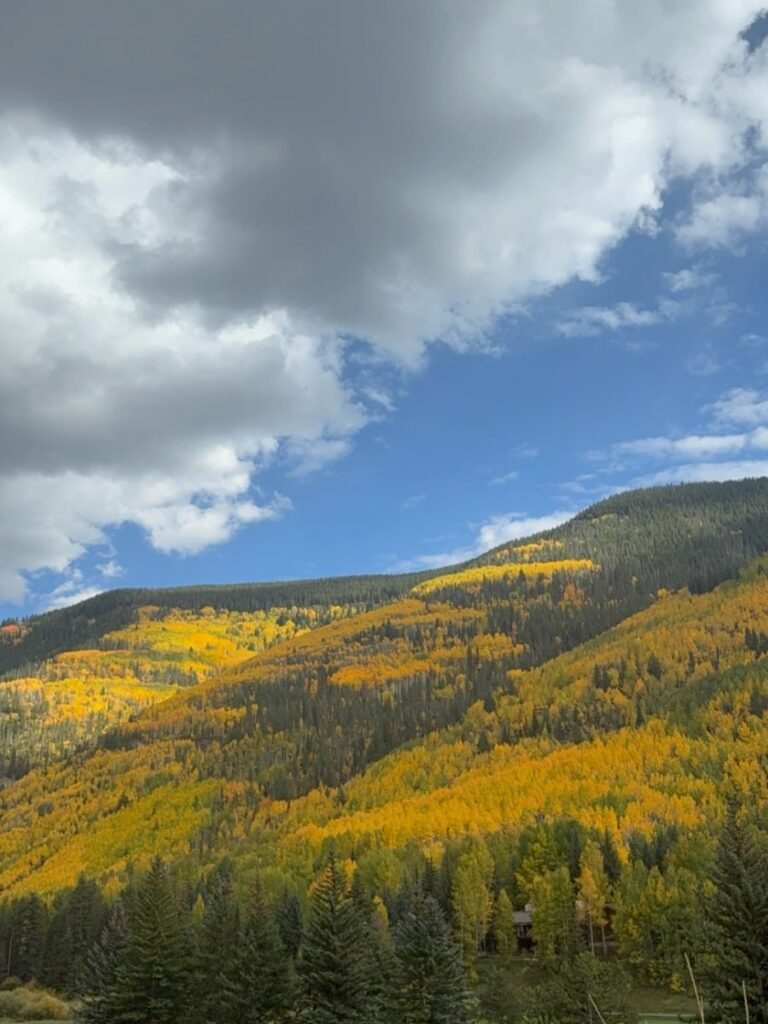 Views on the drive to camp
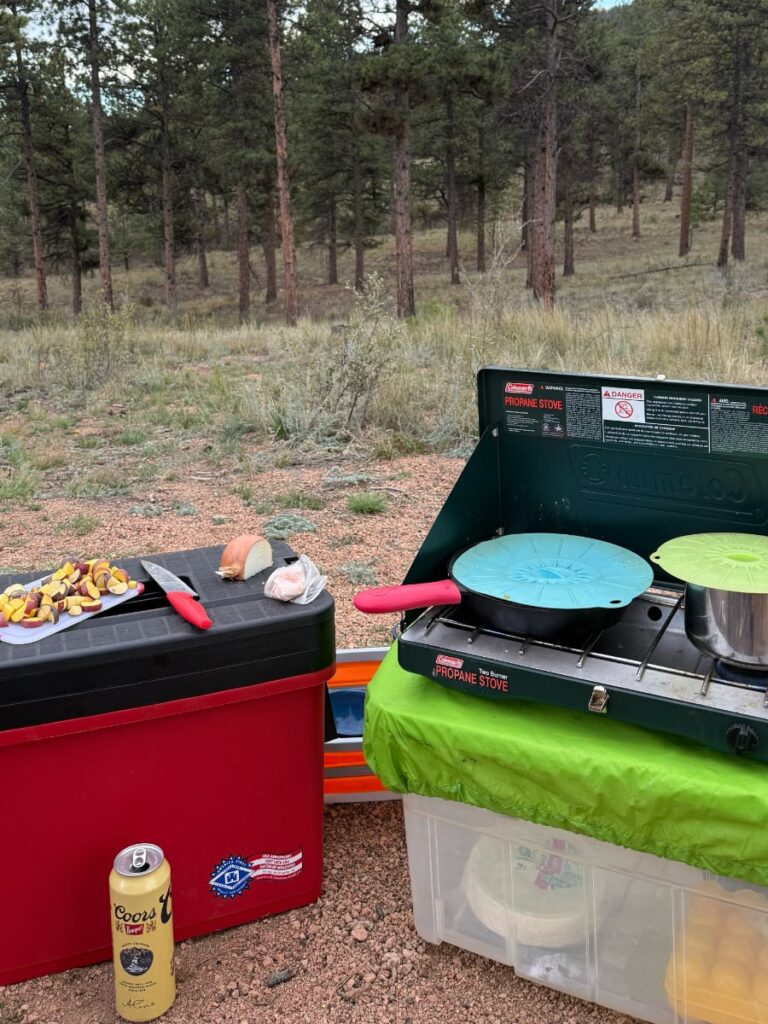 Cooking dinner
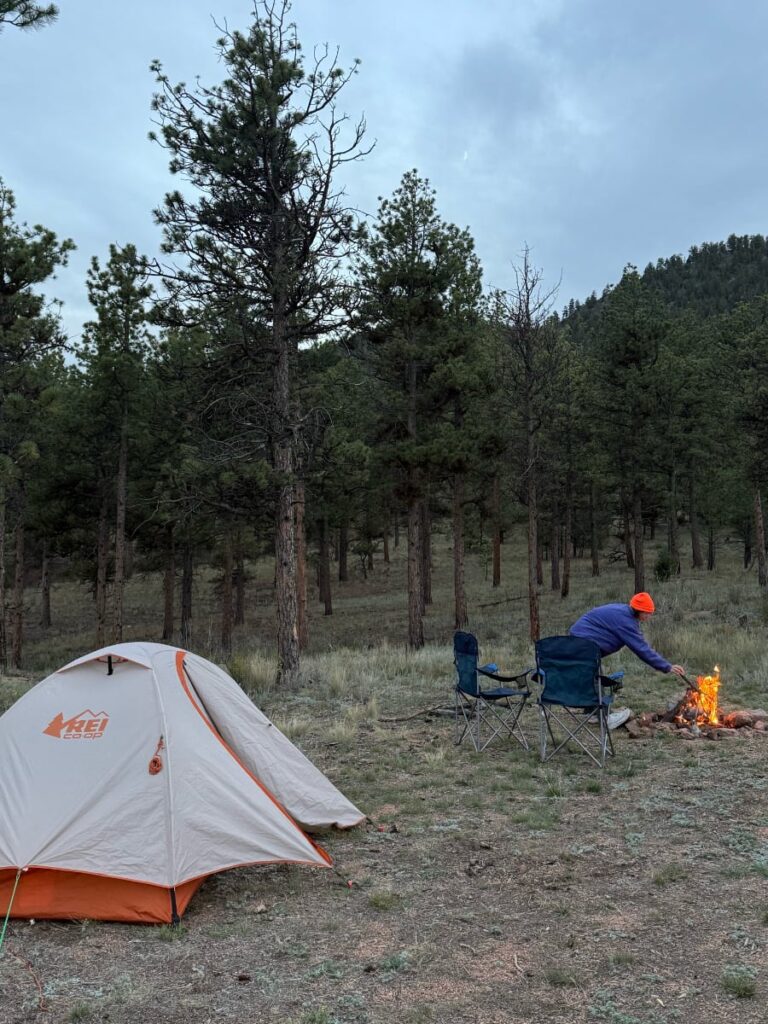 Making a fire at camp to keep warm
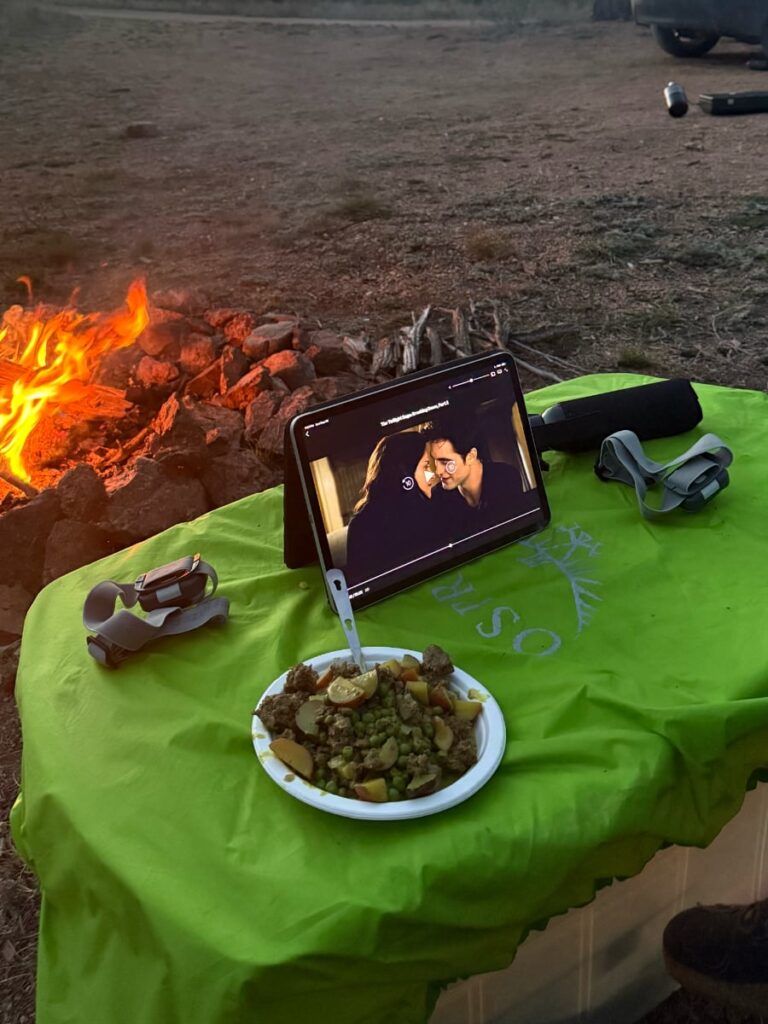 Final camp dinner and finishing the Twilight saga
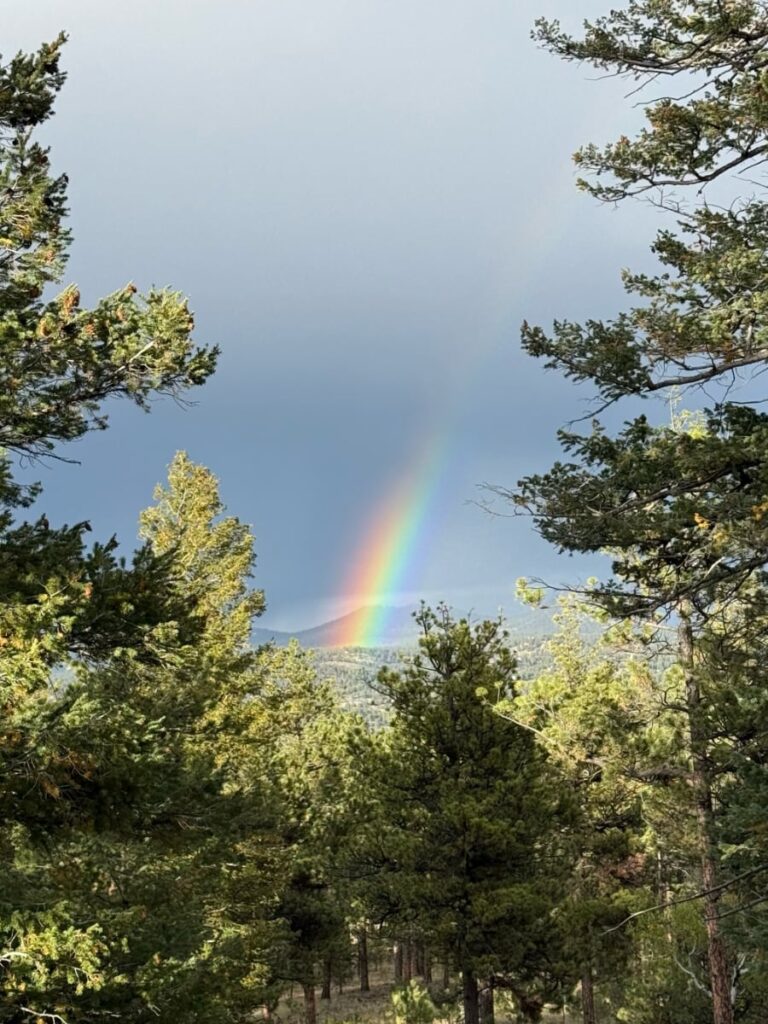 Rainbow right at our campsite
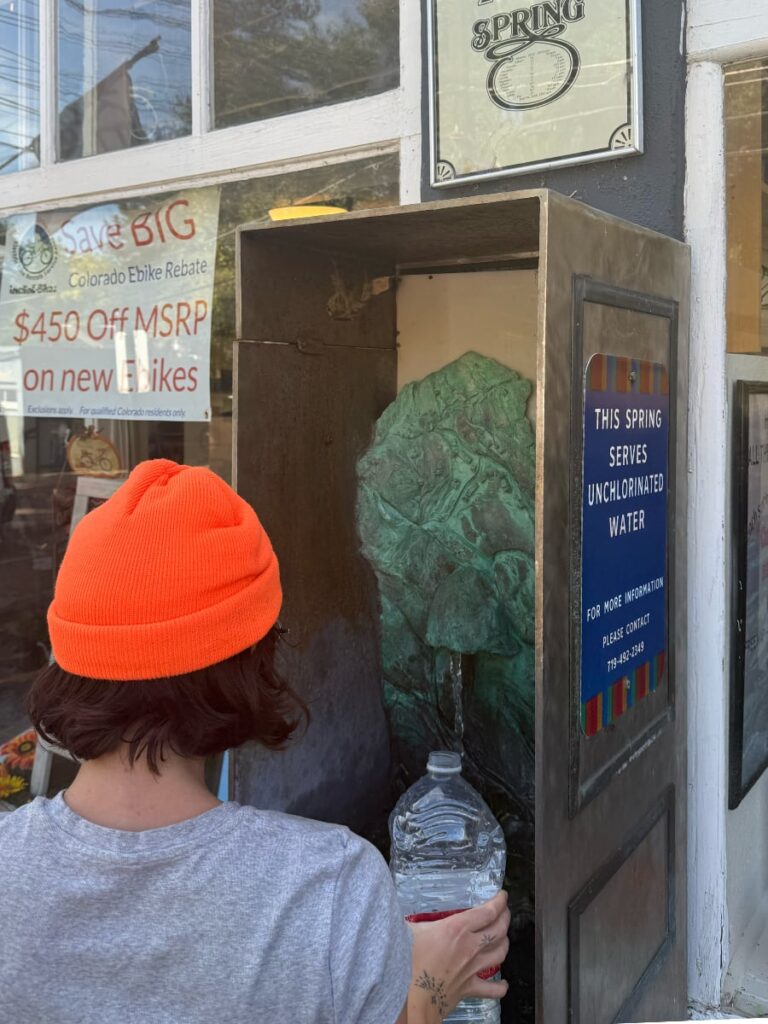 Spring water stop in Manitou
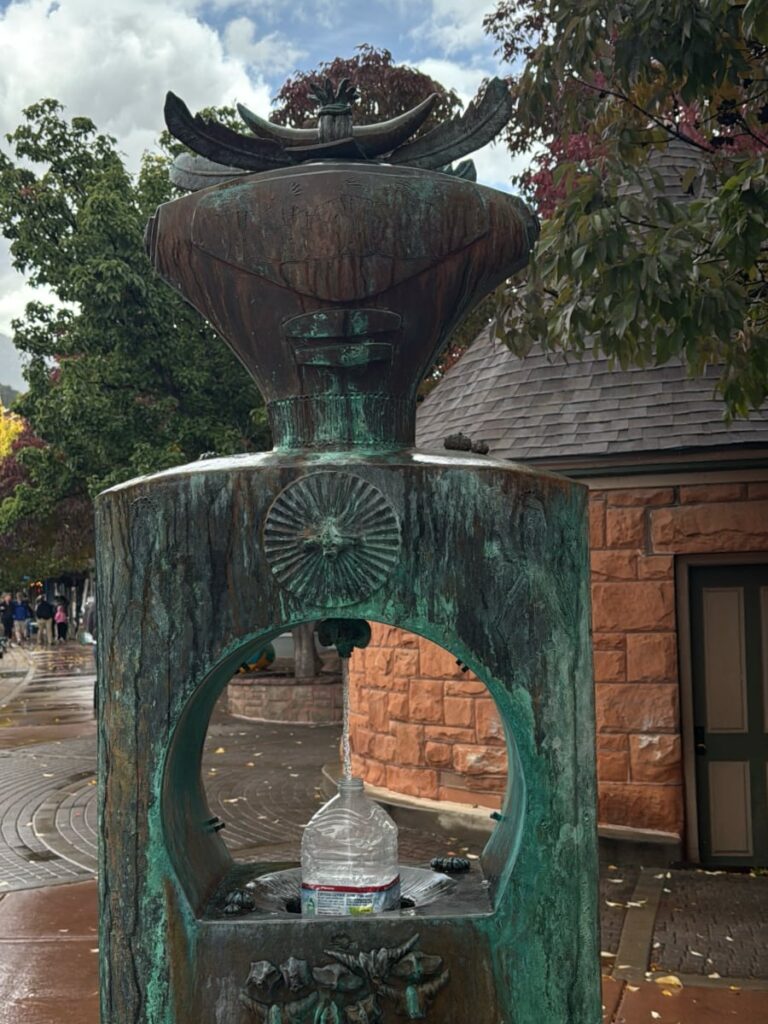 Filling up water jugs in Manitou Springs
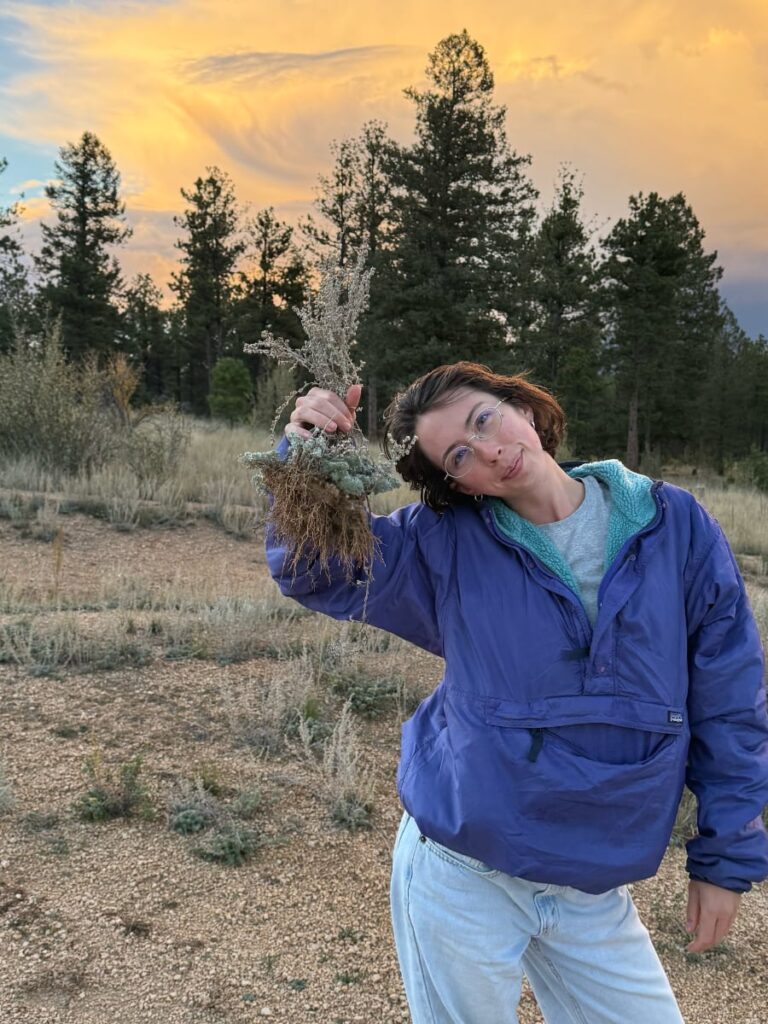 Taking home a sage plant
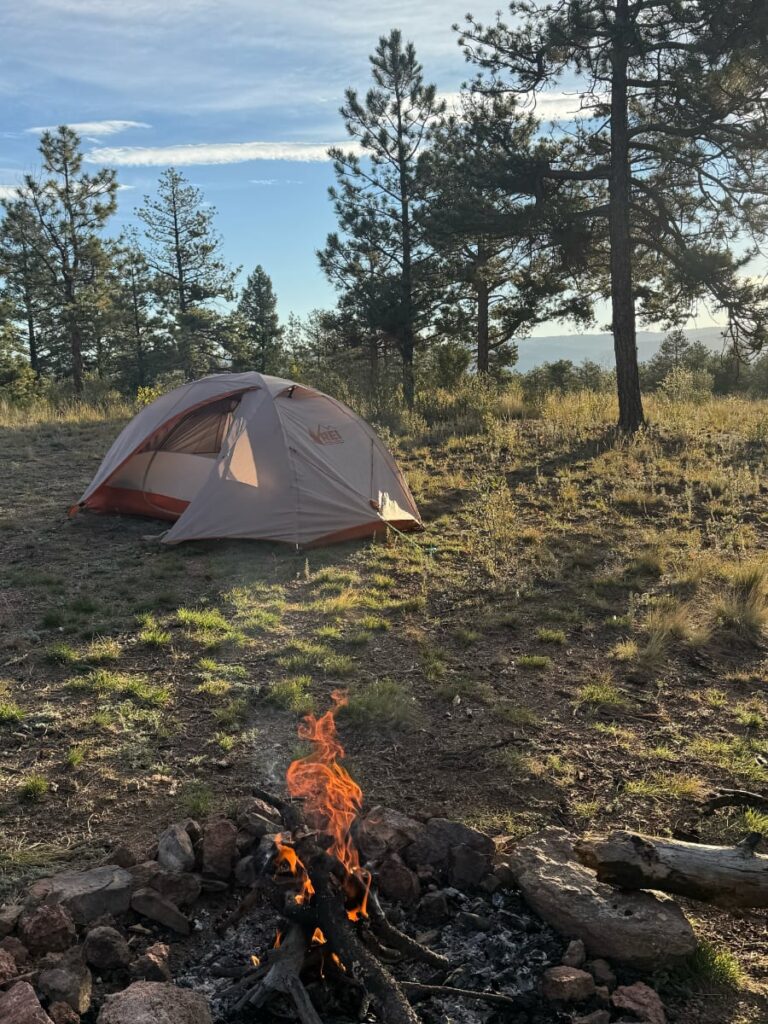 Morning fire
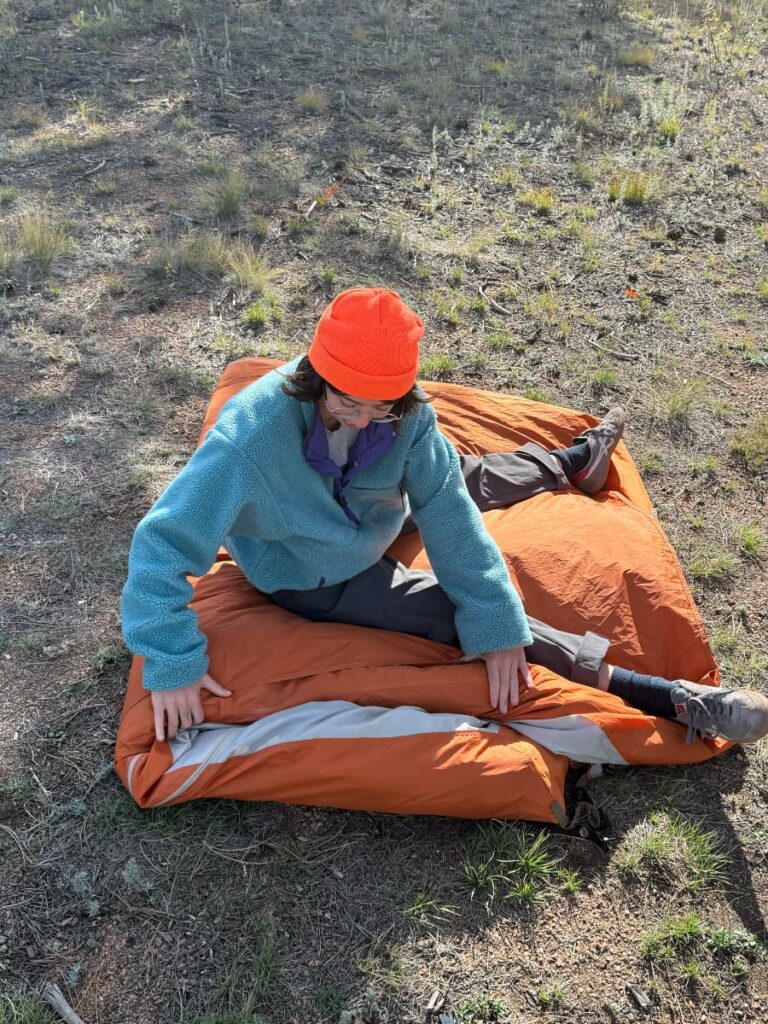 Packing up the tent one last time
After a few nights in the desert, we were ready for trees and cooler air. We crossed into Colorado and camped along Blue Mountain Road, just outside Colorado Springs. This dispersed area offered wooded privacy with open sky views, perfect for relaxing after long highway drives.
Why We Loved It
- Free, shaded pull-offs with forest cover
- Smooth, well-maintained dirt roads
- Quiet and safe, even at night
What We Did While Staying Here
- Cooked dinner and rested by the fire
- Walked through Manitou Springs and sampled the natural mineral springs
- Watched a storm roll in across the mountain range
- Slept with the windows cracked to cool night air
Good to Know
- Occasional campers but plenty of space between sites
- Fire restrictions may apply; check before lighting one
- Strong cell signal for maps and weather updates
Camp Meals
- Tofu ramen with chili oil and greens
- Breakfast oats with honey and coffee
Colorado Springs → Kansas City → Home to Ohio
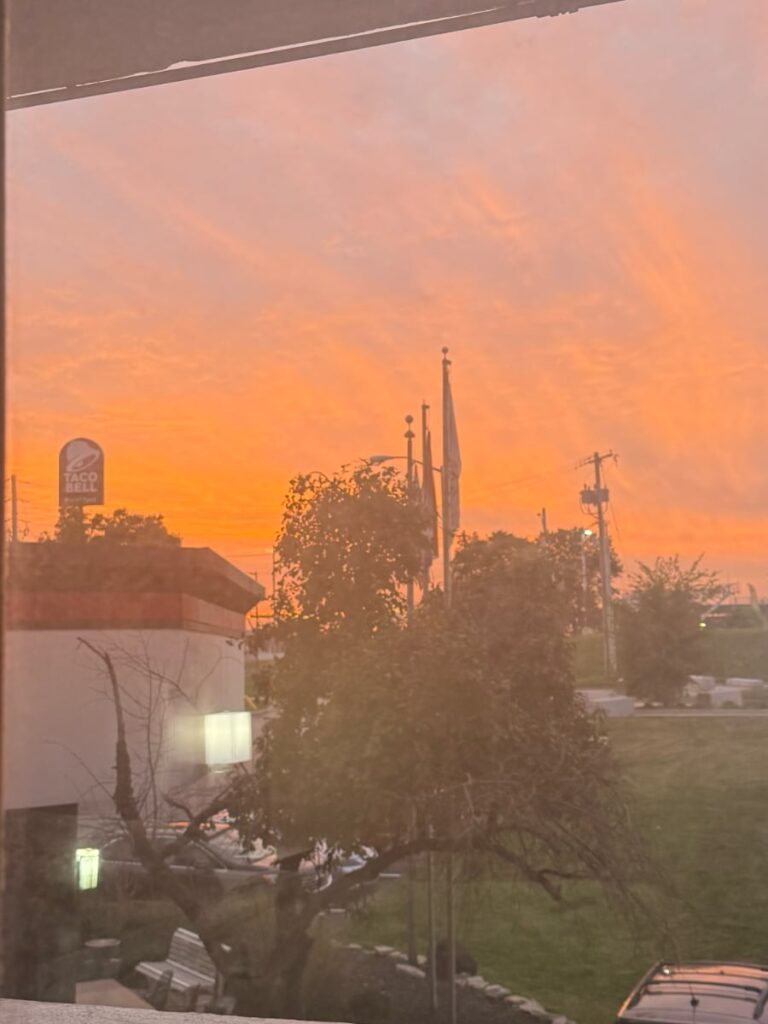 Views from the hotel lol
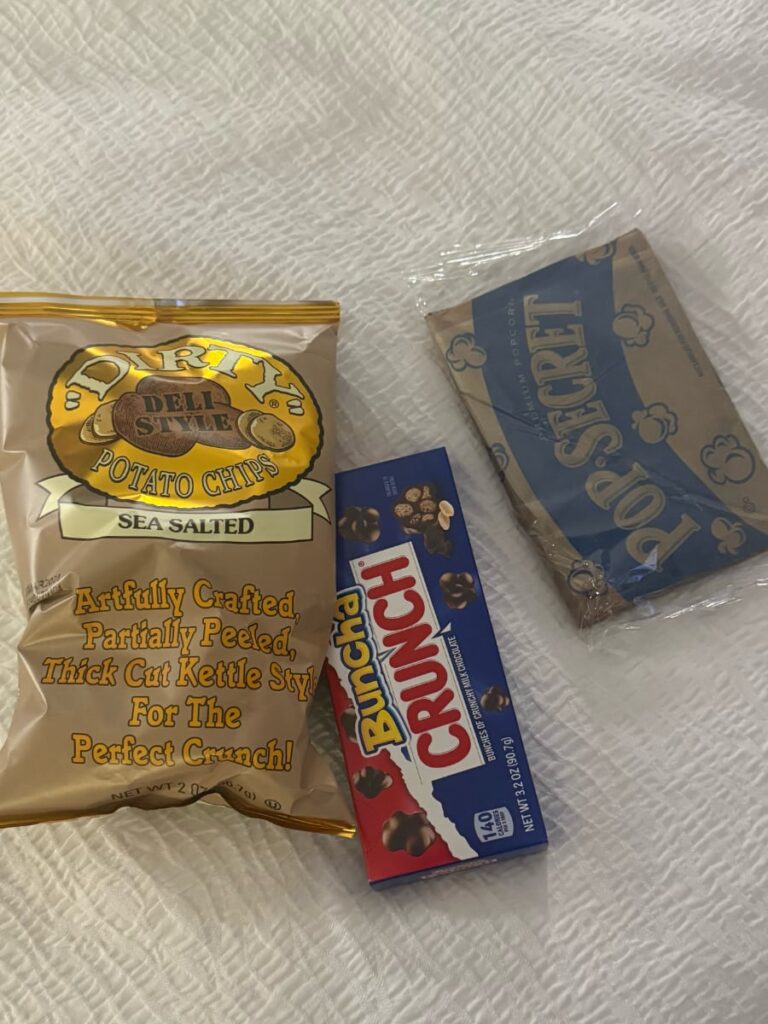 Hotel snacks
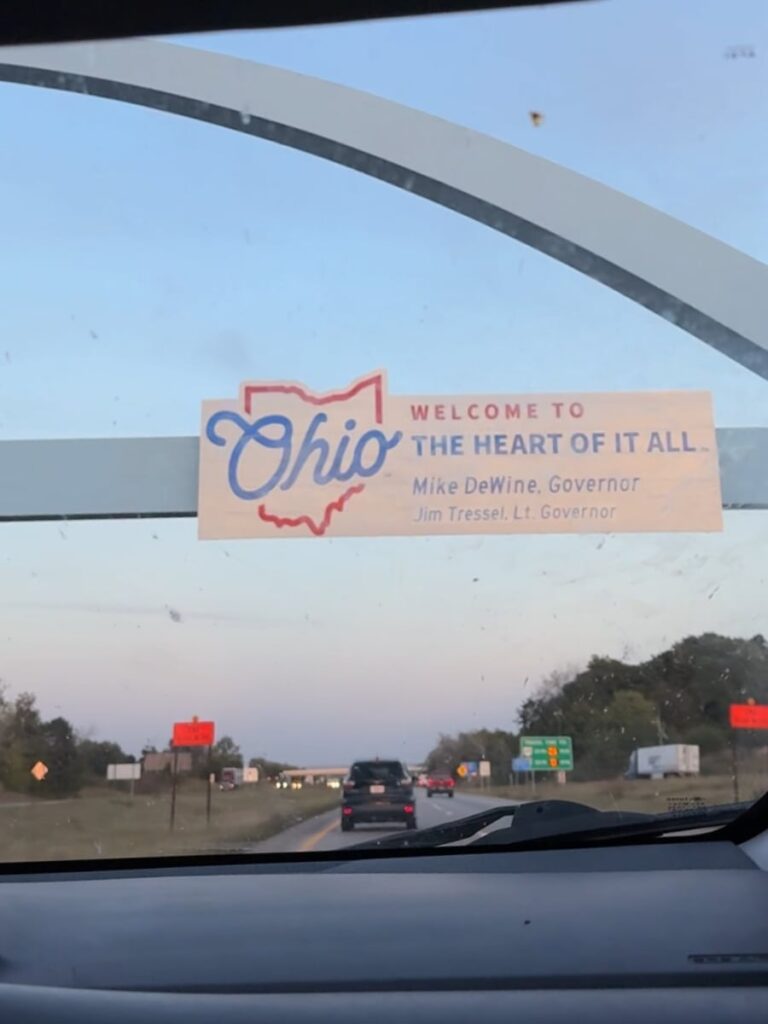 Heading back into Ohio
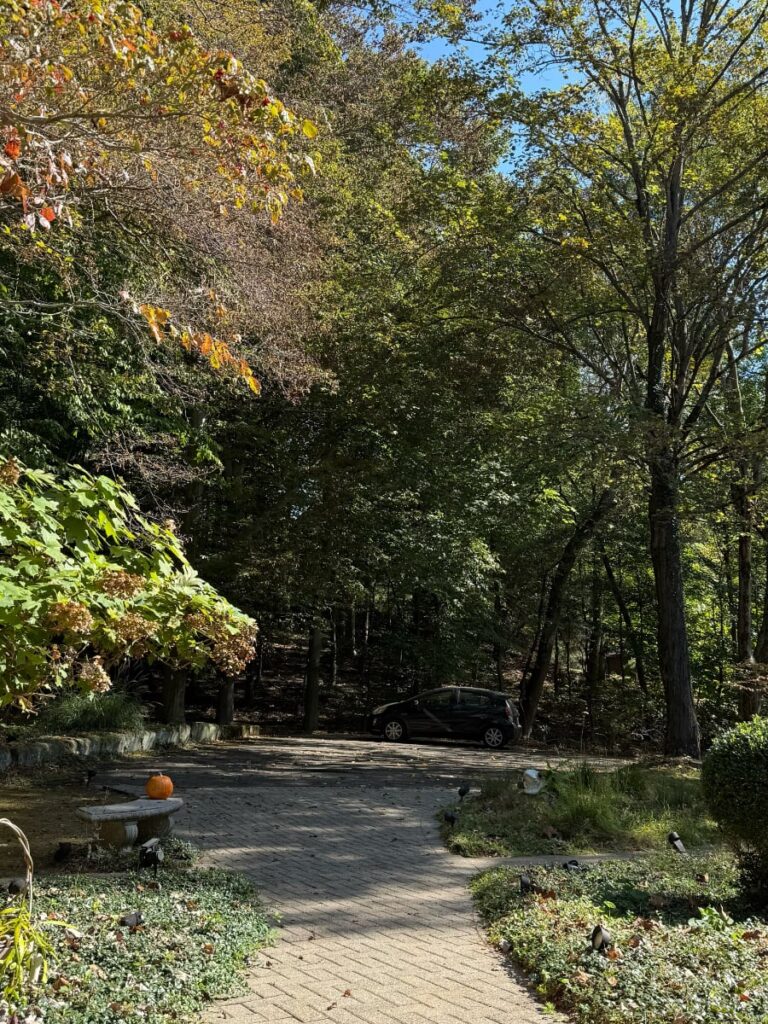 Back home <3
We made one last push east, stopping in Kansas City for a hotel night before finishing the drive home. After nearly two months of camping and crossing the entire country twice, we returned to Ohio rested, clear-headed, and already planning where we’d go next.