Is Puerto Viejo, Costa Rica Worth Visiting? Our Honest Take 2026
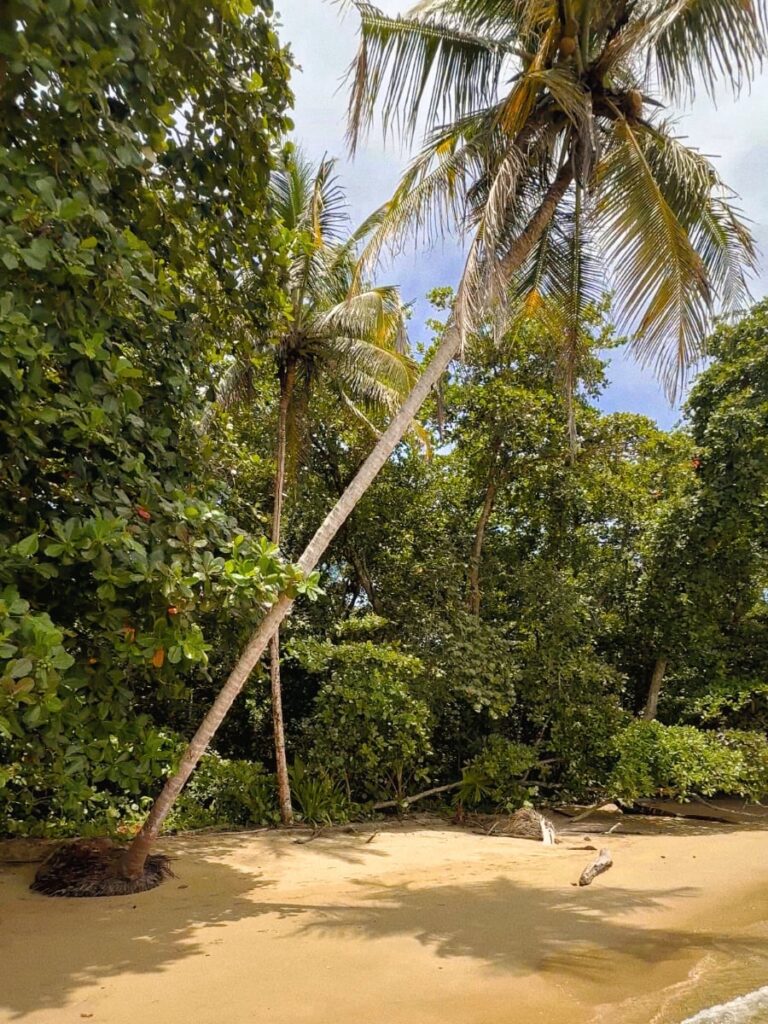
A journal-style guide to help you decide before you book.
We landed in Costa Rica on a Friday at noon with two things on our minds: getting through customs quickly, and getting on the bus to Puerto Viejo.
Neither one went as smoothly as we planned.
By the time we’d bought a ticket for the last bus that day, we were bracing for five hours of standing on the bus. That’s when we started asking ourselves the question this whole post is built around.
Is Puerto Viejo worth all of this to visit?
So, we’re not going to give you a polished highlight reel here. We’re going to walk you through exactly what getting there and being there was actually like: the parts that surprised us, the parts that tested our patience, and the parts that made us understand why people fall in love with this little beach town.
By the end, you’ll have our honest answer, and enough to make your own decision too.
Planning A Trip To Puerto Viejo In A Hurry? Our Top Hotels:
This post may contain affiliate links. We may receive a commission (at not cost to you!) for any purchases made by you using these links. We appreciate your support!
How to Get to Puerto Viejo, Costa Rica
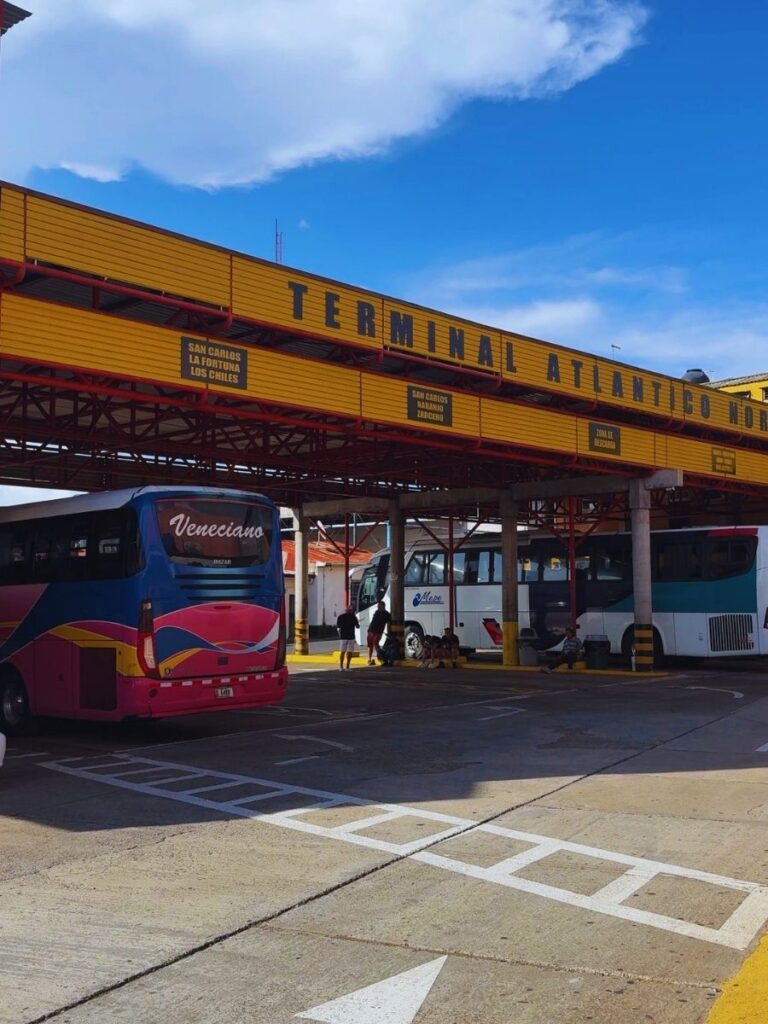
Getting to Puerto Viejo takes some effort, and that’s worth knowing upfront.
Step 1: Customs. After landing at the San Jose airport, customs is surprisingly simple to navigate. There’s only one way to go: follow the signs, ride the escalator down, and get in line. We waited a little over an hour. The customs officer asked for proof of onward travel and where we were staying. Having a printed copy of our travel details ready to hand over made that part easy.
Tip: while standing in the customs line, we noticed a separate, much shorter line for people in wheelchairs, children, strollers, animals, or anyone in a rush. When you first walk into the customs area, look for that line if you’re tight on time and have another bus to catch. Have your booking handy to show as proof.
Step 2: Currency. This part got a little messier. We tried withdrawing colones from the ATMs inside the airport, but did it wrong, and the machine gave us USD instead. We ended up taking that USD to the currency counter to convert it to colones. It works, even though the exchange rate isn’t great. The MEPE bus only accepts cash in colones, no cards, so we needed cash right away. If you don’t need cash right away, skip this step and just hit an ATM later down the road. We only needed cash twice on the entire trip.
Tip: our Charles Schwab debit card is what we use to avoid foreign transaction fees. They also reimburse ATM fees at the end of the month.
Step 3: Getting to the bus station. Exiting the airport puts you straight into a sea of taxi drivers yelling out for your business. Taxis are more expensive, and honestly just felt like a lot in the moment. We booked an Uber instead, which was cheaper and far less stressful.
Tip: book the Uber while you’re still inside the airport. When it arrives, step outside to meet it. That way you skip the chaos out front.
Step 4: The MEPE bus. From the airport, it’s about an hour (or 20-30 minutes without traffic). At the counter we bought two tickets to Puerto Viejo for 6,975 colones each (about $15.33 USD), and found out we’d gotten standing tickets. If that happens to you, head toward the wheelchair space on the bus. It gives you enough room to sit on the floor instead of standing in the aisle the whole way.
We arrived to Puerto Viejo after dark, and pulling into the town center for the first time felt like the trip had finally, actually started. That tuk tuk ride to our stay through town and into the jungle after an 18 hour travel day is a specific feeling that’s hard to explain until you’ve done it yourself.
For more details on the MEPE bus to Puerto Viejo, we’ve put together a full guide here.
Is Puerto Viejo Safe?
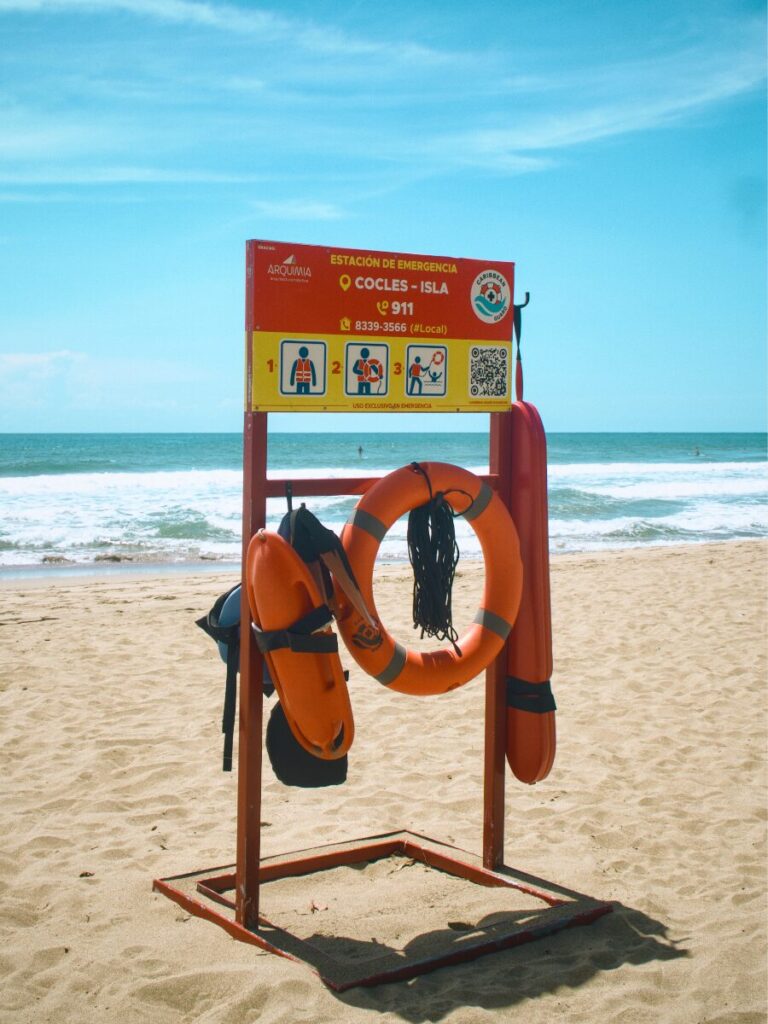
Puerto Viejo felt safe the way any small town does, the people where kind and notice when something’s off and word travels fast. Nothing about it felt tense or sketchy while we were there, but we also understood it’s a developing country with little resources.
The most realistic thing to watch for is petty theft on the beach. The dense jungle line bordering the sand on a quiet beach day is worth being more aware of than a busy, open beach itself. That’s where things tend to disappear from, not from someone walking past your towel.
We learned this firsthand. Our camera was stolen right off the beach, someone came out of that jungle line while we were sitting right there and got away before we even registered what happened. It was fast, and it wasn’t something either of us saw coming. If we’d had a floating dry bag with us, we could have kept it in the water instead of leaving it on the sand while we swam.
At night we stuck to Ubers to get back to our stay in Cocles rather than biking dark stretches of road, and we’d recommend the same. During the day, biking between beaches and into town never felt like something we had to think twice about. It’s the same common sense you’d bring to any place with nightlife.
Best Time to Visit Puerto Viejo
We didn’t plan our trip around the calendar, but looking back, timing matters more here than we realized going in.
The clear water and calm seas show up during two windows: February through March, and September through October. That’s when the sea turns flat and glassy, the rain slows down, and visibility is at its best for swimming and snorkeling. Outside of those windows, rip currents pick up and the rain increases.
High season, roughly December through April, brings more energy into town: more people out, more happening at night, a livelier feel overall. The quieter months are slower and feel more local.
We went in June. There were quite a few rainy days, and every day felt like a big wave day at the beach. But the crowds were next to none, and for us, that trade off was well worth it. We will almost always choose shoulder season anywhere we go.
What To Do In Puerto Viejo, Costa Rica
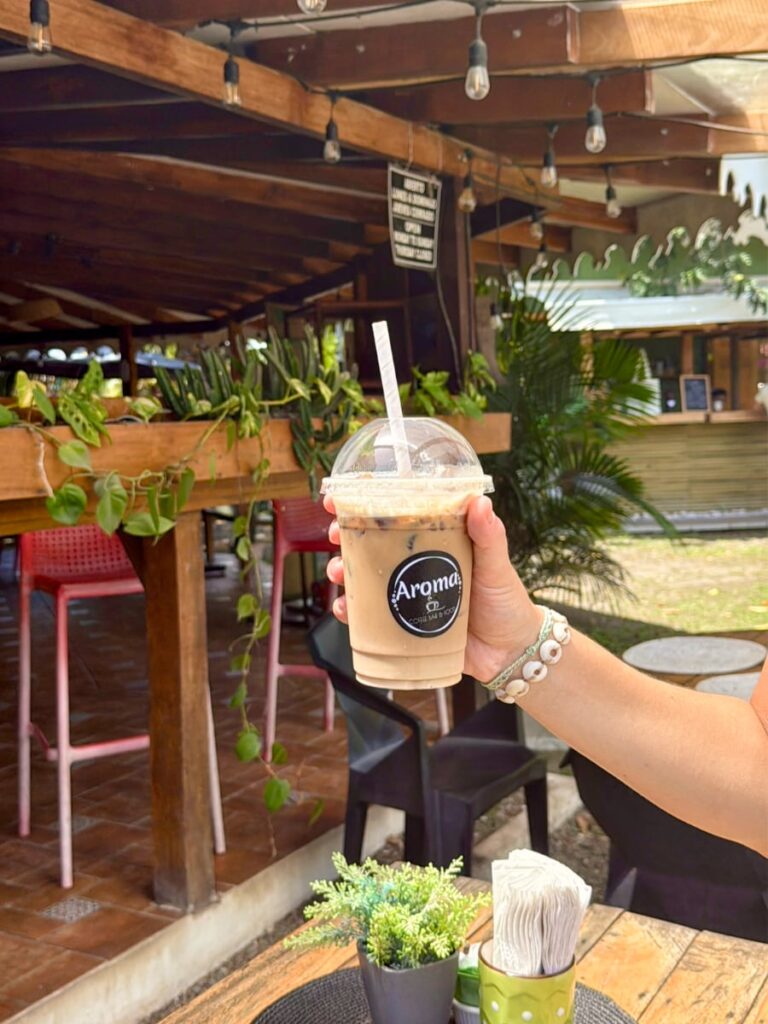
This is where the town simply won us over.
We put together a whole guide on the best things to do during your trip to Puerto Viejo, which you can access here.
But for a quick rundown, read below.
Cocles: We stayed in Cocles (just down the main road from Puerto). Our first morning, we wandered into El Sol de Caribe almost by accident, and it turned out to be one of our favorite places to eat the whole trip. We ordered the Pinto Tico (eggs, rice and beans, plantains, tortilla) alongside a passion fruit and pineapple smoothie made with fresh coconut water. And right across the street is one of the best beaches in Costa Rica, literally. For dinner, Cafe Rio became our go-to for ceviche, made with coconut milk, fresh lime, local white fish, tuna, and pink Caribbean shrimp.
Puerto Viejo town: A short bike ride down the road is Puerto Viejo town itself, where you’ll find most of the shops, restaurants, and bars. At the far end is Chino Beach, a small, calm stretch of shallow water that’s easy to swim or float in, and one of the best spots to watch the sunset and have a beer.
One of our favorite nights was just beach bar hopping, moving from place to place along the sand. We also had the best shrimp and rice we’ve ever had that night (at Salsa Brava Beach Bar)
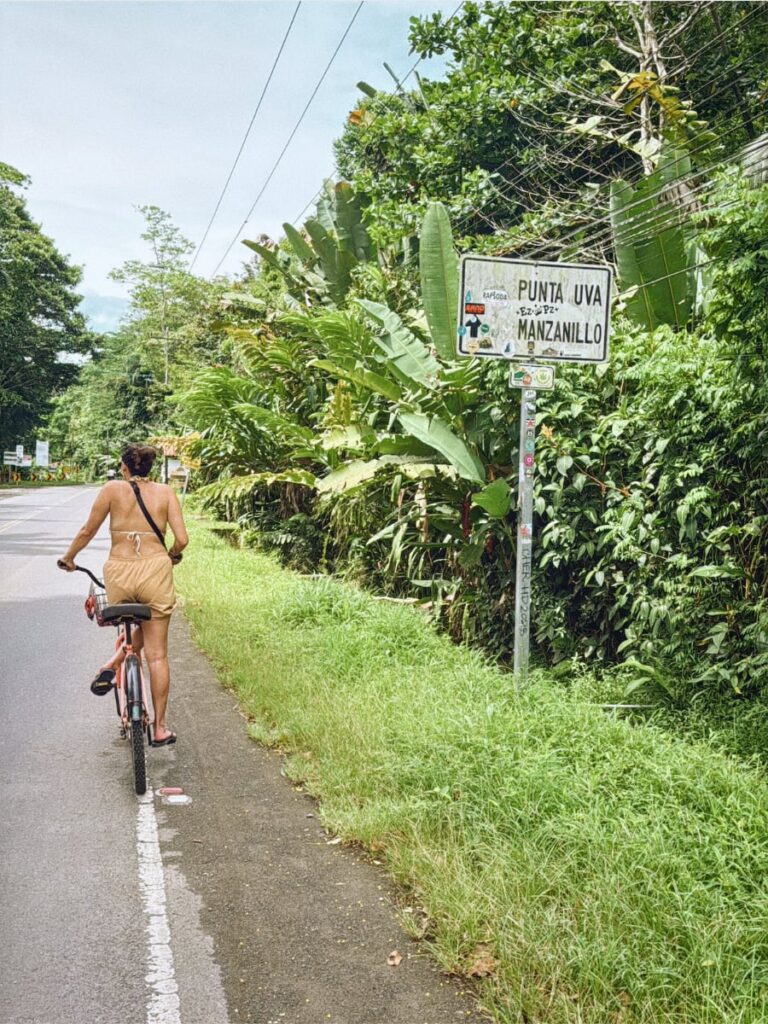
Further north: Past Playa Chiquita, we biked out to Punta Uva on a Sunday and came upon a true local experience: trucks parked along the sand, grills of food going, families, speakers playing from every direction. The water there was some of the clearest we saw the whole trip, calm enough to float in or snorkel.
So what is there to actually do in Puerto Viejo?
Pretty much anything you can think of.
If you want a resort-feeling vacation with lots of treatments, totally doable.
If you want an excursion-heavy adventure vacation, absolutely doable.
Where We Stayed in Puerto Viejo (and Where You Might Want To)
We chose to stay in Cocles for its location which was close enough to bike into Puerto Viejo town in about ten minutes, but quieter and closer to the best beaches.
If you’re trying to decide between staying in town versus somewhere like Cocles, we’ve broken down the best areas and hotels in a separate guide, linked here.
Logistics That Helped
- Charles Schwab debit card — reimburses all foreign ATM fees at the end of the month, which most cards don’t do. Worth setting up before a trip like this.
- Tico Surf & Skate bike rental — where we rented our bikes for $4 a day.
- Uber app — worked well for the airport and inside town for rides at night.
So, Is Puerto Viejo Worth Visiting?

Getting there takes patience. Between the currency customs, traffic, and a five hour bus ride that might land you a standing ticket, this isn’t a place you fly into and unwind immediately.
But once we were actually there, biking between beaches, eating the best ceviche of our lives, watching the sunsets, and generally feeling like time went slower, it was clear why people plan their whole trip around this stretch of coast. It has a rhythm to it that’s hard to find in this modern world.
Our honest answer: yes, it’s worth visiting, as long as you go in expecting the adventure to be part of the story instead of an inconvenience to get past.