Olympic National Park Itinerary | 3–5 Days of Rainforest, Tide Pools & Getting Around
Your Olympic National Park Itinerary
Olympic National Park is one of those places that feels impossible to describe until you’re there. Snow-capped peaks, moss-covered rainforest, and beaches lined with sea stacks and driftwood. Every part of it feels different, yet it all connects.
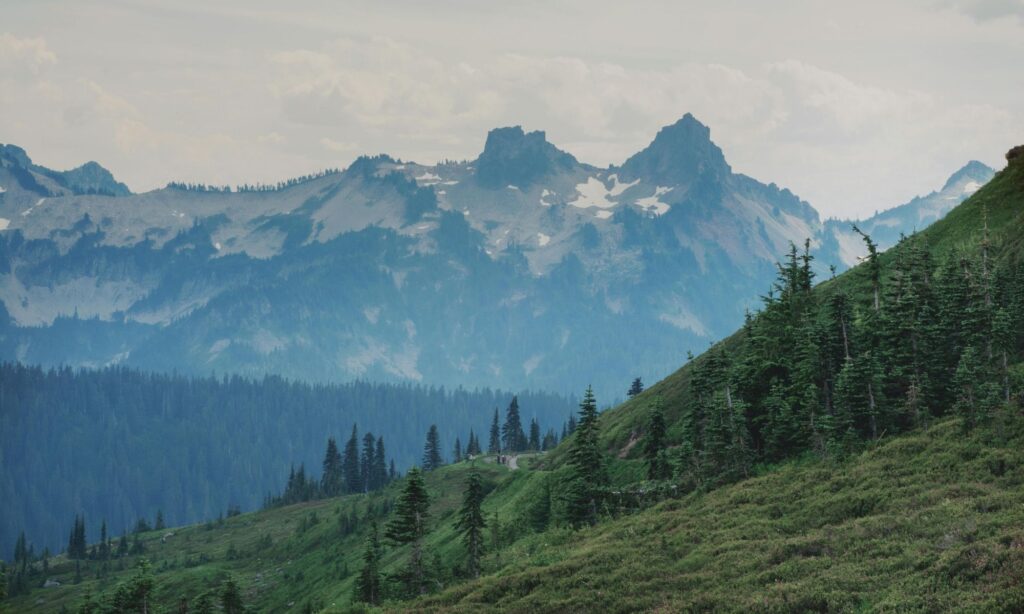
This itinerary breaks down exactly how to explore the park in its vastness. From a ferry ride over to favorite hikes, beaches, and quiet stays. Whether you have three days or a full week, this route covers the best of Olympic without rushing yourself around. This is calm girl travel.
Getting Into Olympic National Park
There are a few primary ways to enter Olympic National Park, from the north via Port Angeles, from the west via the Forks/coastal side, or from the south via Lake Quinault. Which entrance you choose depends largely on where you’re coming from and what part of the park you want to see first.
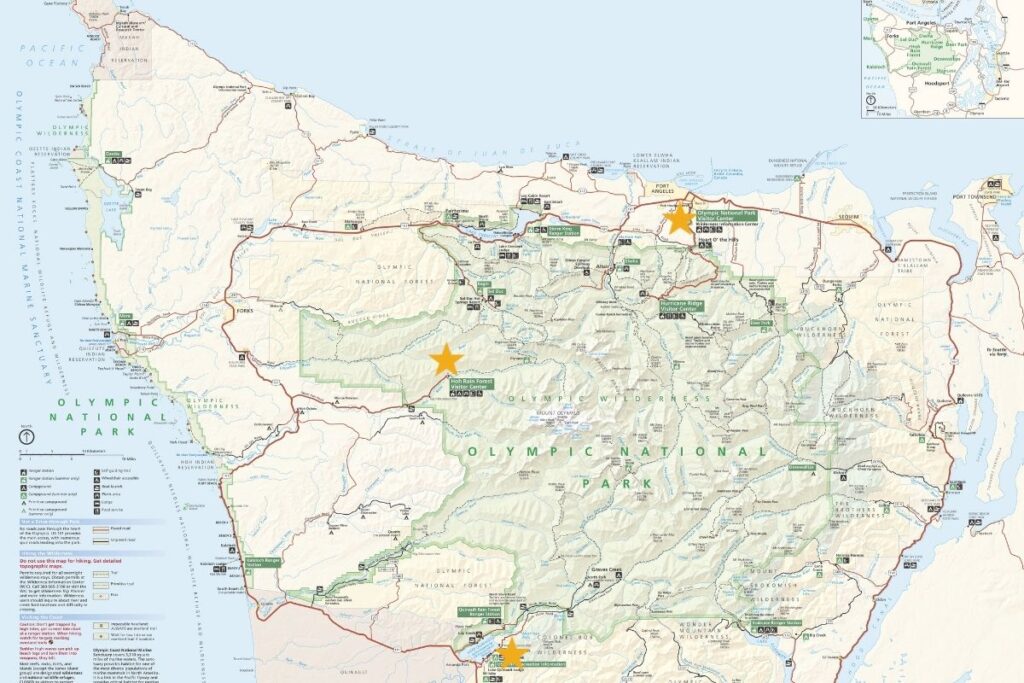
North Entry (Port Angeles / Hurricane Ridge side):
If you’re arriving via Seattle or coming from the east, entering through Port Angeles gives you quick access to Lake Crescent, Hurricane Ridge, and Sol Duc. The main visitor center is located in Port Angeles, making it convenient for stops for maps, permits, or gear.
West / Coastal Entry (Forks / Hoh Rain Forest side):
If your goal is to hit the forest and coastline early (Hoh Rain Forest, Rialto, Ruby), entering from the Forks side (via Highway 101 west side) makes sense. The drive is more remote, but you’ll already be set up for those sections.
We entered via Seattle → Bainbridge ferry → wove west to Port Angeles, then followed 101 down through the forest and coast. That route gave us both mountain and coastal views without backtracking.
Day 1 Itinerary| Port Angeles + Lake Crescent
Given you are coming in from the North entry, and have already made it to the olympic peninsula, your first day would start in Port Angeles and down to Lake Crescent, (if you’re ending here just take this loose itinerary in reverse). You really could spend an entire day in the Lake Crescent area, so we will tell you all of the must-see spots and our favorite small stops around the lake.
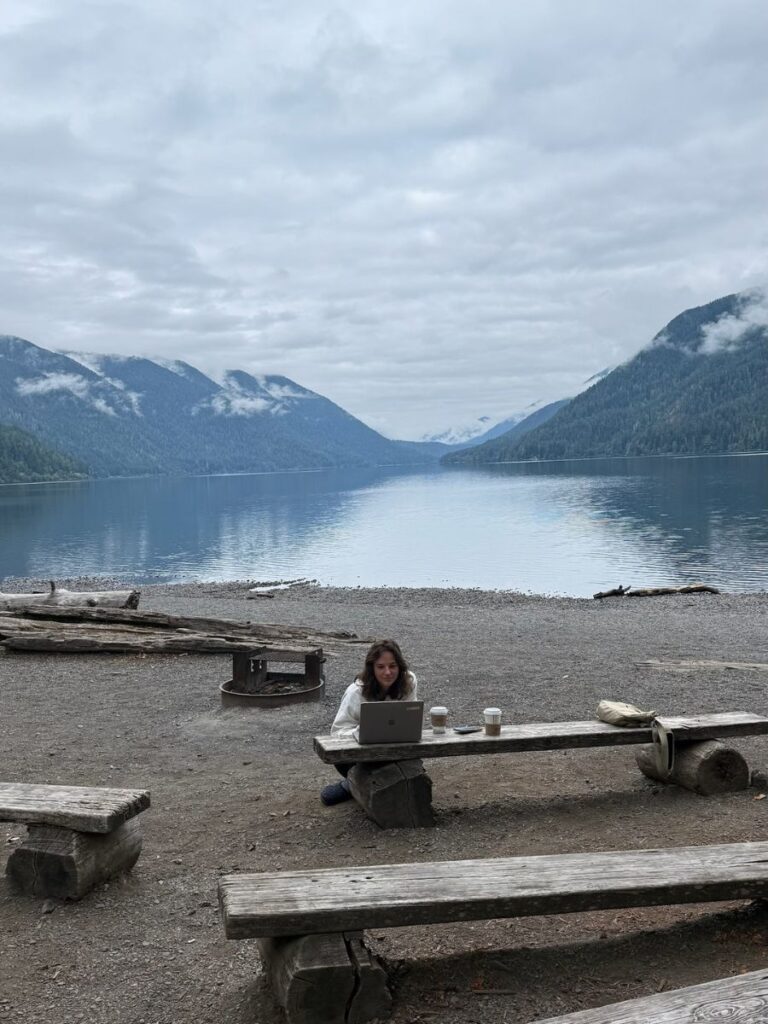
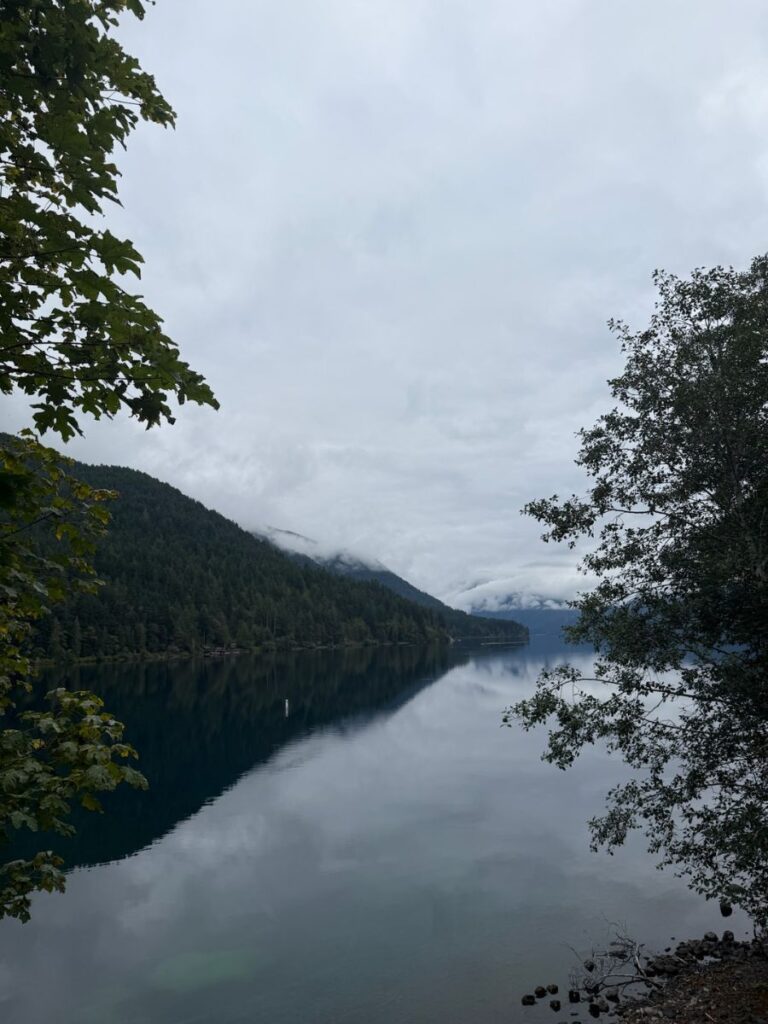
Must-See Spots Around Lake Crescent
- Moments in Time Trail: Flat, shaded, and full of moss. It loops right through the forest and opens up to small lake views.
- Devil’s Punchbowl: A short walk from the Spruce Railroad Trailhead (on the north shore). It’s a small bridge over deep turquoise water — perfect for photos or a quick swim if you’re brave.
- Marymere Falls: A short trail that starts at Storm King Ranger Station. It winds through old-growth forest before ending at a narrow waterfall tucked into the hillside.
- Mount Storm King Viewpoint: A steep climb (bring good shoes), but if it’s clear, you’ll get the best aerial view of the lake.
- Lake Crescent Lodge: Stop here for lunch or coffee — the chairs on the lawn face straight toward the water, and it’s one of the most peaceful places to sit for a bit.
Where to stay:
Stay near Lake Crescent, Sol Duc, or Port Angeles for an easy start to Day 2.
Day 2 | Hurricane Ridge + Sol Duc
Day two takes you up into the mountains in the morning and back into the forest by afternoon. It’s a day of views, waterfalls, and hot springs — all easy to fit into one relaxed loop.
Start your morning early and head toward Hurricane Ridge for the best visibility. Mornings tend to be clearer before the clouds roll in. Pack breakfast or grab something quick in Port Angeles before the drive up.
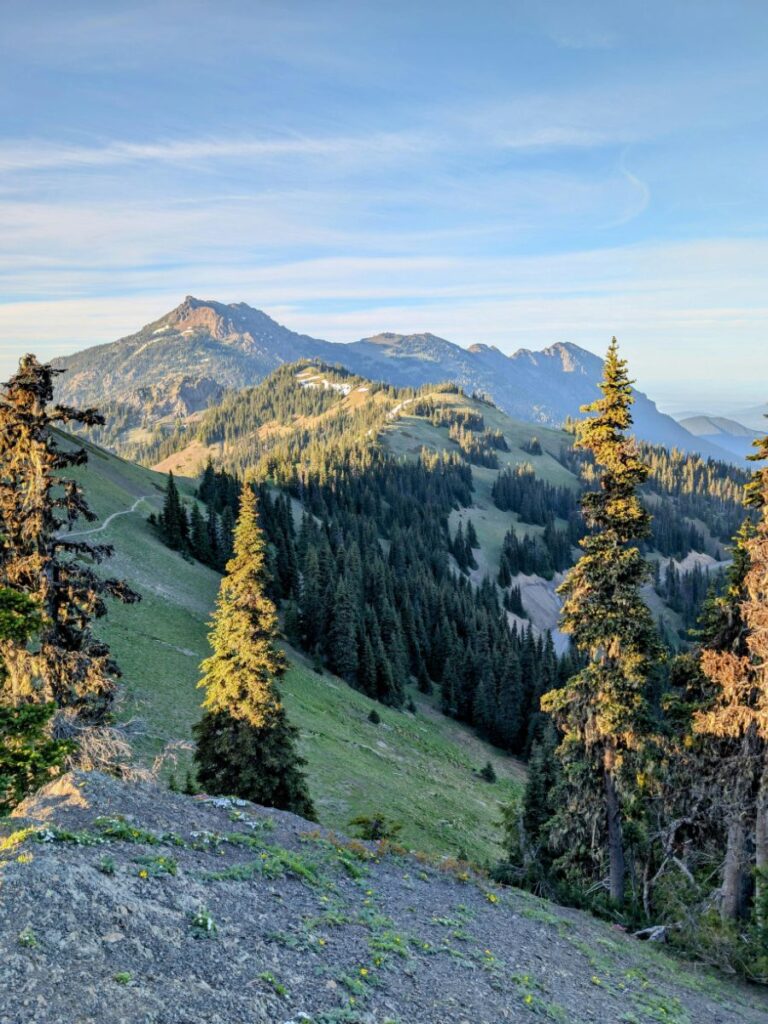
Morning — Hurricane Ridge
From Port Angeles, it’s about a 45-minute drive up to Hurricane Ridge Visitor Center. The road climbs quickly, and every overlook is worth a short stop. Once at the top, the views stretch across the Olympic Mountains and, on a clear day, all the way to Canada.
Must-See Spots at Hurricane Ridge
- Hurricane Ridge Visitor Center: Stop here for trail maps, bathrooms, and to check current weather conditions.
- Hurricane Hill Trail: A 3-mile round-trip trail with wide-open mountain views the entire way. It’s paved for most of the hike and one of the best moderate options in the park.
- Sunrise Point Overlook: Great quick stop on the way up if you catch the morning light.
Afternoon — Sol Duc Falls & Hot Springs
After lunch, drive west on Highway 101 toward the Sol Duc Valley (about 45 minutes from Hurricane Ridge). This area feels quieter and more tucked away, surrounded by forest and misty air.
Best Stops in Sol Duc
- Sol Duc Falls Trail: A short, easy trail (under 2 miles round trip) that leads to one of the park’s most photographed waterfalls.
- Sol Duc Hot Springs Resort: End the day soaking in the mineral hot springs — they have multiple pools at different temperatures. Towels and day passes are available at the lodge if you’re not staying overnight.
- Sol Duc River Overlook: A quick stop near the parking area where you can walk down to the river and see the falls from another angle.
Where to Stay
Stay overnight near Sol Duc, Lake Crescent, or Port Angeles again depending on your plans for Day 3. If you prefer access to restaurants and shops, Port Angeles is still your best hub before heading toward the rainforest and coast tomorrow. If you want a quiet evening, Sol Duc Hot Springs Resort or nearby campgrounds make it easy to relax after hiking.
Day 3 | Hoh Rain Forest + Ruby Beach
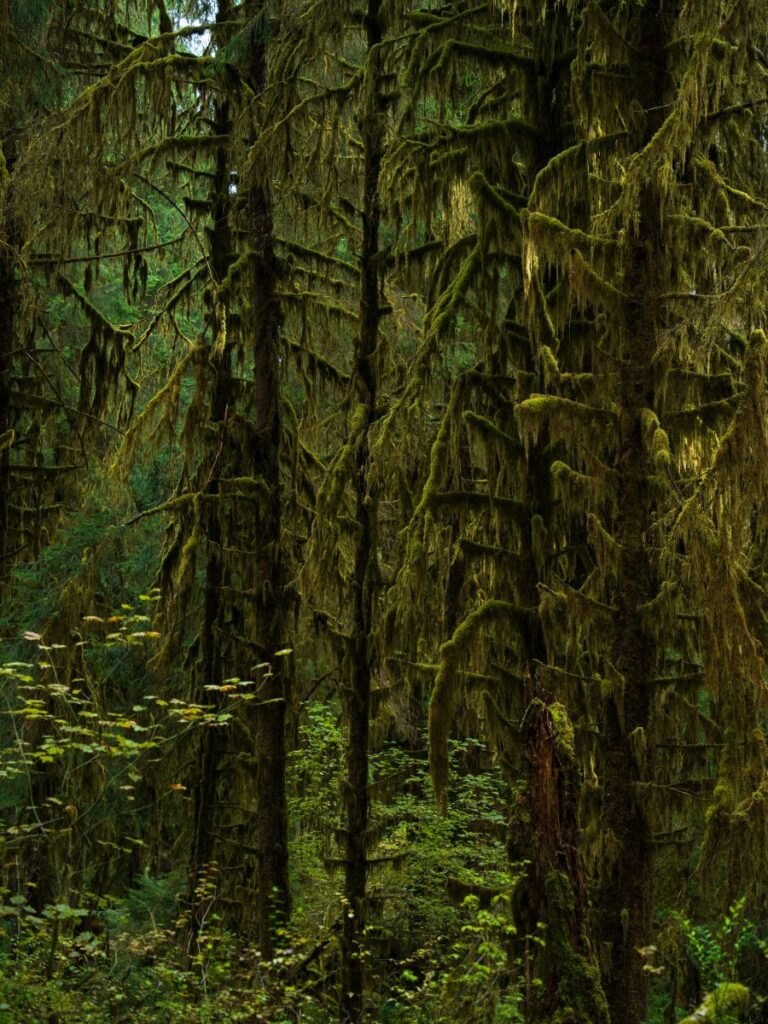
Day three brings you to two of Olympic’s most memorable spots — the deep green of the rainforest and the rugged, moody coast.
It’s a full day, but the drive flows naturally, and the change from forest to ocean makes it one of the most beautiful transitions in the park.
Morning — Hoh Rain Forest
From Port Angeles or Sol Duc, head southwest toward the Hoh Rain Forest Visitor Center (about 1.5–2 hours). The drive is quiet and scenic, with long stretches of mossy forest and misty light filtering through the trees.
Must-See Spots in the Hoh Rain Forest
- Hall of Mosses Trail: The classic 0.8-mile loop through hanging moss, ancient trees, and thick green ferns.
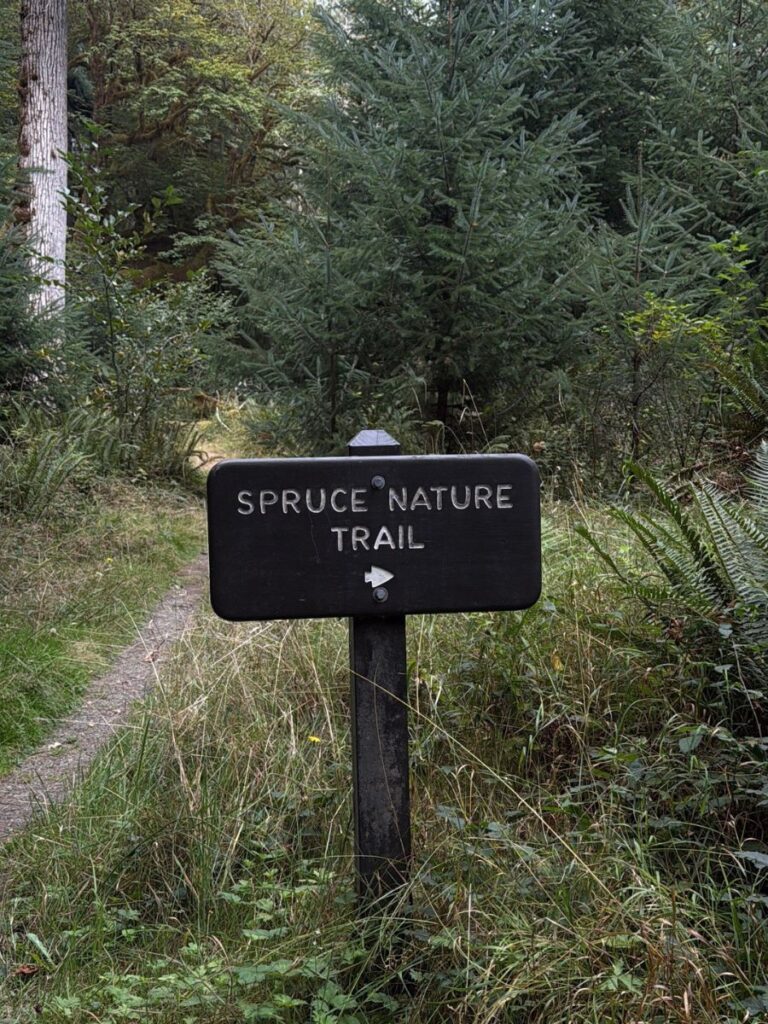
- Spruce Nature Trail: Slightly longer (1.2 miles) and quieter, with open river views mixed into the forest.
- South Fork Hoh River Trail: For something more remote, drive 30 minutes south of the main entrance. The forest feels untouched and is often completely empty.
Evening — Ruby Beach
From the Hoh Rain Forest, drive about 45 minutes south on Highway 101 to Ruby Beach. It’s one of the best evening spots in the park, especially if you time it with the evening low tide and sunset.
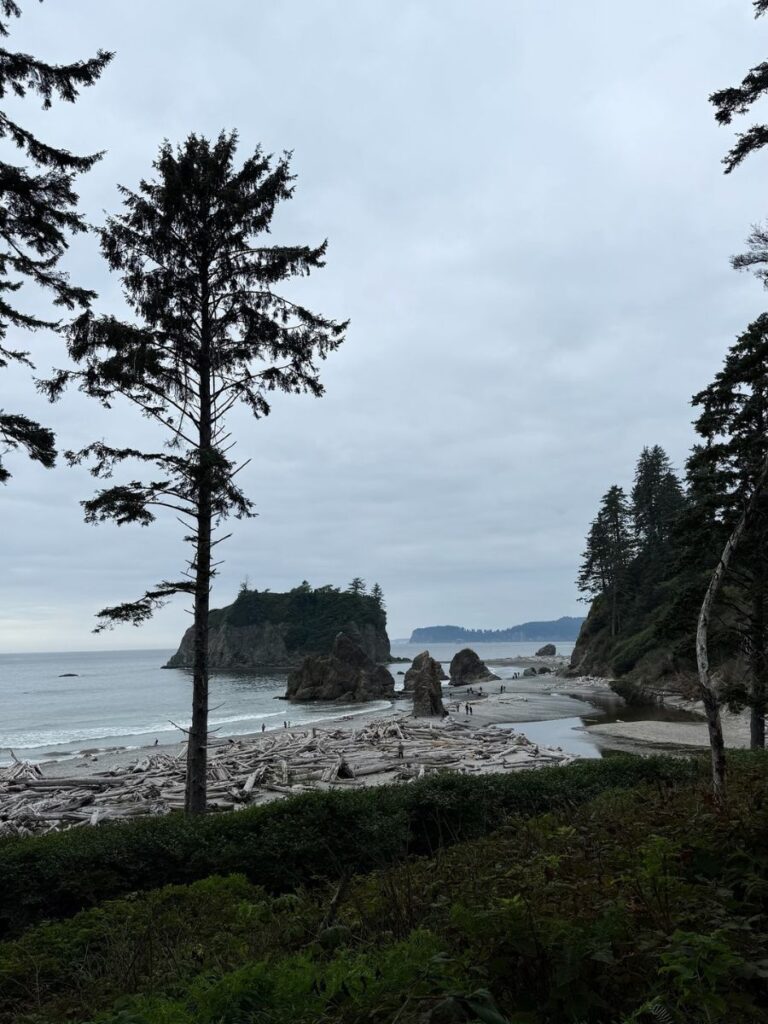
The short walk down from the parking area opens to a wide, driftwood-filled beach with massive sea stacks in the distance. As the sun lowers, the light turns golden and the rocks reflect across the wet sand.
Must-See at Ruby Beach
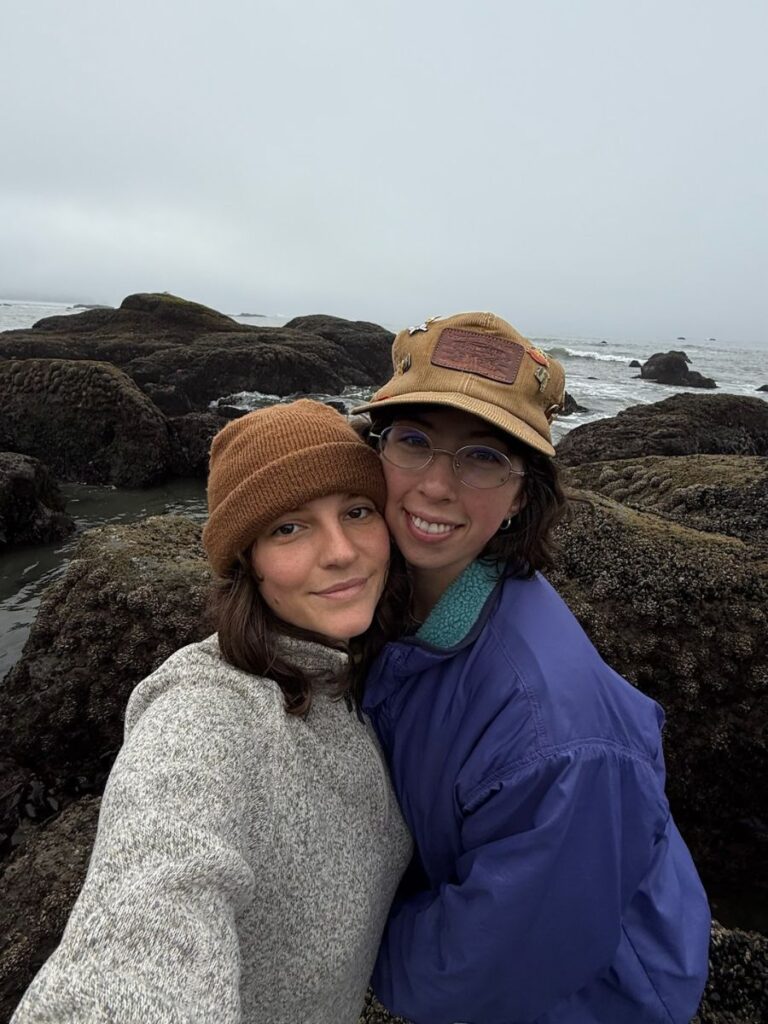
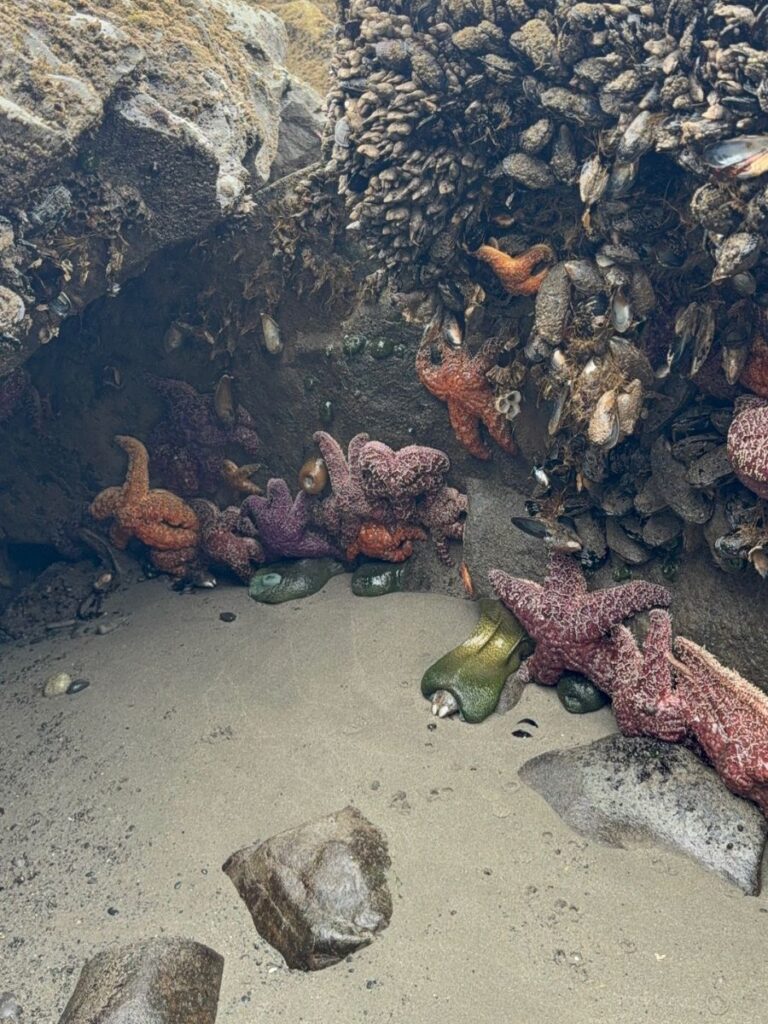
- Tide Pools: Explore during low tide — you’ll find colorful sea stars, anemones, and tiny crabs tucked between the rocks.
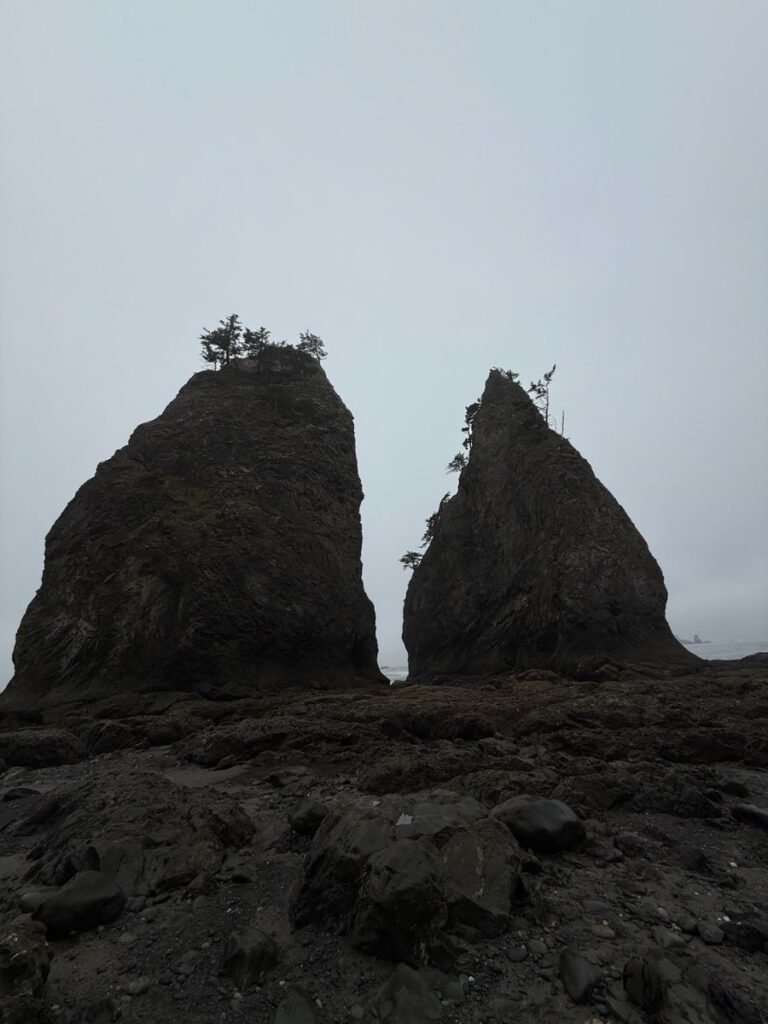
- Sea Stacks: These are some of the most photographed formations in the park — dramatic, misty, and different at every angle.
- Rock Collecting: Ruby Beach is famous for its smooth, colorful stones. It’s easy to lose track of time just looking for your favorites.
- Driftwood Walk: The giant logs along the upper beach make for great photo backdrops and places to sit and watch the sunset.
Where to Stay
After your time at Ruby Beach, head back north toward Forks for the night, or stay near the coast.
- Forks: Central, quiet, and perfect for an early start tomorrow.
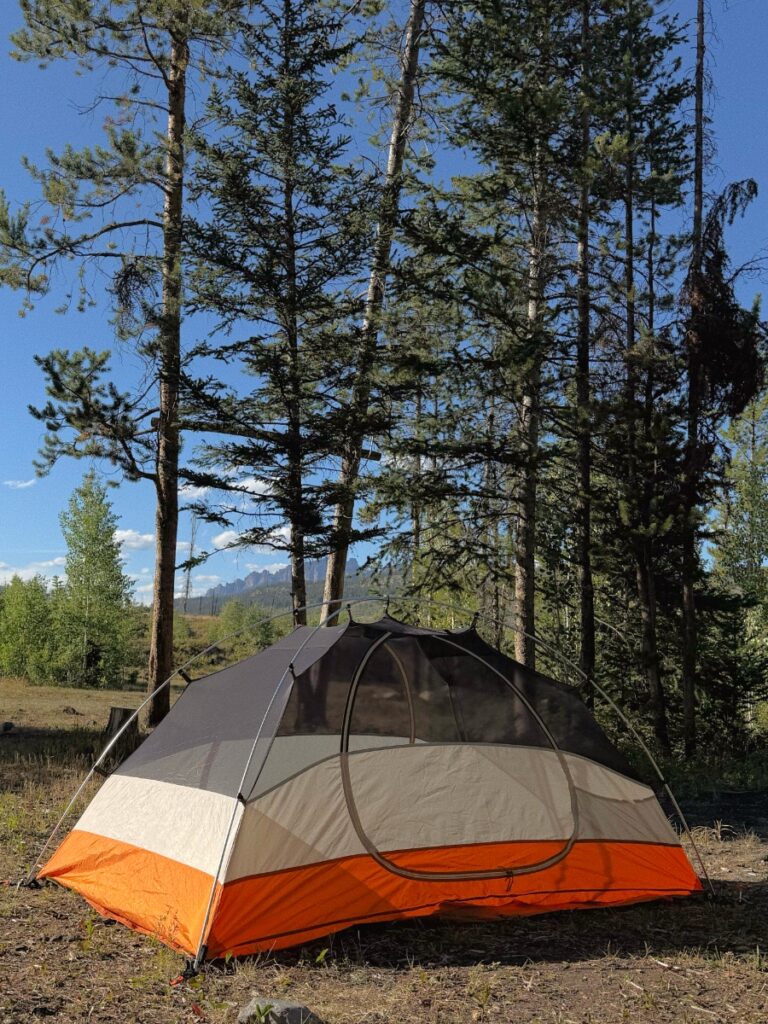
- Dispersed Camping near Kalaloch: We stayed here — tucked in the trees, close to the ocean, and peaceful under the sound of the waves.
Day 4 | Rialto Beach + Forks
If Ruby Beach is where you end your day, Rialto Beach is where you start the next one — early, quiet, and with purpose.
Low tide in the morning completely transforms the area, uncovering tide pools, tunnels, and rock formations that disappear again within hours.
Morning — Rialto Beach
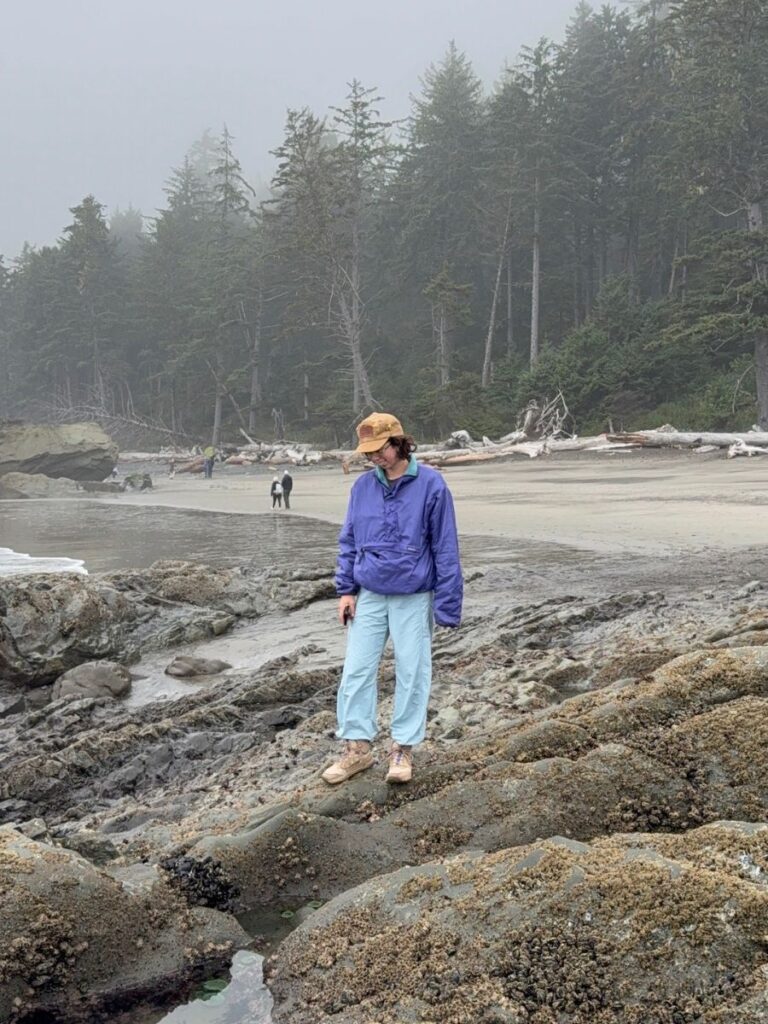
Wake up early and drive toward Rialto Beach (about 30 minutes north of Forks). This is such a magical beach and absolutely a must stop if you are going to go to any beaches out here. The tide pools on the walk to the iconic Hole-in-the-Wall take you to a different world. It feels even more special making it out there when you know that it is only visible at low tide.
Bring shoes for stomping around on the beach and layers for the cool morning!
Must-See at Rialto Beach
- Hole-in-the-Wall: The main attraction — a 1.5-mile walk north along the beach (3 miles round-trip). It’s only accessible at low tide, so check the tide chart and plan your morning around it.
- Tide Pools: These are some of the best in the park. You’ll spot bright purple sea stars, green anemones, and small fish in the shallow pools.
- Driftwood Line: The massive logs stacked along the upper beach make it feel raw and wild. Take your time walking through — it’s part of the experience.
Small Stops
- La Push Beaches (First + Second Beach): After Rialto, drive another 15 minutes west to these beaches near the Quileute Reservation. Second Beach has a short forest trail leading down to the ocean and feels peaceful, even mid-day.
Afternoon — Forks + Slow Day
After a full morning at the coast, spend your afternoon relaxing or ‘exploring’ around Forks. ‘Exploring’ because there isn’t much to see, (unless you’re a Twilight lover).
For us this meant grabbing some provisions in town and heading back to camp for the evening of cooking and relaxing by the river.
Day 5 | Lake Quinault + Continuing the Loop
If you’re continuing south from Kalaloch, your next stop is Lake Quinault, a quiet, scenic end (or beginning) to the Olympic loop. This area sits on the edge of the park and feels like a mix between rainforest and mountain lake — calm, green, and often overlooked.
Morning — Drive Toward Lake Quinault
From Kalaloch, drive about 45 minutes south to reach the Quinault Rain Forest. The road curves along the lake and opens to views of mountains, mossy trees, and still water.
Must-See Spots Around Lake Quinault
- Quinault Rain Forest Nature Trail: A short, flat loop that passes small waterfalls and lush greenery — a simple walk that captures the best of this area.
- Merriman Falls: Just off the road along South Shore Drive. Easy to miss but worth pulling over for.
- World’s Largest Sitka Spruce: A quick stop near the lake — massive and hundreds of years old.
- Lake Quinault Lodge: Stop for lunch or coffee. The big lawn overlooking the lake is one of the best slow-down spots on the peninsula.
Continue Your Journey
From Quinault, you can continue looping around the peninsula or head east toward your next destination.
Whether you’re driving back toward Seattle, continuing down the coast, or beginning another national park trip, this part of the drive naturally connects to whatever comes next.
If you’re not ready to leave, Lake Quinault Lodge or Rain Forest Resort Village both make great last-night stays before moving on.